


Vinyl vs. Ceramic Tile: Which Should You Choose for Your Floor?
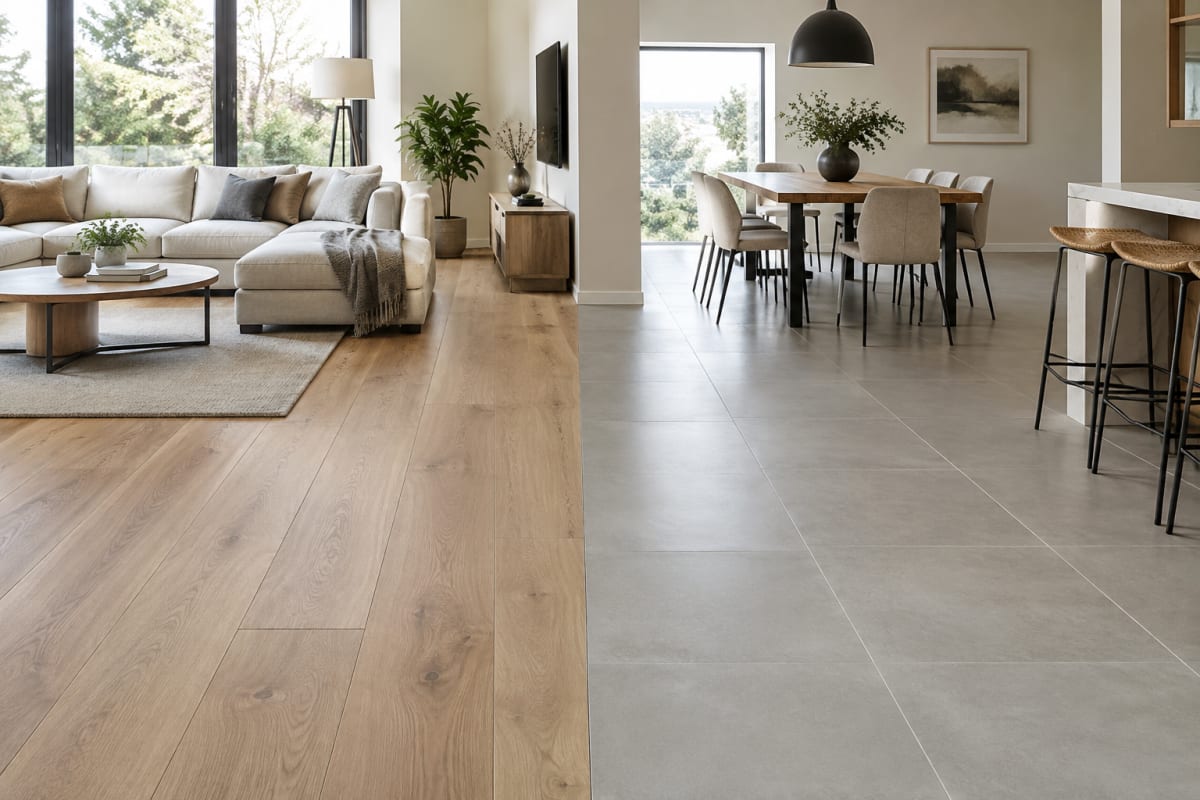
Should you opt for resilient, easy-to-install vinyl or invest in the timeless durability of ceramic tile? The flooring you select shapes your everyday comfort, determines how well your home handles moisture, and impacts your long-term renovation budget. To help you decide, we have broken down the core technical differences, pros, and cons of both materials.
Durability and Lifespan
Evaluating wear resistance and expected service life in everyday conditions is essential before committing to a floor covering.
- Vinyl flooring (LVT and VCT): Quality luxury vinyl tile (LVT) generally lasts between 15 and 30 years, while commercial-grade vinyl composition tile (VCT) typically delivers 15 to 20 years in high-traffic settings. Vinyl excels at impact absorption—dropped mugs or heavy toys rarely crack or chip the planks. However, the surface remains vulnerable to scratches from sharp objects, dragging heavy furniture, and gouging from concentrated point loads.
- Ceramic and porcelain tiles: When properly installed, ceramic tiles easily last 30 to 50 years or more. A tile's surface abrasion resistance is measured by its PEI rating: PEI 3–4 is ideal for residential floors, while PEI 5 is engineered for heavy commercial and public foot traffic. Heavy-duty options like the Taurus 76S 30x30 Nordic ceramic floor tile excel under severe mechanical stress, while versatile options like the Moon Dark Grey 60x60 ceramic floor tile easily accommodate both busy public venues and active family homes.
Water Resistance and Suitability for Wet Areas
Moisture exposure dictates whether a floor covering can perform safely in bathrooms, walk-in showers, mudrooms, or utility spaces.
While synthetic vinyl is inherently 100% waterproof, its seams and click-lock joints represent a critical vulnerability. If standing water seeps through micro-gaps between planks, moisture becomes trapped against the subfloor, encouraging mold growth and compromising the underlying structure.
In contrast, tile installed over an approved substrate remains the gold standard for wet rooms. Properly applied bathroom waterproofing under tiles creates a seamless, flexible barrier that shields the building structure from water ingress. Texture also matters in wet environments. Understanding what anti-slip tiles are and when you need them ensures you select the right level of slip resistance for your project:
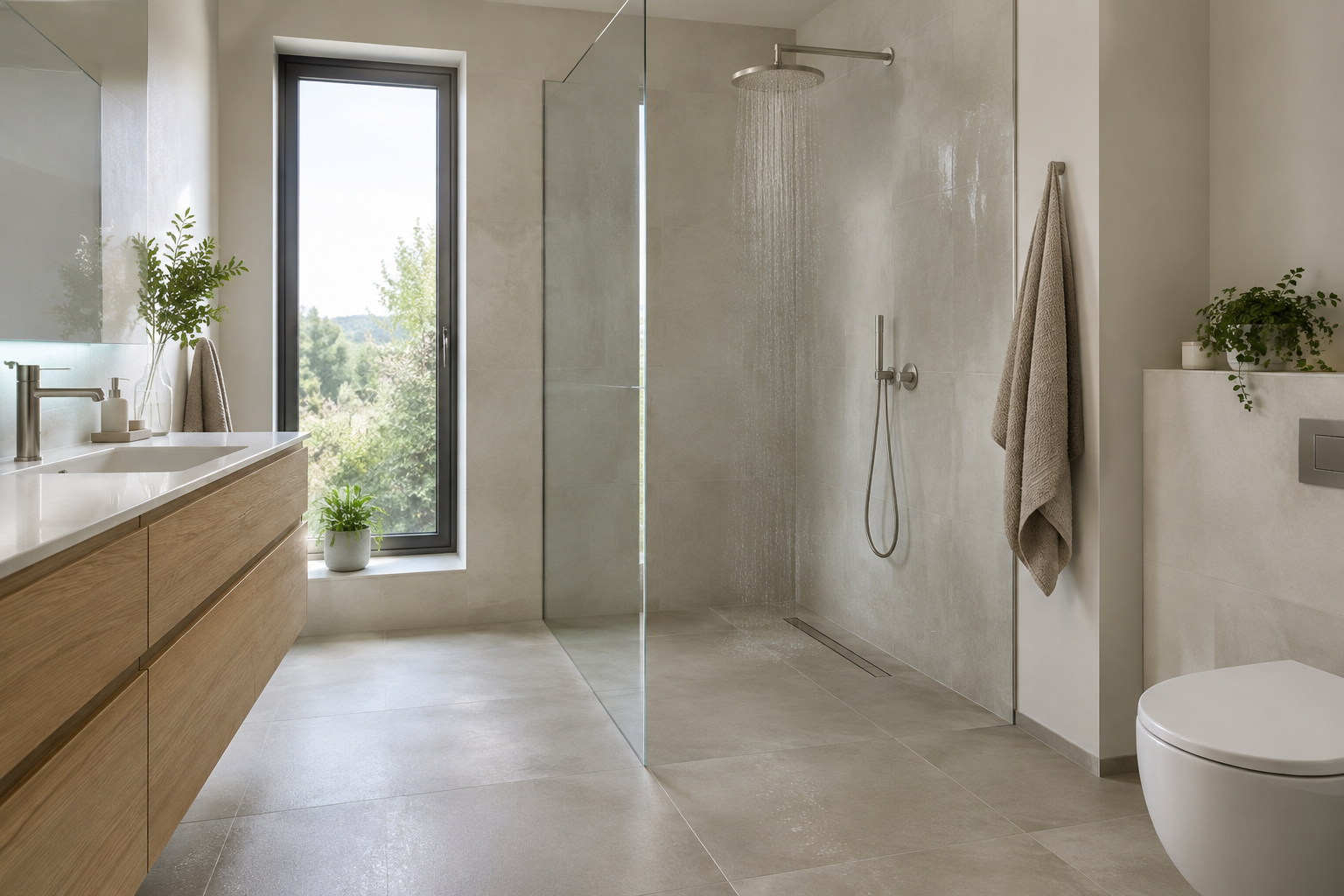
- R10 slip ratings: Offer the sweet spot between sure-footed grip and effortless cleaning in bathrooms, kitchens, and entryways. Leading examples include the modern, concrete-inspired Seramiksan Brugge Grey 30x60 ceramic floor tile, the classically patterned Civitas Lavagna 15x15 ceramic floor tile, and the inviting, neutral Disenia Beige 60x60 ceramic floor tile.
- Small formats for shower falls: In walk-in showers requiring precise slope-to-drain geometry, smaller tiles make it easy to create smooth, accurate falls without awkward cuts. Options such as the crisp Tundra White 10x10 ceramic floor tile and the urban Bien Polaris Cement 10x10 ceramic floor tile deliver clean lines and dependable traction.
Underfoot Comfort, Acoustics, and Underfloor Heating
The flooring you choose plays a significant role in ambient acoustics, heat distribution, and overall comfort underfoot.
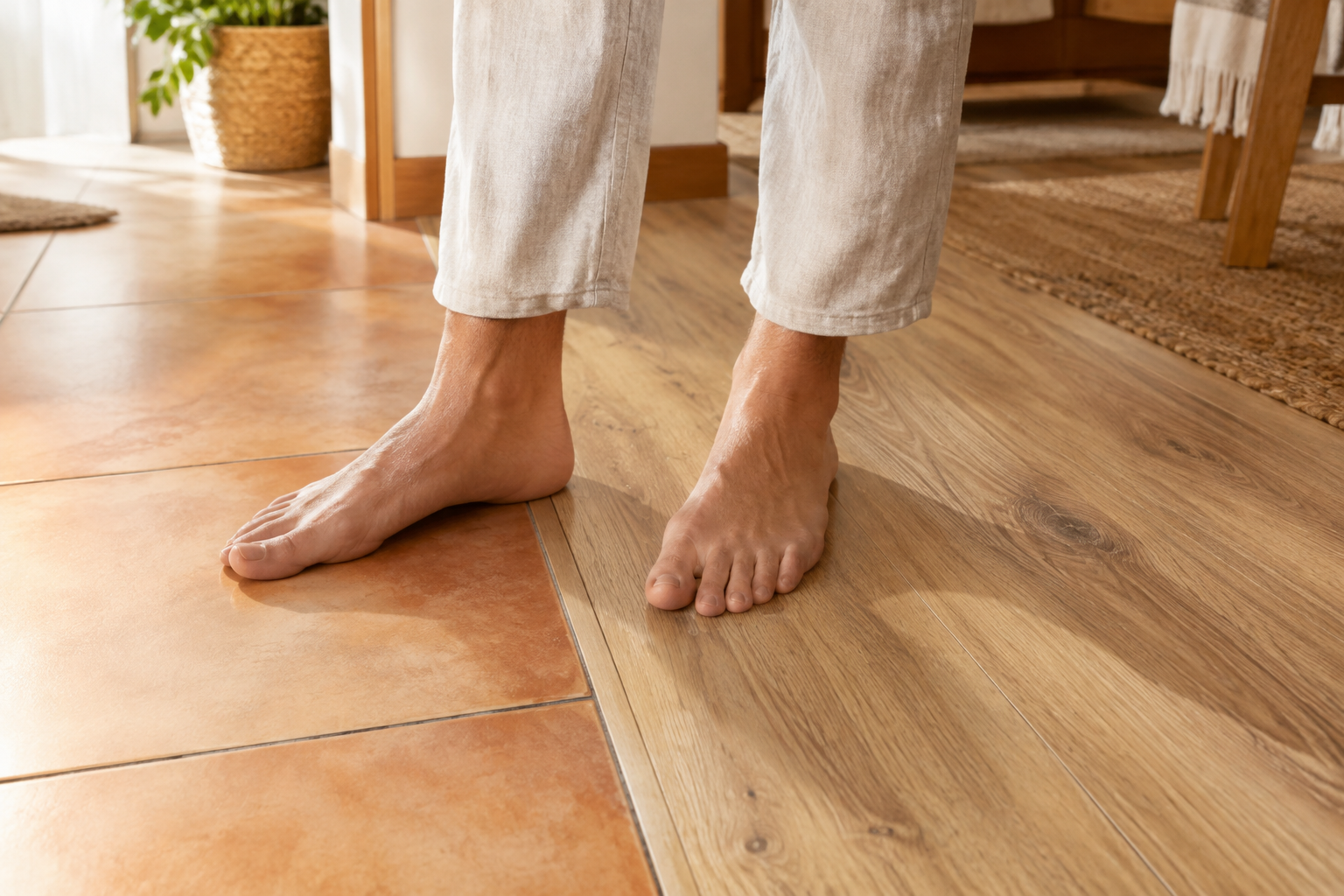
- Walking comfort and acoustics: Vinyl provides a slightly cushioned, resilient surface that naturally muffles footsteps and feels warm to the touch, even without heating. Ceramic tile is rigid, dense, and naturally cool. While exceptionally sturdy, standing on unheated tile for long stretches can feel fatiguing on bare joints and feet.
- Underfloor heating performance: Ceramic and porcelain tiles are exceptional thermal conductors that absorb, distribute, and hold heat far more efficiently than vinyl or wood-based materials. As detailed in our guide on underfloor heating in the bathroom: installation and benefits, radiant systems provide even thermal comfort, and tiled floors stay warm long after the thermostat clicks off. Vinyl, on the other hand, comes with strict temperature limits (typically capped at around 27 °C) to prevent the planks from softening, cupping, or warping.
Cleaning, Maintenance, and Repairs
Day-to-day cleaning is straightforward for both surfaces, but long-term upkeep and repair procedures look quite different.
- Daily cleaning: A regular pass with a vacuum and a damp microfiber mop keeps either floor looking its best. Vinyl requires gentle care—abrasive powders, rough scrubbing pads, and harsh chemical solvents will dull or strip its wear layer. Ceramic tile is far more resilient, withstanding acidic and alkaline detergents, boiling water, and steam cleaning without issue.
- Grout care: Vinyl installs without cementitious joints, eliminating a common magnet for grime. Tiled installations, however, benefit significantly from sealing the cement grout lines with an impregnating stain barrier. For in-depth advice, consult the ultimate guide to installing and maintaining ceramic tiles.
- Fixing damage: If a vinyl plank is gouged or punctured, you can score it with a utility knife, heat it up to loosen the adhesive or unclick it, and drop in a replacement. Replacing a cracked ceramic tile requires scraping out the surrounding grout, breaking out the broken tile, clearing away the old mortar bed, and setting a new tile with fresh adhesive and grout.
Cost Comparison and Installation Considerations
The true cost of any floor encompasses both the purchase price of the material and the labor required to fit it.
- Material prices: Quality vinyl flooring typically ranges from €15 to €45 per m². Ceramic and porcelain tiles span a broader spectrum: dependable floor tiles start around €15/m²—such as the stone-look Limestone Beige-Grey 60x60 ceramic floor tile—while premium, large-format designer slabs can run €50 to €80/m² and up.
- Installation demands: Click-lock vinyl goes down quickly and cleanly, making it a favorite for DIYers. Installing ceramic tile demands meticulous prep, precision subfloor leveling, thin-set application, and clean grouting. As highlighted in our breakdown of how much it costs to tile a bathroom, final tiling expenses depend heavily on substrate prep, layout complexity, tile dimensions, and waterproofing needs.
Vinyl vs. Ceramic Tile: Quick Comparison
| Feature | Vinyl Tile (LVT) | Ceramic Floor Tile |
|---|---|---|
| Lifespan | 15–30 years | 30–50+ years |
| Water Resistance | Planks are waterproof; seams can leak | 100% waterproof when installed with a membrane |
| Underfloor Heating | Compatible, but with strict temperature caps | Outstanding thermal conductivity and heat retention |
| Comfort & Sound | Soft, quiet underfoot, naturally warm | Rigid, cool to the touch without heating |
| Wear & Durability | Prone to deep scratches and heavy point loads | Highly scratch- and fire-resistant (PEI 3–5) |
| Installation | Fast and straightforward (DIY-friendly) | Requires skilled labor, specialized tools, and prep |
When to Choose Vinyl vs. Ceramic Tile
Choosing the right material comes down to the room's moisture levels and expected foot traffic:
- Choose vinyl for bedrooms, home offices, and living rooms where you want warmth underfoot, sound dampening, and a low-profile installation over a level subfloor.
- Choose ceramic tile for entryways, mudrooms, kitchens, bathrooms, laundry areas, and commercial premises. Ceramic easily shrugs off grit, standing pools of water, muddy boots, pet claws, and heavy cleaning routines. For more design inspiration, check out our guide to choosing ceramic tiles for your home: where practicality meets style.
Finding the Right Flooring Solution for Your Home
New flooring is an investment that shapes how your home looks, feels, and functions every day. Before ordering materials, review our practical guide on how to plan your ceramic tile purchase to calculate square footage, waste margins, and setting materials accurately.
Explore the comprehensive collection in our tiles catalog, or stop by the VIPEX showroom to speak with our specialists and find the perfect match for your design vision.