


Rattan Outdoor Furniture: How to Choose the Right Set for the Northern Climate
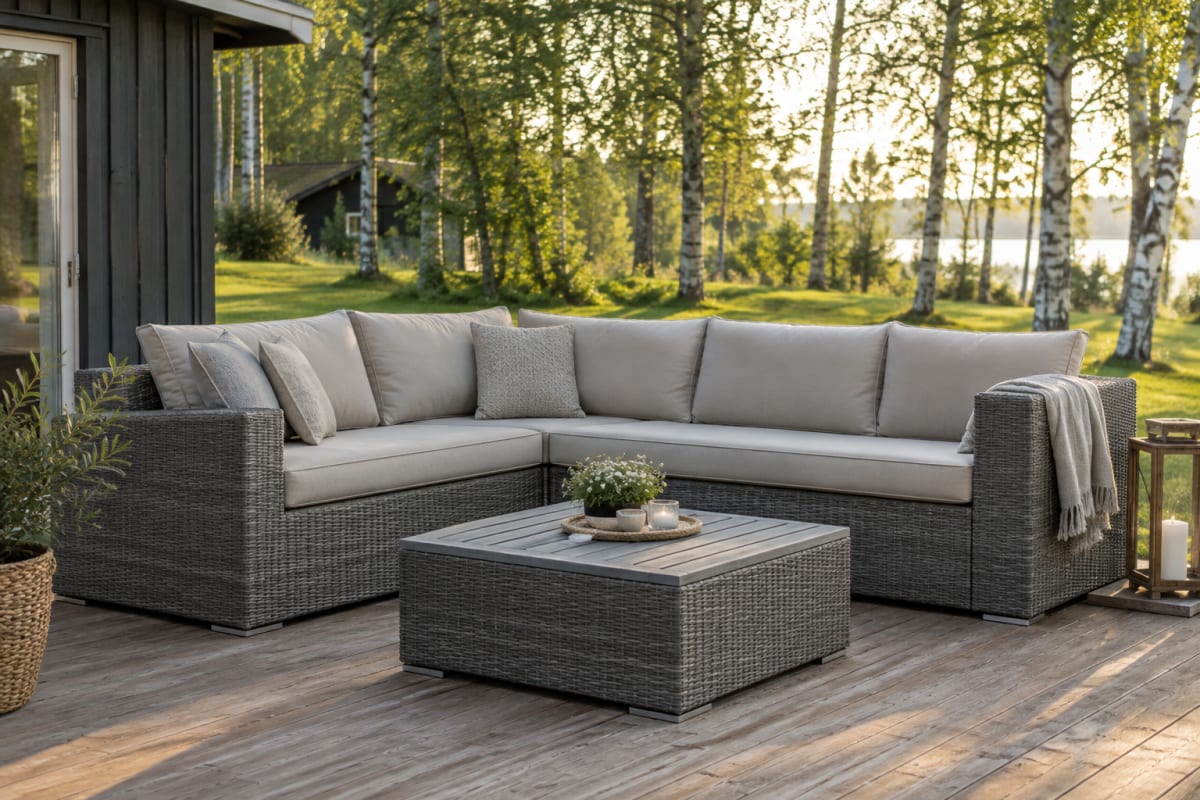
Did you know that most “rattan” outdoor furniture contains no actual rattan? On an open patio, synthetic weave is your only realistic option—and even then, not all synthetic materials are created equal. The difference between a set that falls apart after two or three seasons and one that lasts a decade comes down to the weave polymer, frame construction, and winter care.
The short version: For outdoor use, always choose HDPE polyrattan over an aluminium frame. Keep natural rattan indoors or on a sheltered veranda, and avoid PVC weaves entirely. When winter arrives, store your set in a dry, unheated indoor space and bring all cushions inside.
| Material | Best Suited For | Estimated Outdoor Lifespan | Primary Risk |
|---|---|---|---|
| Natural rattan | Indoors, covered verandas | Unsuitable for long-term outdoor exposure | Mould, cracking, UV degradation |
| PVC weave | Best avoided outdoors altogether | 1–3 years | Turns brittle from cold and UV exposure |
| HDPE polyrattan | Open patios, gardens | 8–15+ years | Inferior polymer blends and weak frames |
Estimated lifespans reflect retailer and manufacturer estimates. Treat them as general guidelines rather than formal industry guarantees.
Natural Rattan vs. Polyrattan: What’s the Difference?
Natural rattan is harvested from the climbing stems of tropical palms in the Calamoideae subfamily, primarily from the genus Calamus. As noted by the Food and Agriculture Organization (FAO), rattan contains high concentrations of starch, making it particularly prone to fungal decay and insect infestations.
Left outdoors, it succumbs to three main vulnerabilities:
- Rain and moisture: Porous fibres soak up water, swell, and quickly develop mould and mildew.
- UV radiation: Direct sunlight saps natural oils from the fibres, turning them brittle and causing colours to fade.
- Frost: Water trapped within the fibres freezes and expands during winter, triggering deep structural cracks.
Indoors or under light, sheltered use, natural rattan can easily last 5 to 10 years. An Estonian summer—marked by heavy downpours and chilly nights—is far from light use. If you love the organic look of natural rattan, keep it in a glazed sunroom or covered porch where driving rain will never touch it.
Polyrattan (also marketed as synthetic rattan, resin weave, or PE rattan) consists of extruded synthetic strands hand-woven around a structural frame. It delivers the same classic texture, but because the fibres are non-porous, they handle exposed weather far better. In practice, whenever contemporary outdoor furniture is labelled as "rattan," it almost invariably means polyrattan.
HDPE vs. PVC: The Weave Material Determines Lifespan
Synthetic rattan is not a one-size-fits-all material. Budget sets often use polyvinyl chloride (PVC), whereas premium outdoor furniture relies on high-density polyethylene (HDPE).
PVC depends on chemical plasticisers to keep its strands supple. Over time, UV rays draw these plasticisers out, leaving the material stiff and fragile. Industry specialists and retailers note that PVC weaves frequently crack and unravel after just two or three seasons. Freezing temperatures accelerate this process, making PVC exceptionally brittle.
HDPE, on the other hand, has UV inhibitors compounded directly into the polymer matrix during extrusion, rather than sprayed on as a surface treatment. It resists impacts and remains supple in sub-zero temperatures. Manufacturers estimate that UV-stabilised HDPE on an aluminium frame can comfortably last 10 years or more. There is an environmental upside, too: HDPE (resin identification code 2) is widely recyclable, whereas PVC (code 3) is difficult to process and rarely accepted in recycling streams.
How to Spot the Difference in the Showroom
A label that merely says "polyrattan" tells you nothing about whether you are buying HDPE or PVC. Ask the retailer for the exact polymer specification, and inspect the furniture yourself:
- The bend test: A high-grade strand will bend a full 180° without leaving white stress marks or creases. If it feels rigid, slick, or glassy, it is an inferior blend.
- Core-dyed colour: Check any visible cut ends. The colour should run consistently through the entire strand. If the core is a different colour, the UV protection is only skin-deep.
- Weave density: Better furniture typically features 12 to 14 strands per 10 cm, compared to just 8 to 10 on economy models.
- Finished edges: Strand ends should be firmly anchored and tucked neatly out of sight. Exposed ends are where fraying and unravelling begin.
A dense, uniform weave and flexible, matte fibres are far more reliable markers of quality than any marketing tag.
Frames: Aluminium vs. Powder-Coated Steel
The weave provides the aesthetic, but the internal frame carries the structural load—and it is often the first component to fail.
Aluminium is naturally rust-resistant. In damp coastal conditions, it may develop a benign, chalky oxidation layer, but it will never produce rust. It is also roughly three times lighter than steel, allowing you to easily reposition dining chairs or sun loungers across the patio.
Powder-coated steel is heavier and cheaper to manufacture. However, if the finish chips or is applied too thinly at the factory, moisture will reach the bare metal beneath. Because the frame is concealed underneath the weave, rust usually goes unnoticed until brown stains seep through the strands and ruin your cushions. On budget pieces, internal steel frames can corrode severely within two or three seasons.
Rule of thumb: If your set will stay on an open patio exposed to rain, insist on an aluminium frame. Reserve steel-framed sets for covered terraces, and inspect the protective finish for chips every spring.
Weave Profiles: Flat, Round, or Half-Round
The cross-section profile of the synthetic strand affects both aesthetics and durability.
- Flat weave is the most common and cost-effective style. When woven loosely, it tends to lose tension faster, and scratches show more readily on its flat surface.
- Round weave uses thicker, solid cord-like fibres that hold their shape exceptionally well under heavy use. It is ideal for active households where chairs are frequently dragged across stone pavers.
- Half-round weave strikes a practical middle ground, providing dimensional texture and robust strength without the added weight of a full round profile.
No profile is inherently superior on its own. Longevity depends on material grade and weave tension: a tightly woven flat HDPE strand will easily outlive a loosely wrapped round PVC cord.
Set Configurations and Load Capacities
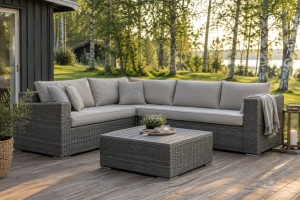
Polyrattan furniture generally falls into three configurations: dining sets (full-height tables paired with dining chairs), corner modular sets (L-shaped sectionals, footstools, and mid-height casual dining tables), and lounge sets (deep armchairs, two- or three-seater sofas, and low coffee tables). Corner sets are especially popular for their versatility, serving comfortably for both meals and relaxed entertaining.
Always check the manufacturer’s rated load capacity. High-quality polyrattan seating is typically certified for 110 to 160 kg per seat. Tables have much lower thresholds, usually between 50 and 100 kg.
Practical example: For everyday dining, a 110 kg rating per chair is sufficient. However, if your family often uses ottomans as impromptu seats or perches on sofa arms, look for a 160 kg rating. Never stand on a 50 kg glass-topped table to hang lights or wash windows; table frames are not engineered for concentrated point loads.
Cushions: Fabric and Filling Matter
Cushions dictate sitting comfort, but they also determine whether your furniture still looks fresh after a few seasons outside.
- Cushion cores: Choose quick-drying, open-cell foam. Water runs straight through it and air circulates freely, eliminating trapped moisture and preventing mildew. After heavy rain, tilt cushions on edge so water can drain out through the seams.
- Fabrics: Solution-dyed acrylic is the premier choice for all-day sun exposure. Industry testing shows that solution-dyed acrylic can endure around 1,500 hours of direct UV exposure before fading, compared to roughly 1,000 hours for solution-dyed polyester. Standard polyester remains a budget-conscious alternative best suited to covered verandas.
- Drying soaked cushions: Unzip the covers and stand the cushions vertically with the zips facing downward to let water drain out.
During prolonged rain, pack your cushions into a waterproof deck box or bring them indoors. Even top-tier outdoor fabrics will develop mildew if the foam core remains waterlogged for days on end.
Seasonal Cleaning and Maintenance
Unlike natural timber, polyrattan never requires oiling, staining, or sealing. However, pollen, dirt, and airborne debris collect within the weave over time, creating a surface where mould can take hold.
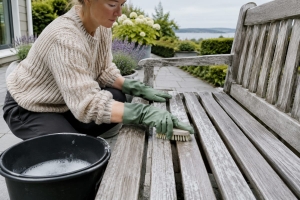
- Wipe furniture down with a damp cloth every two to four weeks in high season, and perform a deep clean at least twice a year.
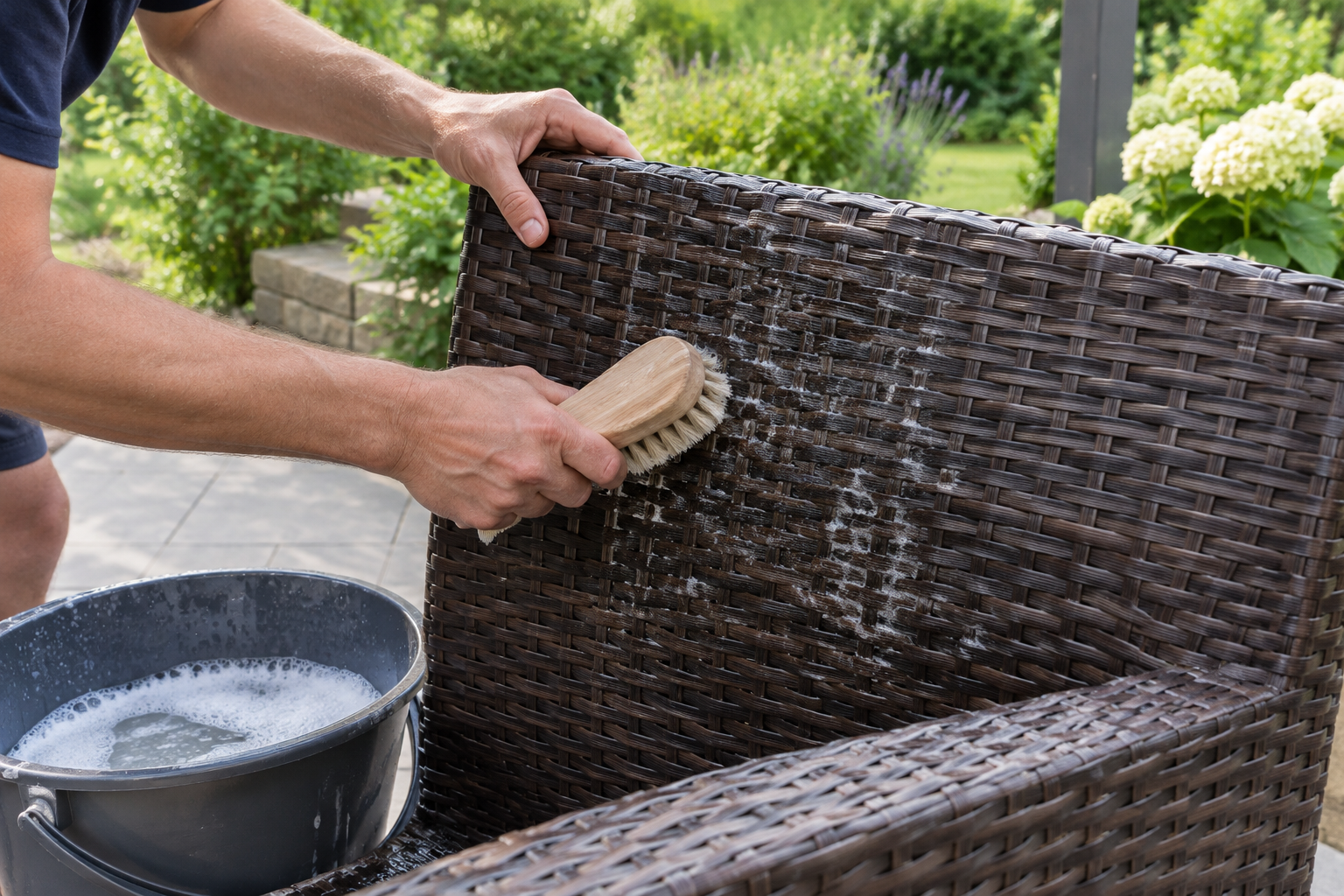
- Wash using warm water, a mild dish soap, and a soft-bristled nylon brush—never steel wool or stiff abrasive pads.
- Rinse thoroughly with a gentle spray from a garden hose.
- Allow the set to dry completely in the open air.
- If mildew spots appear, treat them with a mild white vinegar and water solution, then rinse well.
Never use a pressure washer on woven furniture. High-pressure water jets can slice through the strands, unravel the weave, and void your warranty. Likewise, avoid chlorine bleach, solvents, abrasive scouring creams, and silicone shine sprays, all of which degrade the polymer's protective outer layer.
For broader advice on preserving wood, metal, and performance fabrics, consult our guide to outdoor furniture care and winter storage.
Winter Survival: Can Polyrattan Stay Outdoors in the Cold?
Spec sheets often claim synthetic rattan withstands temperatures from –20 °C to +60 °C (or even +80 °C). These ratings come from static laboratory tests and do not reflect real-world winter weather. A northern winter brings a volatile mix of repeated freeze-thaw cycles, sleet, heavy snow loads, and hard frosts.
What sub-zero cold does to polyrattan:
- Polyethylene fibres contract and stiffen as temperatures drop, losing their natural elasticity.
- Consumer testing organisations and gardening experts advise against sitting on frozen polyrattan furniture or resting heavy items on it, as the rigid strands can snap under load.
- Outdoor power equipment manufacturer Stihl specifically cautions against leaving polyrattan outdoors through the winter to prevent surface cracking, greying, and brittleness. Any seasonal washing must be done while night-time temperatures remain safely above freezing.
Your winter care routine:
- Clean and dry the furniture thoroughly in October before the first sustained frosts.
- Store cushions in a dry, heated or well-ventilated indoor space. Make sure they are bone dry before storing, and avoid sealing them in non-breathable plastic bags.
- Move the frames into a garage, shed, or basement.
- If indoor storage is not an option, drape the set with a breathable, purpose-made outdoor furniture cover (never plain polythene sheeting), and prop the feet up on timber blocks so they do not sit in standing water or frozen slush.
Providing dry, frost-free winter storage extends the life of any polyrattan set, and for budget models, it is essential.
When Rattan Isn’t the Best Choice
Polyrattan is versatile, but it is not the ideal solution for every patio. Consider an alternative material if:
- You have no winter storage space and your patio furniture must stay outdoors year-round.
- Your patio sits in an exposed, windy location, where lightweight woven seating could be tipped over by strong gusts.
- You prefer virtually zero maintenance, as the grooves between woven strands require regular dusting and brushing out.
In these cases, powder-coated aluminium, marine-grade stainless steel, or solid teak make more practical investments. We compare these options in detail in our guides to weather-resistant outdoor furniture materials and how to choose outdoor furniture built to last.
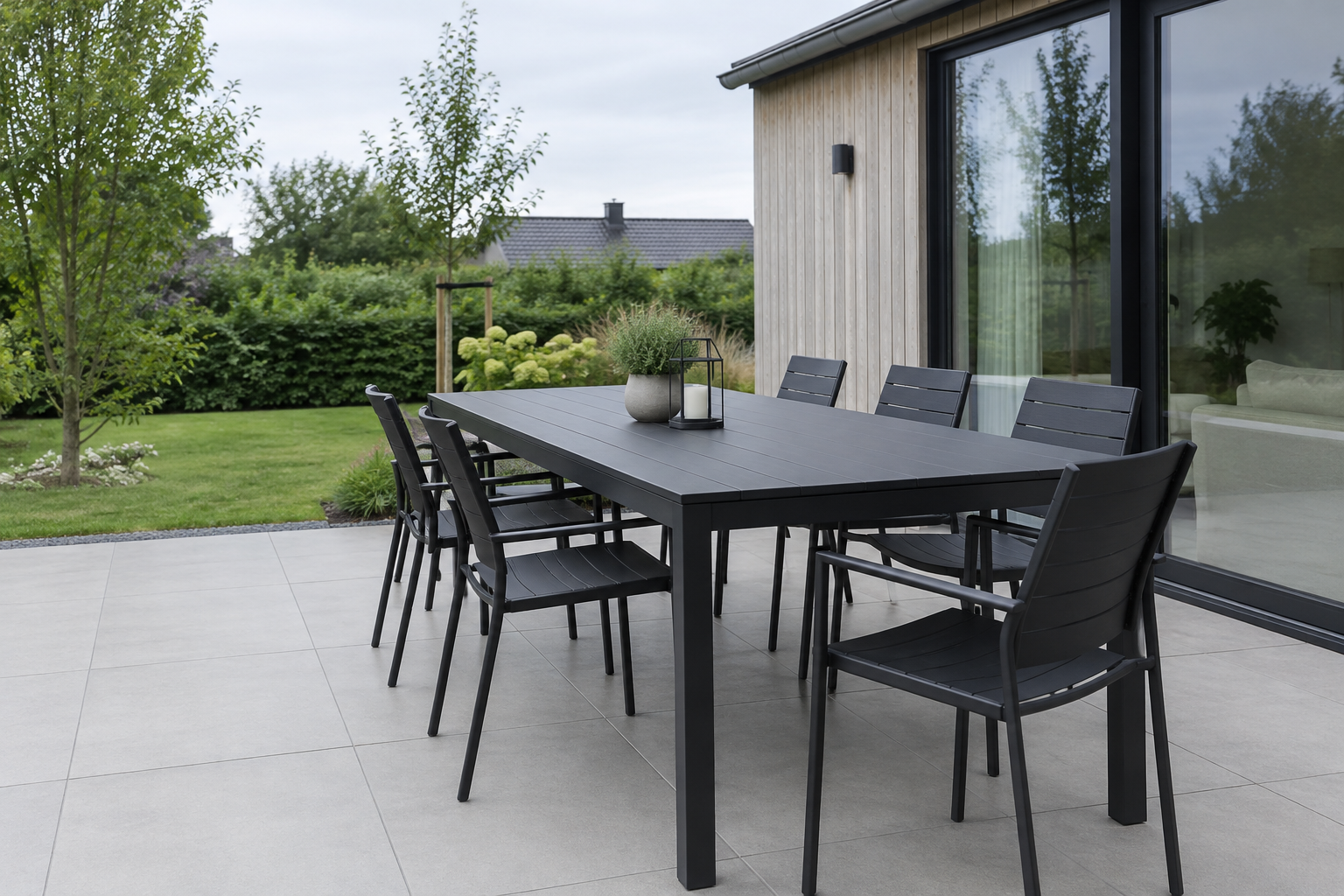
Vipex’s range of outdoor furniture features heavy-duty aluminium designs engineered for Northern European conditions. For instance, the Vipex Home A005 chair utilizes a precision-welded aluminium frame that shrugs off sun, rain, and snow without maintenance headaches. If you are working with limited square footage, see our practical tips on choosing furniture for a small patio. For help coordinating frame colours with your exterior architecture, read our recommendations on choosing outdoor furniture colors.
Rattan-style outdoor furniture can provide many seasons of comfortable outdoor living—as long as you invest in high-density polyethylene (HDPE) on an aluminium frame, and keep the set dry over winter. Before buying, test the flexibility of the weave, verify the polymer type, and check the load capacity per seat. If you prefer low-maintenance furniture that can braves the elements all year long, browse Vipex’s outdoor furniture selection online or stop by our Tallinn showroom at Kriidi 10 to inspect the finishes in person.