


How to Clean Outdoor Furniture: A Guide to Caring for 7 Key Materials
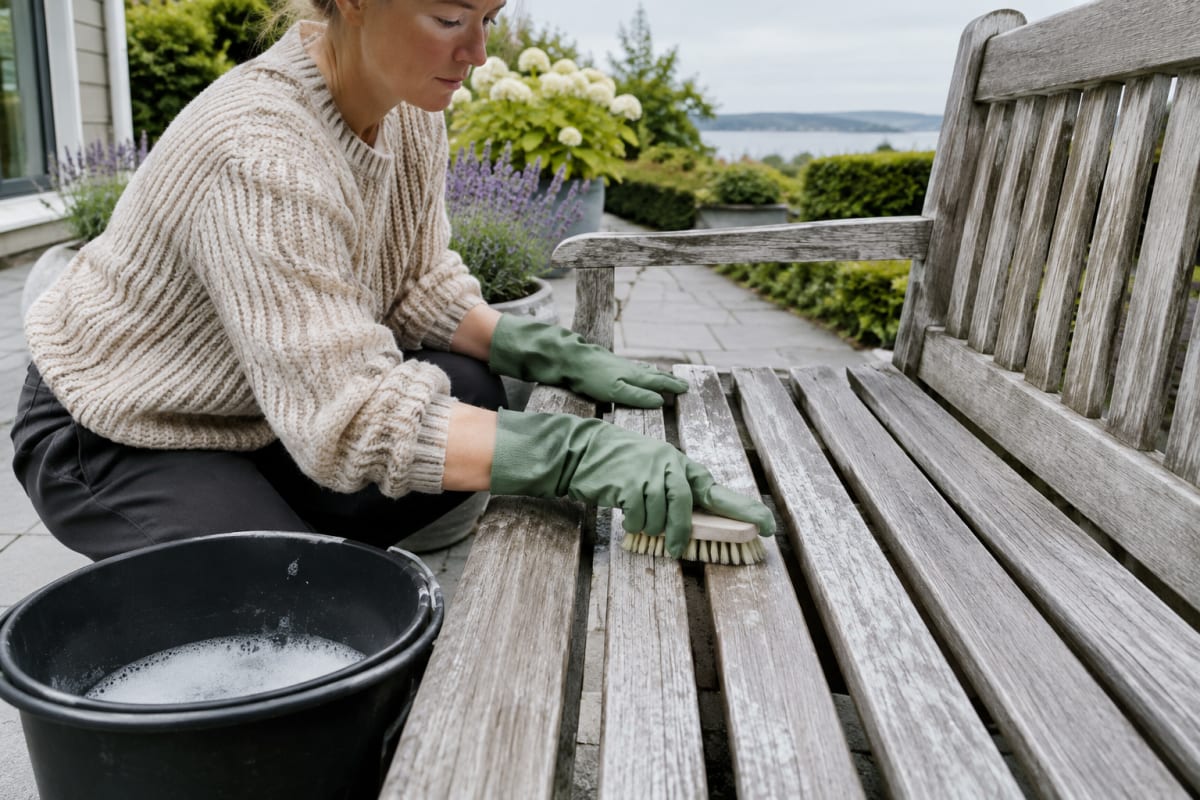
A pressure washer can inflict more damage on a teak bench in ten seconds than an entire winter left out in the elements. When it comes to outdoor furniture, brute force is rarely the answer; longevity comes down to matching the cleaning technique to the specific material.
Here is how to clean every common patio furniture material safely, thoroughly, and effectively.
The short version: For almost any outdoor piece, all you really need is lukewarm water, a mild dish soap, and a soft brush or microfiber cloth. Always finish with a thorough freshwater rinse and let the piece dry completely. Reserve abrasive scrubbers, wire wool, and bleach for rare, specific tasks—and step away from the pressure washer unless the manufacturer explicitly gives you the green light.
| Material | Routine Cleaning | Heavy Grime or Mildew | What to Avoid |
|---|---|---|---|
| Teak and hardwoods | Mild soapy water; scrub with a soft brush along the grain | Specialized teak cleaner; light hand-sanding | Pressure washers, conventional varnish, paint |
| Powder-coated aluminum | Mild soapy water, microfiber cloth | 1:1 solution of white vinegar and water | Steel wool, abrasive scourers |
| Synthetic wicker (HDPE) | Vacuum or brush loose dirt, then wash with soapy water | Medium-pressure garden hose rinse | Bleach, tugging or yanking woven strands |
| Molded plastic | Mild soapy water | Baking soda paste; dilute bleach solution if required | Strong bleach on colored finishes |
| Wrought iron and steel | Mild soapy water | Wire brush, rust converter, metal primer, and touch-up paint | Painting directly over active rust |
| Glass, ceramic, and HPL | pH-neutral cleaner and a soft cloth | Multi-surface spray cleaner | Abrasive creams and scourers |
| Outdoor fabrics and cushions | Mild soapy water, sponge | Diluted bleach and mild soap solution (fabric permitting) | High heat, tumble drying, pressure washers |
A Universal Cleaning Routine for Patio Furniture
Most deep cleaning happens twice a year: in spring, when pulling furniture out of storage, and in autumn, before packing it away. The workflow remains virtually identical for both:
- Clear the surface: Remove all cushions and accent pillows. Vacuum or brush away loose dirt, dust, cobwebs, and dried leaves, paying extra attention to joints and woven crevices.
- Pre-rinse: Spray the frames down with an open garden hose. Rinsing first floats away surface grit that would otherwise scratch finishes once you start wiping.
- Wash gently: Work in sections using lukewarm water mixed with a mild dish soap. Use a soft-bristled brush, sponge, or microfiber cloth suited to the surface.
- Rinse clean: Hose down the furniture thoroughly with clean water. Dried soap residue leaves an invisible film that attracts fresh dirt like a magnet.
- Dry: Wipe metal frames down with a clean, lint-free cloth to prevent water spots, and allow porous materials to dry completely in the open air.
Vipex's outdoor furniture care guidelines recommend this exact approach: stick to gentle tools and mild soapy solutions, steering well clear of abrasive scourers or harsh bleaching agents on painted and metallic surfaces to safeguard the finish. When introducing a stronger cleaning agent, always patch-test it on an inconspicuous spot first—such as the underside of a tabletop or the inner face of a rear chair leg.
Teak and Other Hardwoods
Dense hardwoods like teak are packed with natural protective oils, which means they rarely require aggressive chemical treatments. Furniture maker Gloster advises deep cleaning teak once or twice a year; for regular upkeep, plain water and a mild detergent are all it takes.
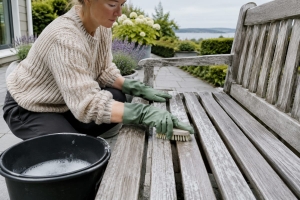
Always scrub along the grain, never across it. Scrubbing across the grain grinds surface grime deeper into the pores, and stiff bristles can leave permanent cross-grain scratches.
Never blast teak with a pressure washer. Manufacturers consistently caution that high-pressure water strips away the wood's softer summer growth, raising the grain and leaving behind a rough, furrowed texture that traps dirt even faster. If your wood’s grain has already lifted, a gentle hand-sanding with fine-grit sandpaper will smooth it back down.
Embracing the Silver Patina vs. Keeping the Golden Glow
Exposed to sunlight and rain, teak naturally patinas into a soft, silvery gray as surface pigments weather away. Premium outdoor retailer AuthenTEAK notes that this transformation usually takes between 5 and 12 months. This shift is purely aesthetic; it has zero impact on the structural integrity or rot resistance of the timber.
Decide early on which look you prefer:
- To maintain the weathered silver patina: Clean the wood exclusively with mild soap and water. Casual furniture manufacturer Kingsley Bate warns that bleach, abrasive pads, and chemical cleaners will strip this natural patina away and expose the warmer wood beneath.
- To restore the rich golden brown: Apply an oxalic acid-based teak cleaner. These brighteners work much like a mild chemical sanding step. Follow the manufacturer's dwell-time and dilution instructions strictly, wear protective rubber gloves, and rinse the wood thoroughly with clean water.
- To lock in the restored color: Apply a dedicated teak sealer to clean, bone-dry wood. Gloster points out that sealers alter appearance rather than structural durability, and they do require periodic reapplication.
Steer clear of conventional outdoor paints and varnishes. Teak’s natural oil reserves prevent standard topcoats from bonding properly, causing paint or varnish to bubble and flake before long.
Powder-Coated Aluminum
While aluminum will never rust, its powder-coated shell keeps it looking sharp and protects the base metal from surface oxidation. Caring for aluminum is primarily about shielding that protective layer.
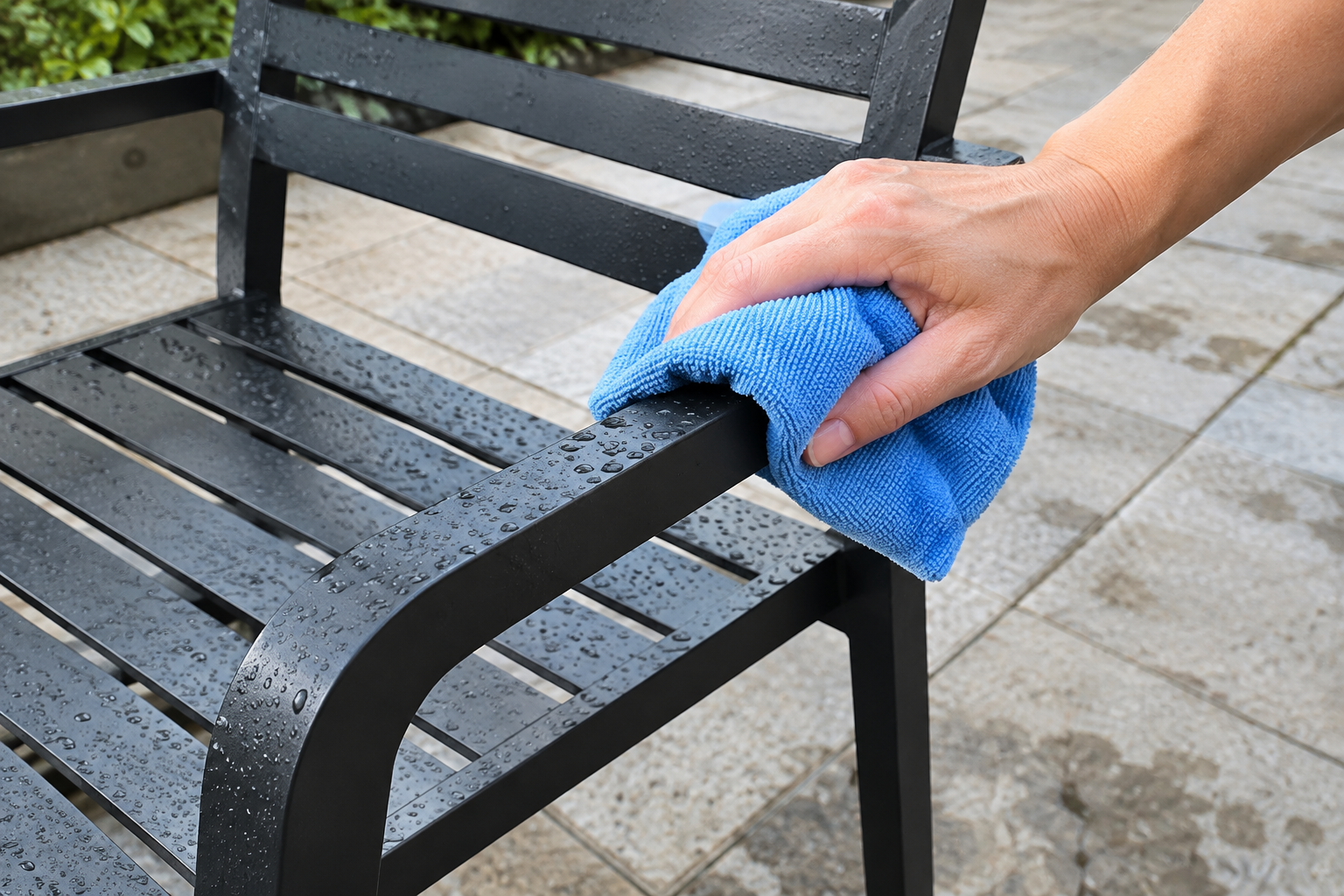
Wipe down frames with a soft sponge or microfiber cloth soaked in mild soapy water. Gloster suggests drying aluminum pieces immediately with a chamois or automotive drying towel to keep mineral spots from forming. Never use steel wool or scouring pads—fine micro-scratches breach the coating and invite moisture underneath.
If you notice a chalky white film—a telltale sign of surface oxidation—Restoration Hardware recommends wiping the area with a 1:1 mixture of white vinegar and water. Never leave vinegar to sit on the finish: apply it with a cloth, rub the chalky residue away, rinse immediately with clean water, and wipe dry.
To build an extra layer of defense against the elements, treat smooth aluminum surfaces with an automotive-grade wax. Brands like Bernhardt and POLYWOOD recommend applying a non-abrasive, silicone-free car or marine wax once or twice a season. The wax creates a hydrophobic barrier, making water bead up and turning routine wipe-downs into a breeze.
This low-maintenance routine is ideal for pieces like the black aluminum Vipex Home A005 armchair and coordinating A007 table from the Vipex outdoor furniture range. A quick soapy wash, a towel dry, and an end-of-season check for surface chips are all it takes to keep them looking showroom-fresh. If you spot a nick or scratch in the coating, dab it with touch-up paint before winter sets in.
Synthetic Wicker (Resin Weave / HDPE)
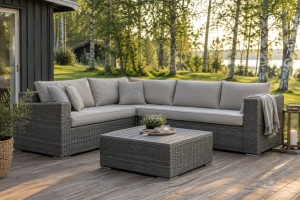
Modern all-weather wicker is crafted from high-density polyethylene (HDPE)—a non-porous, UV-stabilized synthetic material engineered to withstand rain and sun. The challenge lies in its intricate texture: dust, pollen, and debris easily settle deep into the weave where a flat cloth cannot reach.
Begin by vacuuming the frame with a soft brush attachment, or sweep it out with a handheld brush. Next, wash down the weave using mild soapy water and a soft-bristled brush, then rinse off with a garden hose. Garden furniture specialist Kettler recommends using medium hose pressure and cautions that bleach or gritty cleaners can degrade the synthetic strands over time. Take care not to pry, stretch, or pull at individual strands while scrubbing, as this can loosen the tension of the weave.
Guidance on pressure washers varies across manufacturers. While Kettler advises against them entirely, Restoration Hardware allows for low-pressure washing up to 1,200 PSI (83 bar), provided the nozzle remains at least 30 inches (around 75 cm) away from the surface. Because weave tension and fastening methods vary widely between brands, always check your specific product manual. When in doubt, a regular garden hose is the safer bet.
Molded Plastic Furniture
Resin and molded plastic furniture handle water effortlessly, but unsealed plastics can grow dull, chalky, and prone to staining over time. Mild soapy water handles routine grime without an issue.
For ground-in dirt and barbecue grease, mix baking soda with a little water to form a thick paste. Rub the paste onto the stain, let it rest for 10 to 15 minutes, scrub gently with a soft brush, and rinse clean. If you are dealing with stubborn mildew on white plastic, a mild solution of 1 part household bleach to 10 parts water can help lift the spores. Always wear protective gloves, shield your eyes, and rinse thoroughly.
Only use bleach if the manufacturer explicitly approves it. Bleach can easily bleach or mottle colored plastics and will damage neighboring fabric cushions or metallic hardware. Never mix bleach with ammonia or other household cleaning agents.
Wrought Iron and Painted Steel
Cleaning steel and wrought iron furniture is as much about preventative inspection as it is about tidying up. Washing away dirt exposes early signs of surface rust before they turn into structural damage.
Clean frames with warm soapy water or a 1:1 solution of water and white vinegar. If you come across patches of rust, tackle them promptly:
- Scrape off loose rust flakes and blistered paint using a stiff wire brush.
- Sand the immediate area smooth, working from a medium grit (P80) down to a fine grit (P120) to feather the edges.
- Treat stubborn pitting with a rust-converting primer.
- Wipe the area clean, let it dry completely, and brush on a quality rust-inhibiting metal primer.
- Finish with two light coats of outdoor-rated metal enamel for durable weather protection.
Never paint over active rust; corrosion will continue to eat into the metal beneath the fresh paint layer. Pick a dry, temperate day for painting: avoid working when relative humidity tops 80%, when temperatures drop below 10 °C (50 °F), or under intense direct sunlight, which can cause the paint to cure too quickly and blister.
Glass, Ceramic, and HPL Tabletops
Because patio dining tables see daily action with food, drinks, and sunscreen, they inevitably need more frequent cleaning than the chairs around them.
- Glass: Clean with a streak-free glass spray or a pH-neutral dish soap solution and a microfiber cloth. When spraying cleaner, avoid heavy overspray onto surrounding wood or powder-coated frames.
- Ceramic: Warm soapy water easily lifts grease and sticky spills. Gloster notes that high-fired outdoor ceramic absorbs practically zero water, making it naturally frost-proof, though regular wipe-downs are still needed to prevent greasy build-up.
- HPL (High-Pressure Laminate): Clean with a damp microfiber cloth and an all-purpose spray or mild soap. Keep in mind that not all interior HPL surfaces are UV- and weather-rated, so confirm your tabletop is certified for outdoor exposure.
If your outdoor entertaining area features tiled flooring, read our comprehensive guide to outdoor ceramic tiles for dedicated surface care tips.
Cushions and Outdoor Fabrics
Outdoor cushions bear the brunt of airborne dust, tree pollen, and seasonal damp. High-end patio cushions typically feature solution-dyed acrylics, and leading performance textile brand Sunbrella provides straightforward maintenance instructions:
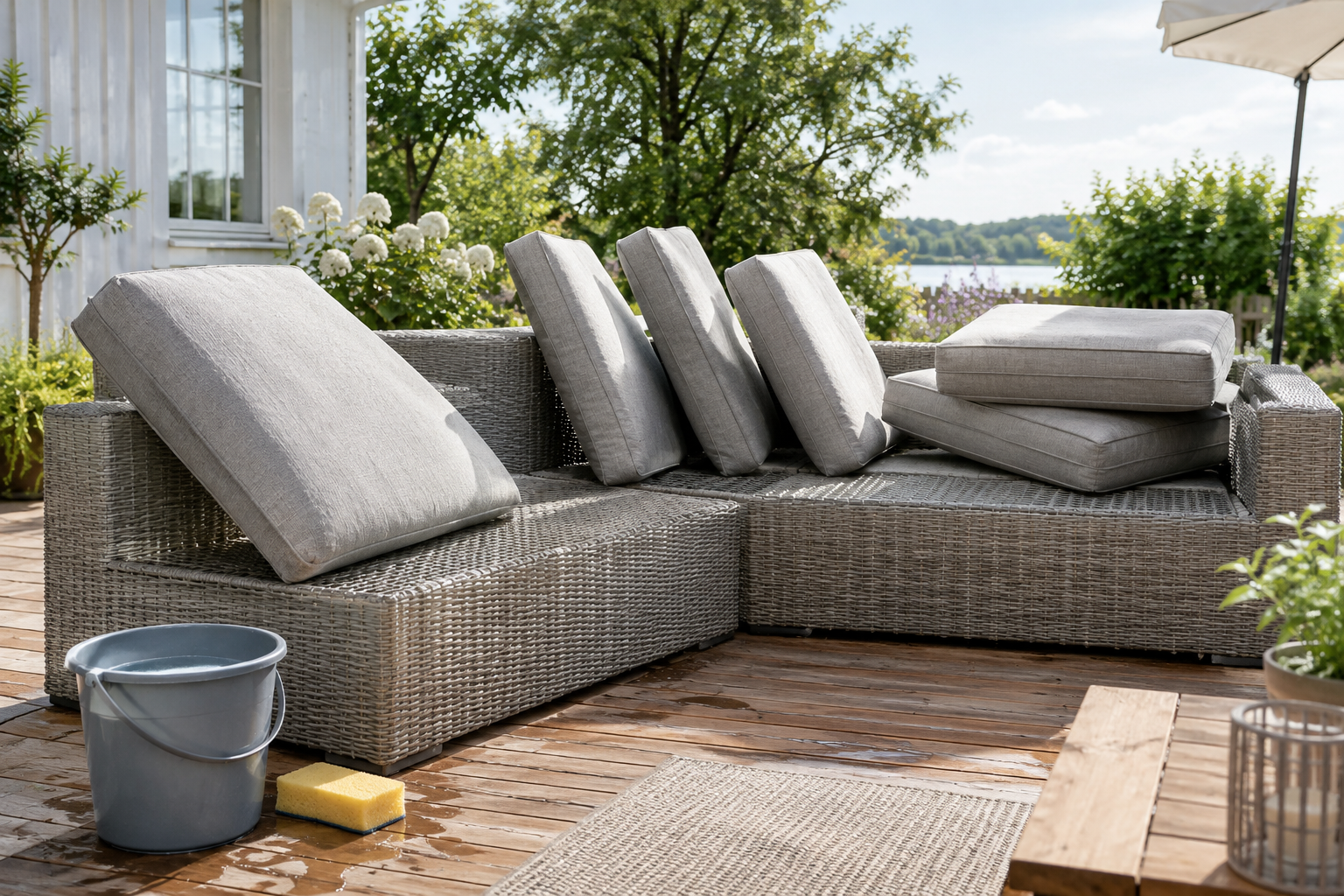
- Everyday cleaning: Dissolve roughly 60 ml (¼ cup) of mild liquid dish soap in 3.8 liters (1 gallon) of lukewarm water—roughly one tablespoon per liter. Work the solution into the fabric with a sponge or soft brush, rinse thoroughly until the water runs clear of suds, and let the cushions air-dry.
- Tackling mold and mildew: Performance fabrics do not promote mold growth on their own, but mold will feast on trapped dirt and pollen. Mix 240 ml (1 cup) of bleach and 60 ml (¼ cup) of mild soap into 3.8 liters (1 gallon) of water. Spray or sponge the mixture onto the fabric, allow it to soak for 15 minutes, rinse completely, and dry in the open air.
Stick strictly to cool or lukewarm water, avoid machine dryers, and never clean cushions with a pressure washer. Only apply bleach solutions to textiles verified as bleach-safe, and always test a hidden inner seam first. If cushion foam becomes waterlogged after a downpour, unzip the covers and stand the cushions upright on their corners so trapped water can drain away freely. Ensure the inner core is bone-dry before storing cushions away for the season.
Pressure Washers: When Are They Safe to Use?
While a pressure washer speeds up large jobs, it is also the single most common cause of accidental patio furniture damage. A reliable rule of thumb: unless your furniture manual explicitly recommends pressure washing, leave the machine in the shed.
- Teak, hardwood, cushions, and textiles: Never pressure-wash.
- Synthetic wicker: Only when permitted by the manufacturer, and strictly on low-pressure settings.
- Decking and resilient timber (when permitted): Keep pressure around 70–100 bar (1,000–1,500 PSI) using a wide 25° or 40° fan nozzle. Maintain a generous distance from the surface and test on an out-of-sight spot first.
Never use a narrow 0° or 15° pencil-point nozzle on timber, painted finishes, or resin. Remember that the water pressure hitting the surface increases exponentially the closer you bring the nozzle to the furniture.
Common Cleaning Mistakes to Avoid
- Skipping the initial dry-rinse. Scrubbing a dusty, sandy surface turns loose grit into sandpaper, scuffing clear coats and wood fibers. Always rinse with an open hose before wiping.
- Failing to rinse off soap residue. Dried detergent forms an invisible, slightly sticky film that pulls airborne dirt straight back down onto the surface. Always rinse with clean water until suds disappear.
- Using a single all-purpose cleaner across every piece. An acidic cleaner formulated to revive weathered teak will corrode aluminum and strip powder coating. Treat each material on its own terms.
- Covering damp furniture. Sealing damp furniture under airtight plastic sheeting creates an instant greenhouse, virtually guaranteeing heavy condensation, mildew blooms, and foul odors.
End-of-Season Prep for Winter Storage
In climates with freezing winters and autumn rains, seasonal cleaning is essential before furniture goes into hibernation. Wash and thoroughly dry every frame before packing it away; trapped moisture is an open invitation for surface mold, rust, and freeze-thaw damage. Store soft cushions, fabric canopies, and pillows indoors in a dry, ventilated room.
If your furniture stays outside over the colder months, invest in breathable, water-resistant furniture covers rather than wrapping frames in non-breathable plastic tarps. Elevate the center of the covers with a small prop so rainwater runs off instead of pooling on tabletops, and keep the lower hem slightly off the ground to encourage continuous airflow.
For an in-depth breakdown of off-season protection, take a look at our complete guide on protecting outdoor furniture from winter and moisture.
Great Outdoor Furniture Care Starts with the Right Knowledge
Your patio furniture’s lifespan relies far less on how vigorously you scrub and far more on choosing the right tools for the material. For almost any setup, a soft brush, warm soapy water, and a generous rinse with the hose will do the heavy lifting. Reserve stronger chemical solutions for isolated stains, and only use them when the material and manufacturer give you the go-ahead.
If you are planning an upgrade for your outdoor living space, look for low-maintenance materials that align with your lifestyle. Learn more about choosing weather-resistant outdoor furniture materials, and browse the curated Vipex outdoor furniture collection online or in person at our Tallinn showroom at Kriidi 10.