


Interior Design Trends 2026: Curating a Personalized and Timeless Home
Does your home truly reflect who you are, or is it merely a collection of outdated design "rules"? As we look toward 2026, interior trends are moving decisively away from clinical minimalism in favor of bold self-expression and tactile comfort. This new era of design sees natural elements converge with retro-inspired luxury to create spaces that feel both intentional and lived-in. Here are the dominant trends shaping the homes of 2026.
The Kitchen Evolution: Personality Over Uniformity
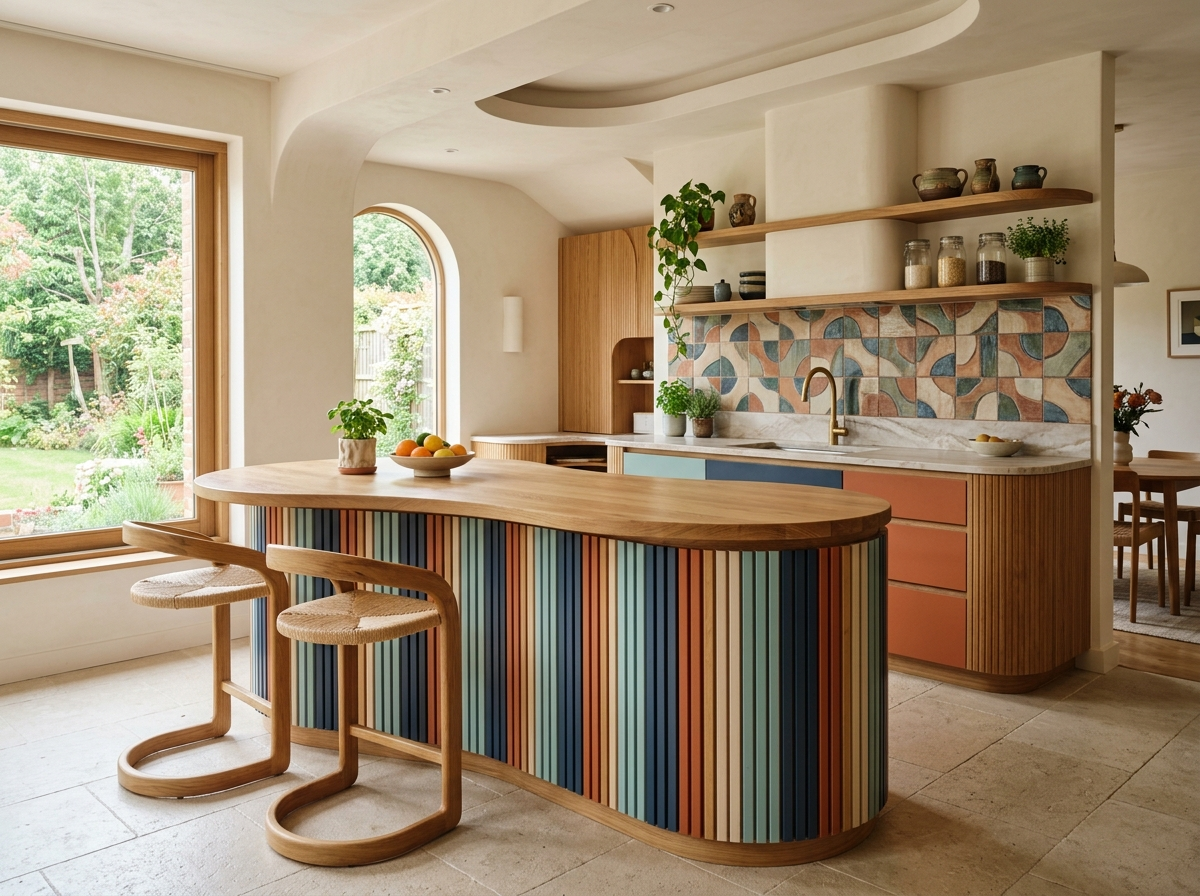
The era of the monochromatic, all-white kitchen is drawing to a close. Today’s homeowners are embracing color, varied textures, and bespoke details. Industry data supports this shift, with 71% of designers reporting an increased demand for highly personalized solutions. Vibrant kitchen islands and decorative ceramic tiles for backsplashes have become the new standard, transforming the kitchen into the home’s primary visual anchor.
Fluidity is also reclaiming the floor plan. Sharp, clinical angles are being replaced by organic lines, rounded corners, and curved islands that encourage a more natural movement through the space. While functionality remains the cornerstone of kitchen planning, it is now softened by warmer materials. The "transitional" style has emerged as a market leader—accounting for 25% of new designs—by masterfully blending classical elegance with modern simplicity.
A Renaissance of Materiality and Wabi-Sabi Soul
Current material choices prioritize authenticity and the physical sensation of touch. There is a growing reverence for "perfect imperfection," a core tenet of the Japanese philosophy of Wabi-Sabi. This aesthetic celebrates the passage of time and the beauty of the natural world, favoring raw textures like limewash plaster, clay, linen, and weathered wood. The resulting palette is grounded in matte, soulful tones like sage, olive green, and rust.
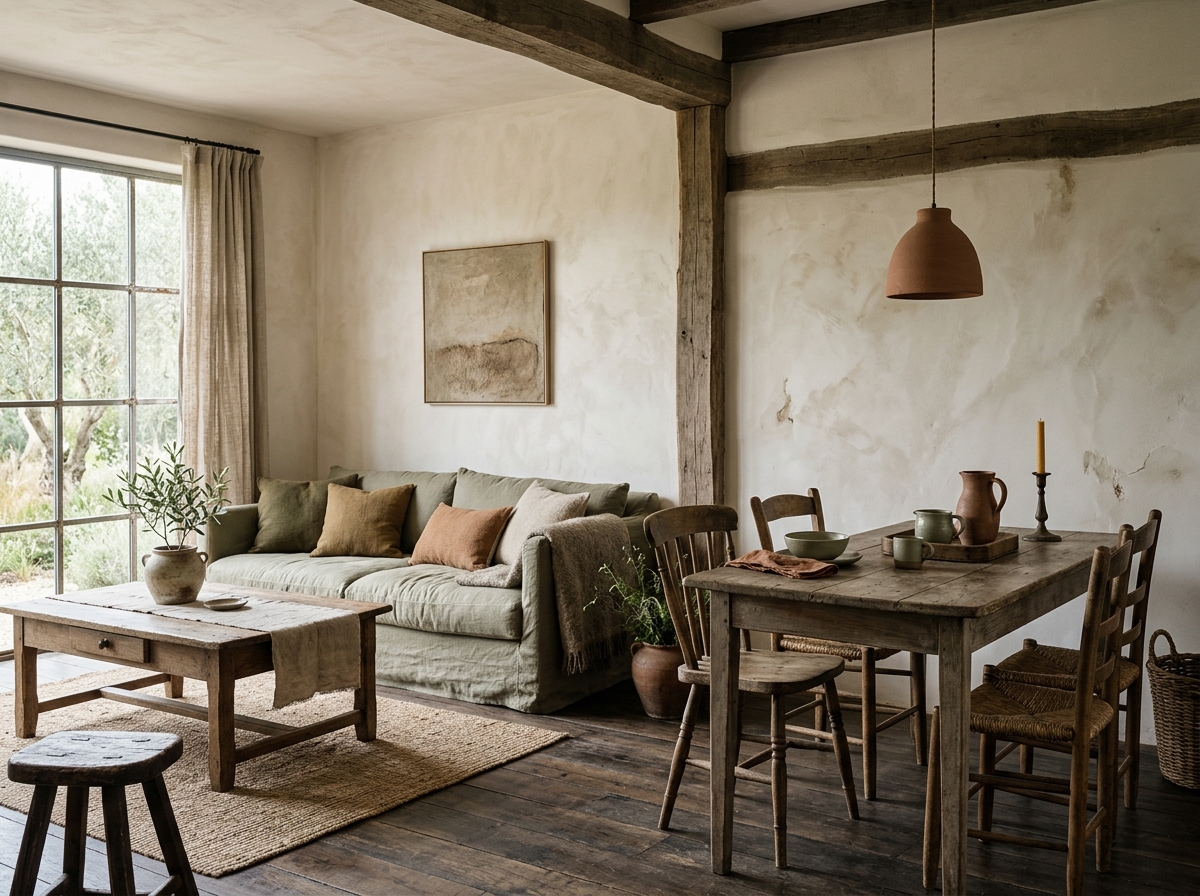
The Wabi-Sabi series by Grespania perfectly illustrates this movement, showcasing how modern ceramics can replicate the warmth of wood and concrete while offering the durability of stone. Simultaneously, the "resimercial" trend is bridging the gap between home and work. By integrating residential comforts—such as plush seating and atmospheric lighting—into professional environments, designers are creating spaces that feel approachable rather than formal.
The 2026 Palette: Earthy Foundations and Jewel Accents
The world of color is seeing a sophisticated layering of influences. On one hand, warm, earthy neutrals like cream, taupe, and terracotta provide a grounding backdrop. On the other, we are seeing a rise in "vibrant maximalism," characterized by deep forest greens, regal purples, and sophisticated gold accents. This dual approach allows for the creation of high-energy spaces that still feel curated.
Achieving a cohesive color scheme requires a delicate balance between expansive surfaces and intricate details. For example, Apavisa Zinc Green Natural Hexagon tiles can be used to create a striking focal point that harmonizes with natural wood or stone tones. Green, in all its iterations—from soft sage to deep, dramatic forest hues—remains the definitive favorite for 2026.
Flooring Built for the Future
The floor is both the structural and visual foundation of a home. While vinyl and ceramic tiles are prized for their resilience against water and wear, natural wood remains the gold standard for luxury. Esta Parket represents the pinnacle of this category, where precision engineering meets the organic warmth and unique grain of natural timber.
For those seeking a more distinctive character, the terrazzo effect has made a significant comeback. It offers a timeless, durable solution that feels equally at home in a spa-like bathroom or a grand living area. For a more classic sense of opulence, marble remains unmatched. The Grespania Marmorea Marquina black matte tiles, for instance, provide a level of depth and sophistication that defines a room.
Geometric Precision and Retro Revivals
Modern interiors are embracing a renewed sense of playfulness, heavily influenced by 1970s retro aesthetics. This is reflected in sculptural lighting and bold geometric patterns that add character to minimalist surfaces. Hexagonal tiles have secured their place as a modern staple, offering a dynamic alternative to traditional formats.
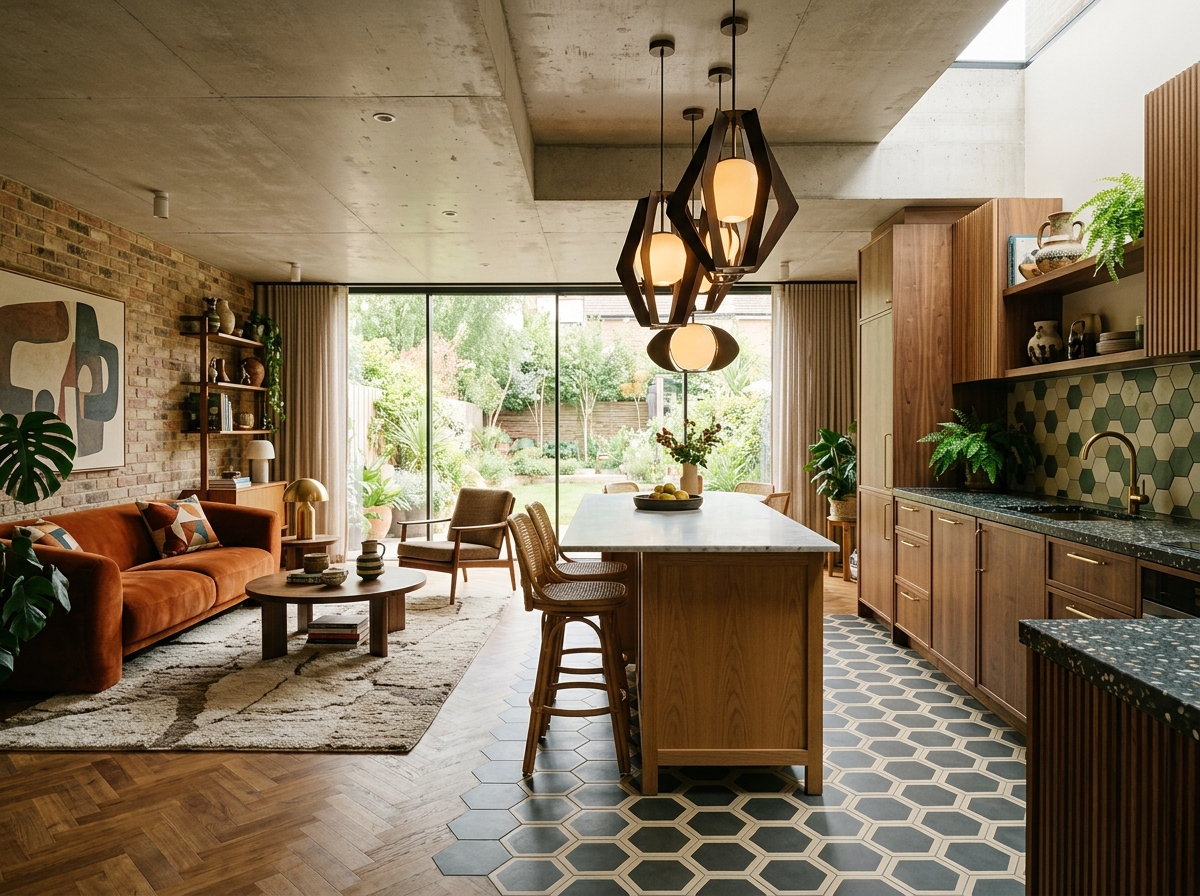
- Mayolica Essence Black Hexagon provides a refined, modern accent for both walls and floors.
- Forest Grey Hexagon offers a softer, more organic gray that pairs seamlessly with light wood tones.
Designers are utilizing these shapes and varied textures to create visual balance within open-plan layouts. By strategically placing different materials, it is possible to define functional zones—like a kitchen versus a dining area—without the need for obstructive walls.
Ultimately, modern design is a journey toward discovering your home’s unique personality. Whether you are drawn to the rugged durability of natural stone or the lush energy of colorful maximalism, the key lies in the quality of materials and their harmony. Visit our showroom to explore the textures and tones that will turn your vision into a lasting reality.