


Glass Block Trends and Applications in Interior Design
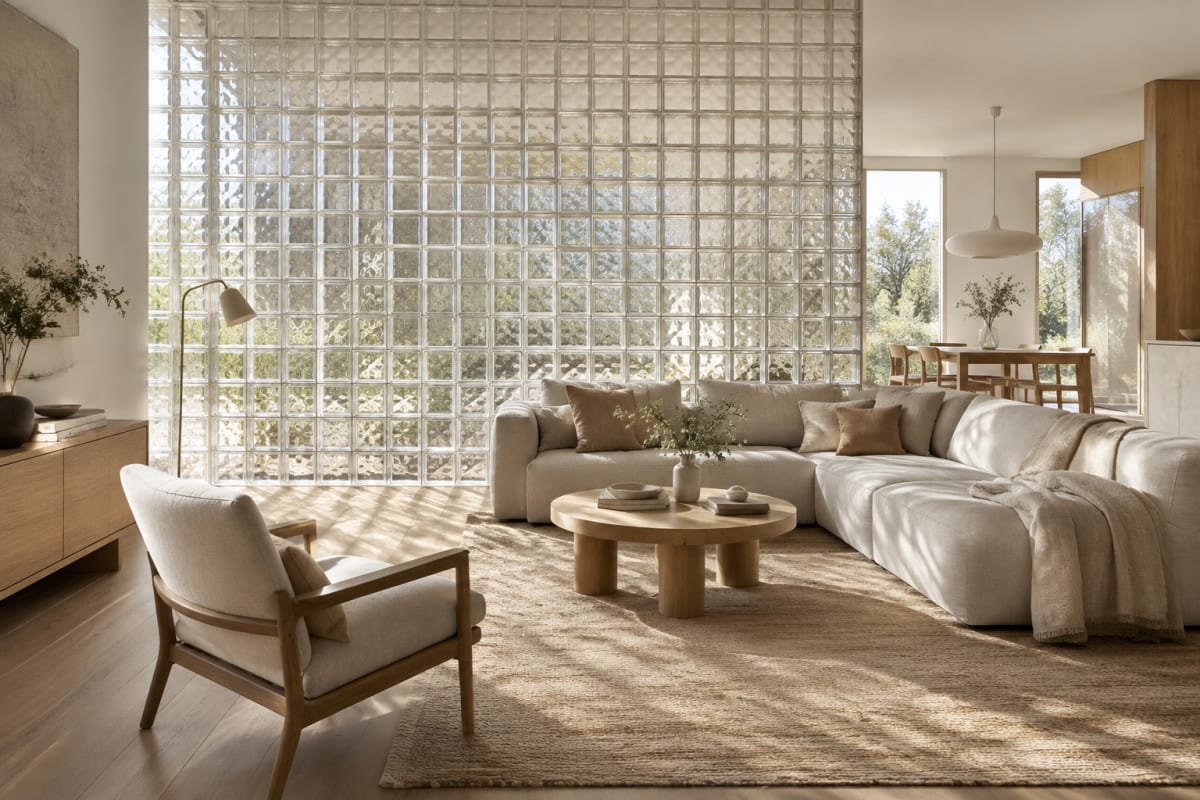
Finding ways to maximize natural light without sacrificing privacy is a perennial challenge in architecture and interior design. Today, glass blocks are experiencing a well-deserved renaissance, re-emerging as a sophisticated, dual-purpose solution for both residential and commercial spaces.
Modern Design and Material Evolution
Glass blocks have come a long way from their purely utilitarian roots. Once associated with the heavy, murky aesthetics of mid-century industrial builds, contemporary glass blocks have evolved into refined architectural design features defined by crisp surface finishes, graphic patterns, and curated color palettes. Leading manufacturers like Seves demonstrate how this versatile material can sculpt light and space with effortless modernity.
Frosted surfaces and delicate textures have become particularly popular as ambient light diffusers. The double-sided matte finish of the Clearview Sahara glass block, for example, softens glare while offering complete visual privacy. For a cleaner, minimalist look, high-clarity options such as the Clearview smooth glass block let daylight stream through almost completely unimpeded.
Light Play and Dynamic Textures
By pairing different patterns and reliefs, glass block walls can become striking sculptural focal points:
- The classic undulating surface of the Wave glass block bends and refracts light, casting gentle, fluid shadows across the room.
- Linear patterns like the Midarc glass block bring crisp architectural rhythm and contemporary geometry to partitions.
- The bubbled finish of the Savona glass block creates an organic, sparkling play of light.
- For subtle visual shielding, the Optical glass block distorts direct sightlines to protect privacy while preserving an illusion of depth.
- Expressive accents, such as the green Wave glass block, allow designers to incorporate color in line with the latest interior design trends.
Practical Applications in Interior and Exterior Architecture
Thanks to their outstanding water resistance, acoustic dampening, and structural durability, glass blocks integrate seamlessly into nearly any interior or exterior concept. You can explore additional layout ideas and project showcases in our curated guide to glass block applications.
Bathrooms and Wet Rooms
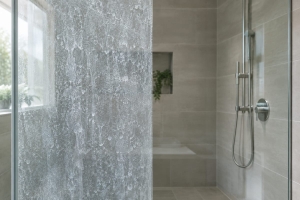
Bathrooms represent one of the most natural applications for glass blocks, given their complete imperviousness to moisture and effortless maintenance. Successful bathroom design depends on balancing functional flow with water protection—and a glass block shower enclosure delivers far more seclusion and character than conventional clear glass partitions.
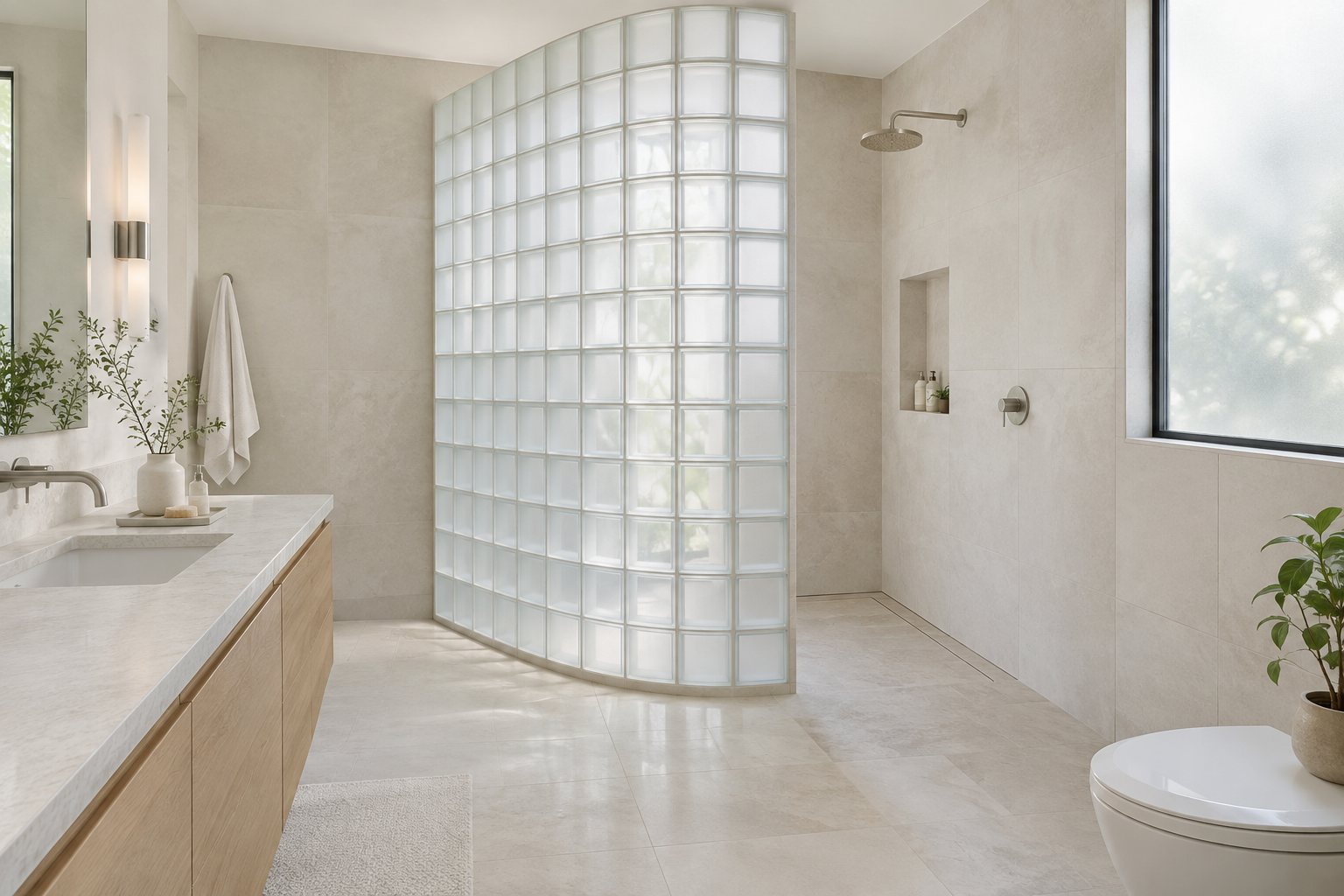
Glass block dividers are especially transformative in a small bathroom. By letting daylight penetrate deep into the room without closing off sightlines, they brighten previously dark corners and keep the floor plan feeling expansive and open.
Space Planning in Homes and Offices
In open-concept residences and workplace layouts, glass blocks make it easy to delineate distinct zones without creating dark, closed-off cubicles. A glass block partition functions as an effective acoustic screen—mitigating background noise in meeting rooms, home offices, and bedroom suites—while keeping the surrounding space flooded with ambient light.
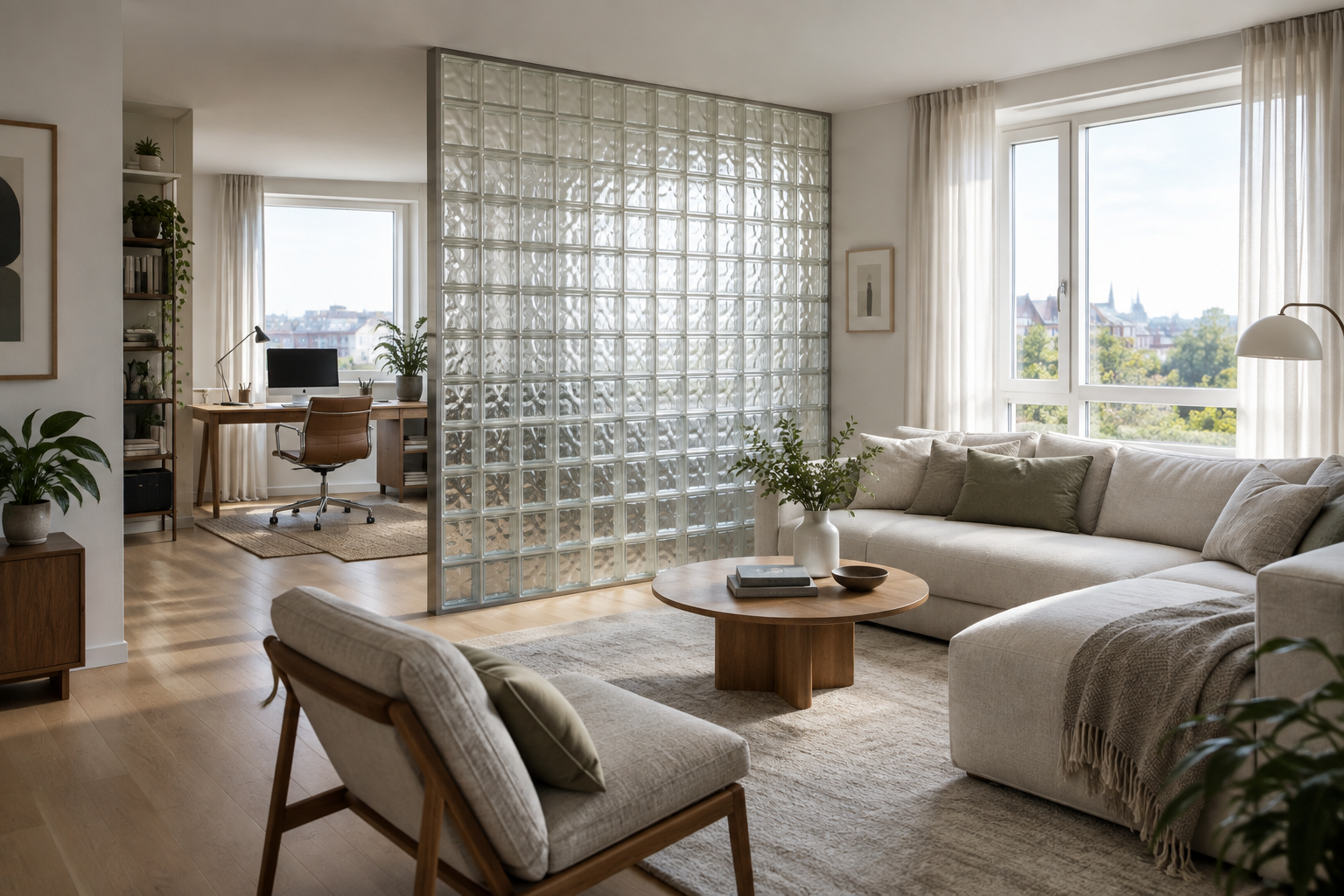
Technical Performance, Fire Safety, and Installation
Beyond their striking visual qualities, glass blocks offer a suite of robust technical performance benefits:
- High acoustic and thermal insulation performance, engineered into each block via its hermetically sealed interior air pocket.
- Certified fire protection: specialized fire-rated glass blocks (EI30) can stop fire, smoke, and heat transfer for at least 30 minutes.
- Exceptional long-term durability and high resistance to humidity, chemicals, and everyday wear.
The best installation method depends on the project's location and structural demands. Wet zones and exterior walls typically require traditional mortar installation with horizontal joint reinforcement for larger spans, guaranteeing superior stability and water resistance. In dry indoor environments, accent walls of up to 4 m² can be built quickly and cleanly using track-and-adhesive modular systems. For detailed technical instructions, refer to our comprehensive guide on glass block installation.
Browse our complete range of glass blocks to find the perfect profile, finish, and format for your next project.