


The Ultimate Guide to Granite Sink Care: Removing Stains and Limescale
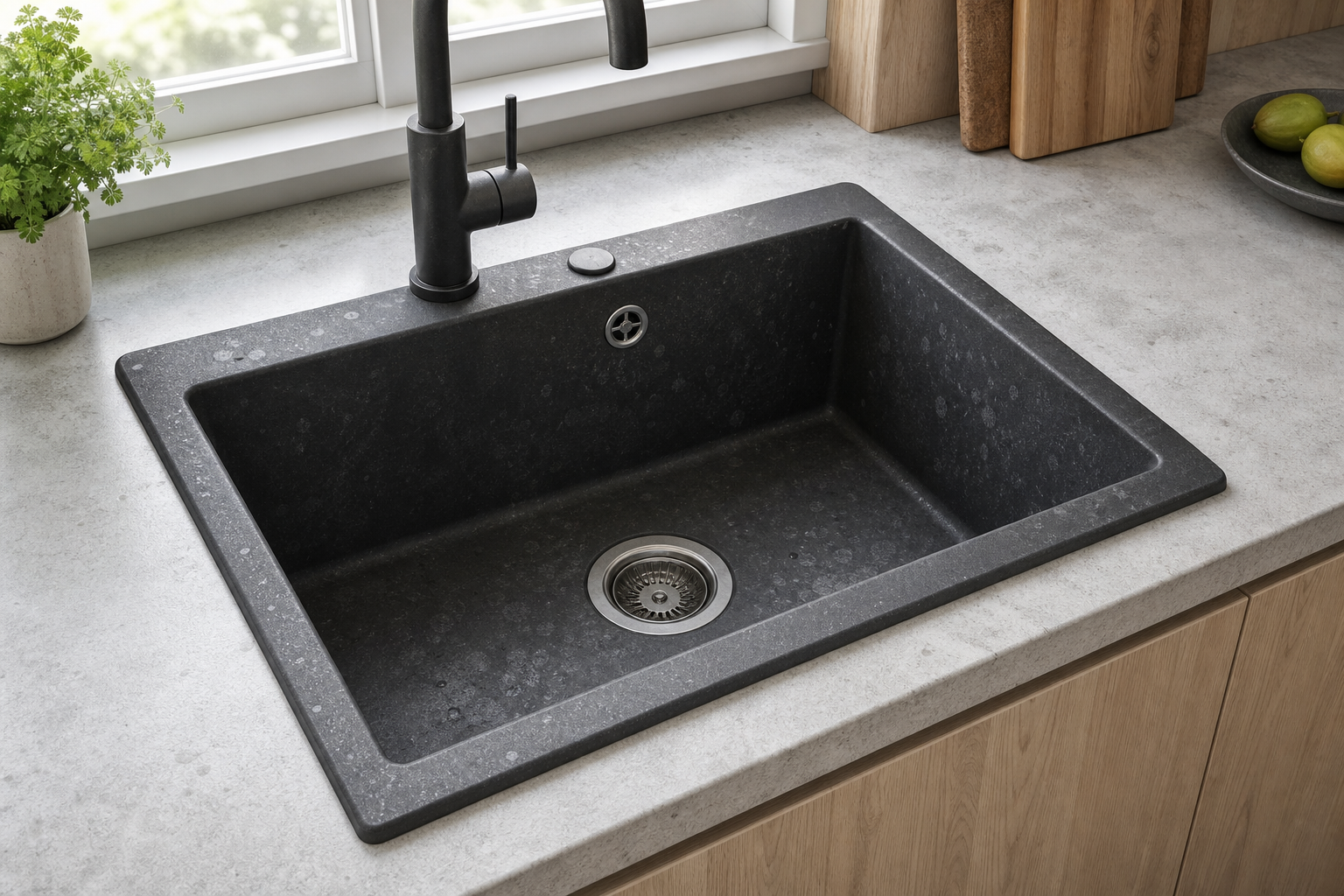
Is your granite sink looking dull, or are you struggling with stubborn limescale deposits? While granite composite is exceptionally durable, its surface requires a specific maintenance routine to prevent permanent staining and preserve its premium finish for years to come.
Why Does Granite Composite Require Special Care?
Modern granite sinks are typically engineered from roughly 80% natural granite quartz and 20% acrylic resin. This blend creates an incredibly resilient, heat-resistant material capable of withstanding temperatures up to 280°C. However, the surface is microscopically porous, which means that without proper care, dirt and minerals can become trapped within the material.
When a kitchen sink is left wet after use, the water evaporates and leaves behind mineral deposits. In regions with hard water, the accumulation of calcium and magnesium is the leading cause of the hazy grey patches often seen on black or charcoal sinks. These chalky deposits act like a sponge, absorbing coffee, tea, and wine stains, making the sink significantly harder to keep clean.
Daily Maintenance: Prevention Is Key
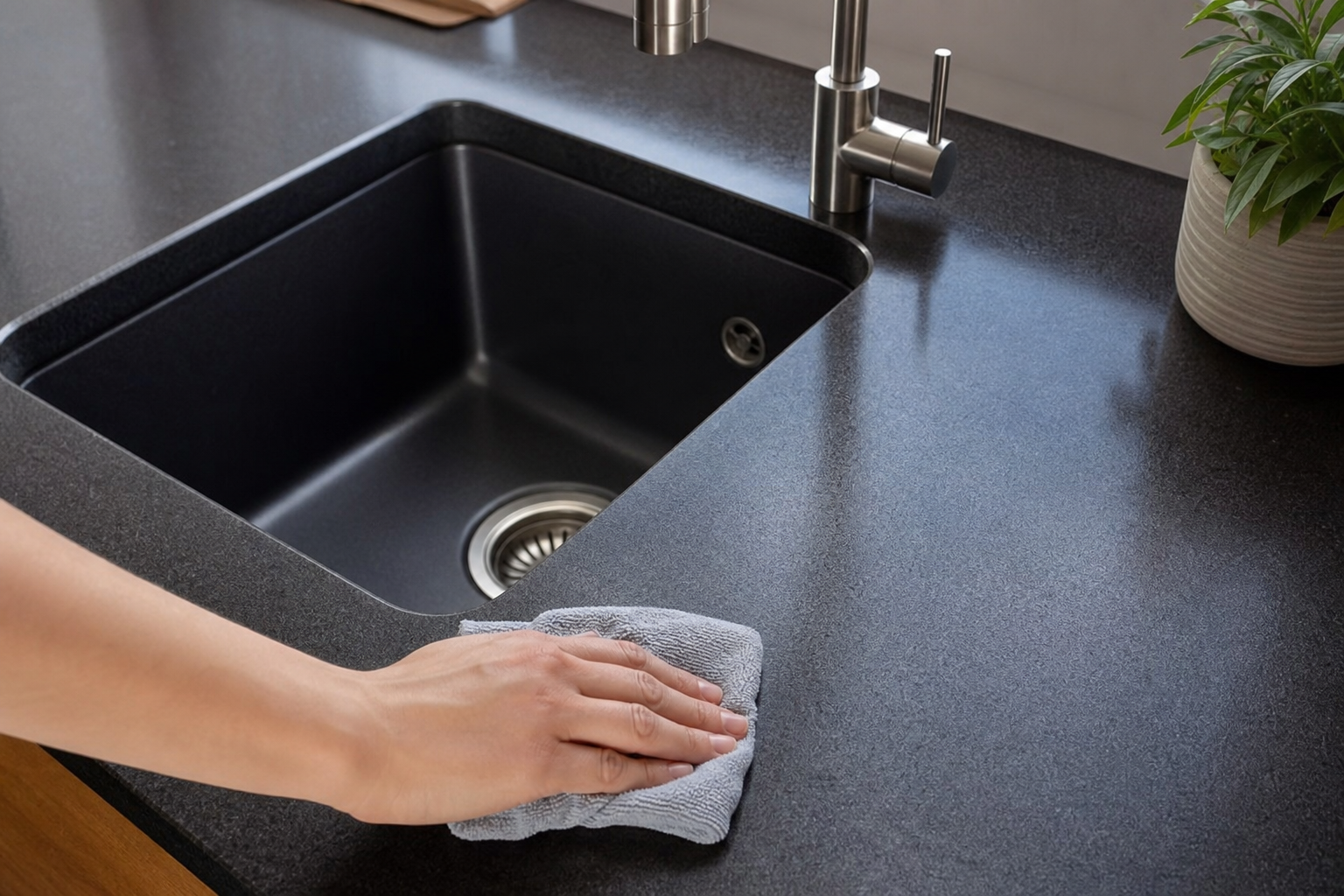
The most effective way to keep your sink looking brand new is consistency. After every use, the surface should be rinsed and wiped completely dry with a soft cloth. This simple habit prevents limescale from forming and stops grime from bonding to the composite material.
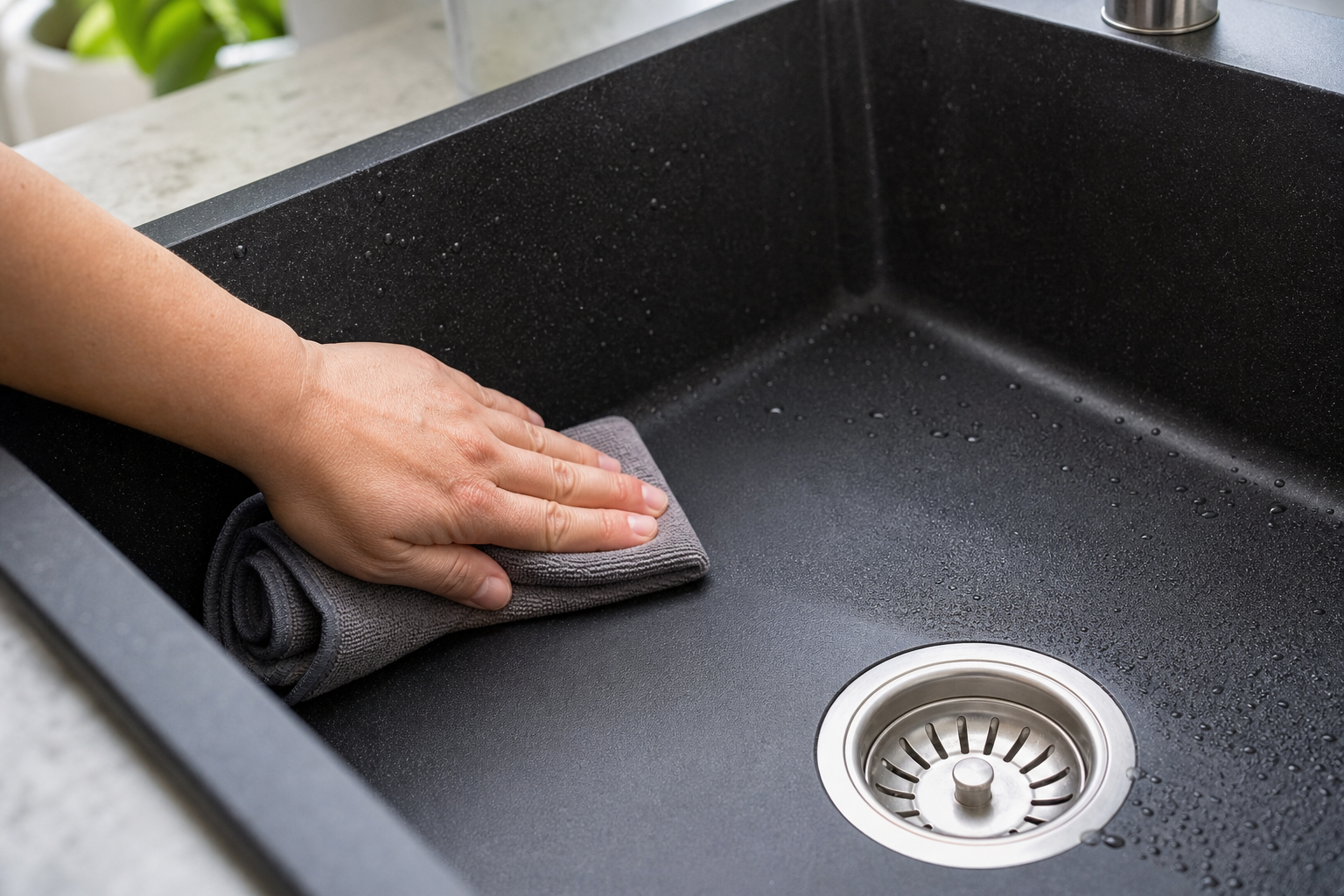
- Cleaning Agents: Use a soft sponge and standard mild dish soap or a gentle pH-neutral cleaner.
- Drying: Use a microfiber cloth or a soft cotton towel. This is the most critical step in preventing water spots and mineral buildup.
- Rinsing: Always rinse the sink thoroughly after using any cleaning agent to ensure no chemical residue dries on the finish.
How to Remove Stubborn Limescale and Stains
If limescale has already taken hold, standard dish soap might not be enough. For deeper cleaning, you can use safe home remedies or specialized composite maintenance products.
- Vinegar Solution: Mix a 1:1 solution of white vinegar and water. Spray it onto the affected areas and let it sit for 15–30 minutes. Gently scrub with the non-abrasive side of a sponge, rinse thoroughly, and wipe dry.
- Baking Soda Paste: To lift dark or stubborn stains, mix baking soda with a small amount of water to form a thick paste. Apply it to the stain, let it sit for about 15 minutes, then gently scrub with a soft brush or sponge before rinsing.
- Specialized Cleaners: For heavy grease or deep-set grime, use dedicated granite sink cleaners. These are specifically formulated to deep-clean without stripping the protective resin.
What to Avoid
Although granite composite is incredibly tough, certain chemicals and tools can permanently etch the surface, leaving it dull and more susceptible to future staining.
- Harsh Chemicals: Avoid undiluted bleach, ammonia, caustic drain cleaners, acidic descalers, or oven cleaners. These can degrade the resin binder and ruin the finish.
- Abrasive Tools: Never use steel wool, wire brushes, or metal scouring pads. These will scratch the surface, creating microscopic grooves where dirt and limescale will accumulate even faster.
- Sharp Objects: Avoid cutting food directly on the sink surface, and try to prevent heavy cookware from dropping into the bowl to avoid chipping or cracking.
Pro Tip: Restoring Luster with Oiling
After a deep clean and thorough drying, it is highly recommended to "nourish" the sink surface. This restores the depth of the color and provides an additional layer of protection.
Apply a thin layer of food-grade mineral oil (or a specialized granite maintenance oil) to the clean, dry surface and buff it in with a soft cloth. This oil treatment makes the color more vibrant, hides light scuffs, and creates a water-repellent barrier that significantly slows down the return of limescale.
For more expert advice on kitchen design and practical maintenance, read our guide on choosing a kitchen sink and practical solutions.
With regular and proper care, a high-quality granite sink will remain a hygienic and beautiful centerpiece of your kitchen for decades. Remember: gentle cleaning and frequent drying are far more effective than aggressive, occasional scrubbing. For personalized advice on choosing the right sink or professional care products, visit the Vipex showroom or explore our sink and faucet maintenance guides.