


Cleaning Shower Enclosure Glass: How to Remove Stubborn Limescale
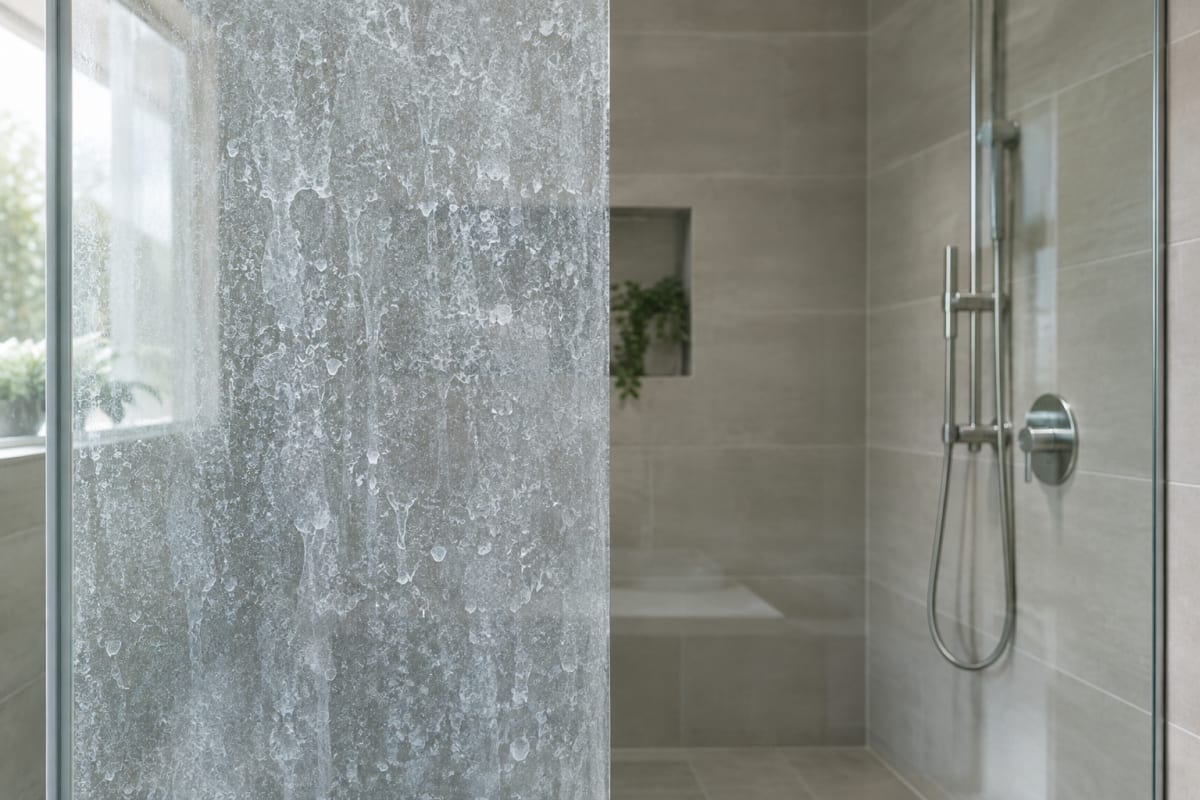
Has your shower screen lost its crystal-clear look to a cloudy film of limescale? Every time you shower, evaporating water leaves behind mineral deposits and soap residue that quickly turn transparent glass dull and foggy. With the right care and cleaning techniques, you can restore its sparkling finish without scratching the glass or stripping the protective finish off your hardware and profiles.
Why Do Limescale and Soap Scum Form on Shower Glass?
The chalky white haze on shower screens is caused by two main culprits: dissolved minerals in tap water and soap residue. When water droplets evaporate after a shower, calcium and magnesium salts stay behind, crystallising into stubborn limescale deposits.
Traditional bar soaps make the problem worse. The fatty acids in bar soap react chemically with the minerals in hard water to create insoluble soap scum—a waxy layer that clings tenaciously to glass. Switching to a liquid body wash significantly slows this buildup, as gel formulas rinse away far more cleanly. If your shower enclosure contends with hard water daily, installing water-softening water filters can capture excess minerals before they ever reach your shower head.
Effective Cleaning Methods: Everyday and Homemade Solutions
A simple weekly cleaning routine prevents mineral buildup from bonding to the glass and causing permanent etching.
White Vinegar Solution for Limescale
Because limescale is an alkaline deposit, a mild acid dissolves it with minimal effort:
- Mix one part white vinegar with five parts water in a spray bottle.
- Mist the solution evenly over the glass and let it sit for a few minutes to break down the mineral bonds.
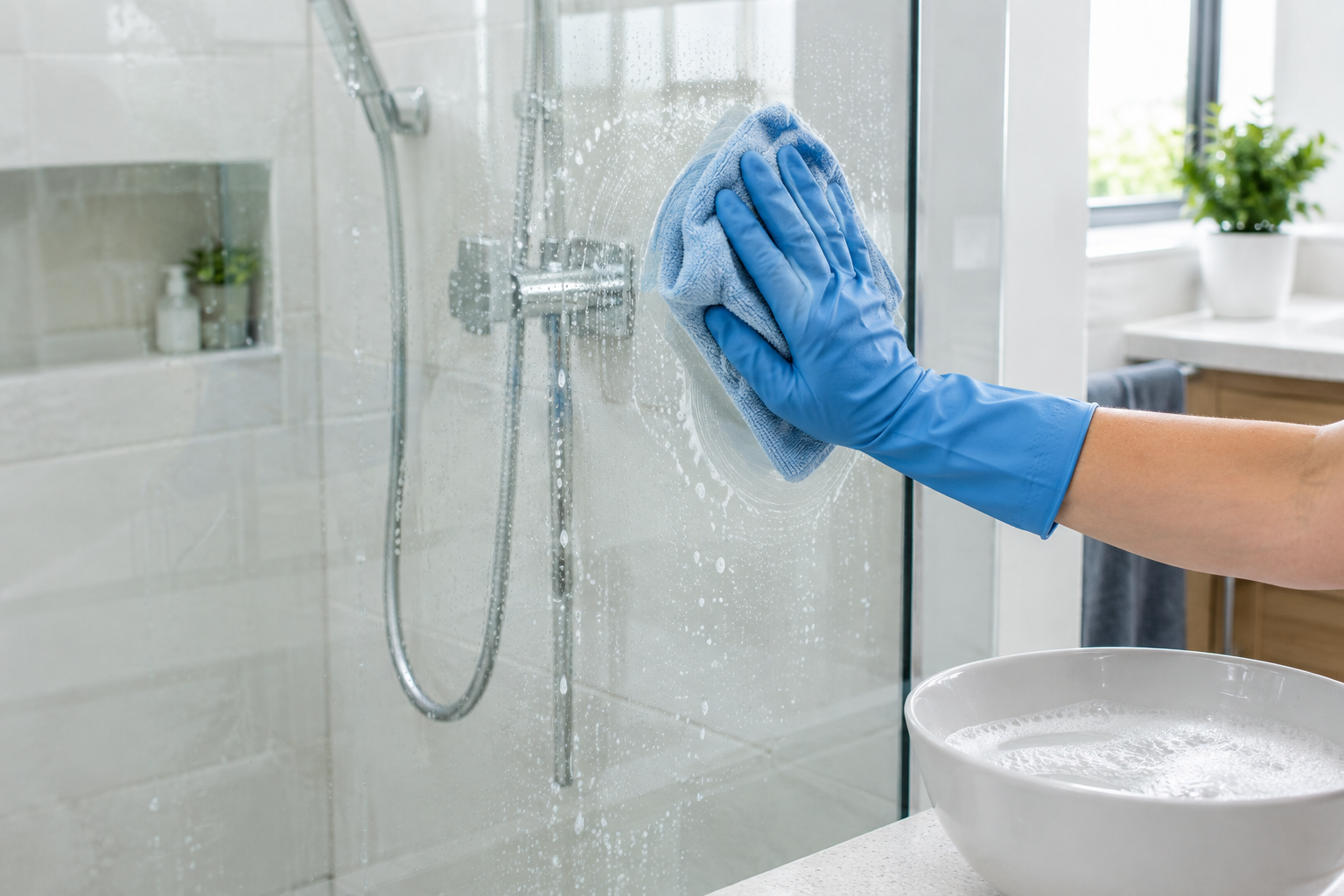
- Wipe the screen down with a soft microfibre cloth, then rinse thoroughly with clean water.
- Squeegee away excess water and buff dry with a clean microfibre towel.
Routine Cleaning with Mild Soapy Water
For light daily maintenance and fresh water splashes, warm water and a small amount of pH-neutral washing-up liquid or liquid soap work wonders. Wipe the surface using circular motions with a soft, damp cloth, rinse, and dry completely. Much like caring for washbasins and faucets, consistent, gentle cleaning keeps surfaces pristine without the need for harsh chemicals down the line.
Safety Rules and Mistakes to Avoid
Improper cleaning products can permanently damage glass panels, protective seals, and metal hardware.
- Never combine chlorine bleach with vinegar or other acids. Mixing acid with bleach generates toxic, highly dangerous chlorine gas.
- Never mix chlorine bleach with ammonia. Many commercial glass cleaners contain ammonia, which reacts with bleach to form hazardous chloramine fumes.
- Wear protective gloves and ensure adequate ventilation. Always wear household gloves when using cleaning agents. Keep the bathroom door open and run the extractor fan while cleaning. Proper bathroom ventilation also helps the room dry out quickly after every shower, preventing mildew and water spots.
- Ditch abrasive pads and scouring powders. Steel wool, scouring sponges, and abrasive creams scratch glass and strip the anodised or powder-coated finishes on hinges and frame profiles.
- Protect natural stone surfaces. If your shower sits near marble, limestone, or travertine, keep acidic solutions away. Acid will etch calcium-based stone instantly, leaving permanent dull patches. As with cleaning a granite sink, delicate surfaces demand dedicated, non-acidic cleaners.
Caring for Nano-Coated Glass and Hardware
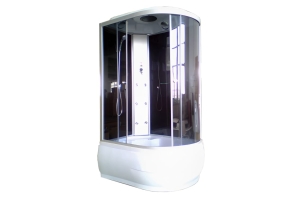
Modern shower enclosures—such as the Harma DN019 with nano-coated safety glass—come treated with a factory-applied hydrophobic coating. This microscopic barrier makes water bead up and roll off the surface, carrying away dirt and preventing limescale from gripping the glass.
To safeguard this protective layer and preserve your fittings:
- Avoid strong acids and harsh alkaline cleaners, which degrade and eventually strip the protective nano-coating.
- Clean treated panels using only lukewarm water, a soft microfibre cloth, and a gentle, neutral detergent when needed.
- Wipe down hinges, handles, and aluminium profiles with warm, soapy water, rinse, and buff dry immediately with a clean cloth.
How to Keep Shower Glass Clean with Minimal Effort
Establishing a few simple post-shower habits cuts deep-cleaning time to almost zero:
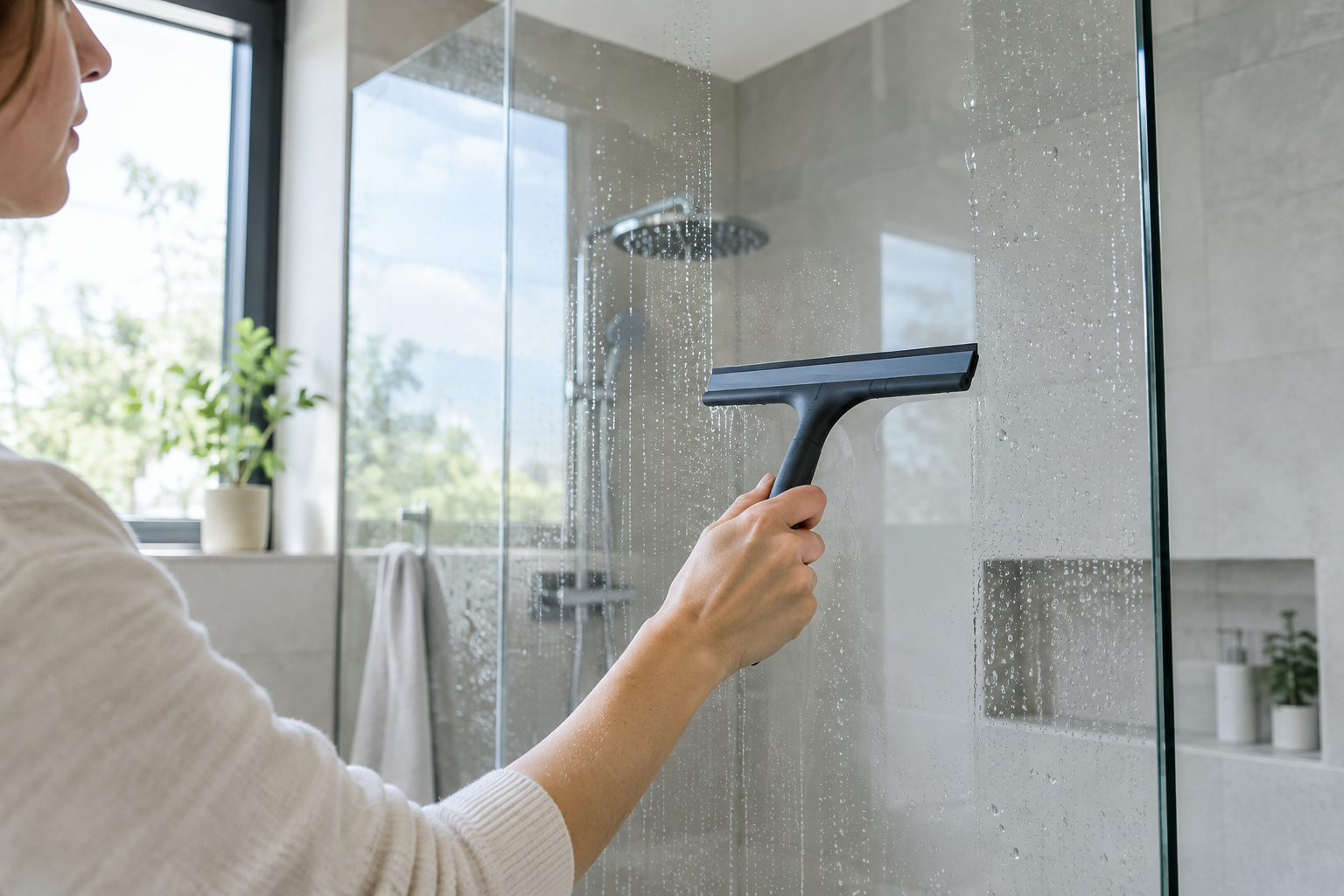
- Rinse and squeegee: Take thirty seconds after showering to rinse the glass with warm water, then clear away water droplets with a rubber squeegee using smooth, overlapping downward strokes.
- Dry edges and profiles: Run a microfibre cloth along the lower tracks, bottom seals, and corners where standing water tends to collect.
- Aerate the space: Leave the shower doors open after use to let moisture evaporate quickly.
If you are currently redesigning your bathroom, explore our guide on how to choose the right shower enclosure—frameless and minimalist designs have fewer nooks and crannies, making daily upkeep effortless.
A Sparkling Shower That Lasts
Keeping shower glass spotless does not require aggressive chemicals—just the right routine and a little consistency. A quick squeegee after each shower paired with a gentle weekly wipe-down keeps your glass crystal clear for years.
If you are planning an update, explore our range of low-maintenance bathroom solutions: from freestanding shower cabins and sleek corner shower enclosures like the clear-glass Harma DN028, to complete units such as the Harma Cube and Harma Luuna. Discover the full Vipex catalogue to find the perfect sanitaryware for your home.