


Preventing Drain Clogs: A Practical Guide to Drain Care and Maintenance
Is water draining frustratingly slowly from your sink or shower? Clogged drains are an annoying disruption, yet with a few sensible habits, almost every blockage is entirely preventable. Here is our practical guide to keeping your kitchen and bathroom plumbing in top shape, along with the most common pitfalls to avoid.
Kitchen Drains: Keep Grease and Food Waste Out of Your Pipes
Daily cooking inevitably exposes your pipes to fats, oils, and food debris. While warm grease flows down the plughole easily at first, it quickly cools and solidifies inside the pipework, lining the walls with a sticky coating. This buildup catches stray food particles, gradually constricting water flow until the line backs up completely.
A few proactive habits will keep your kitchen drainage running clear:
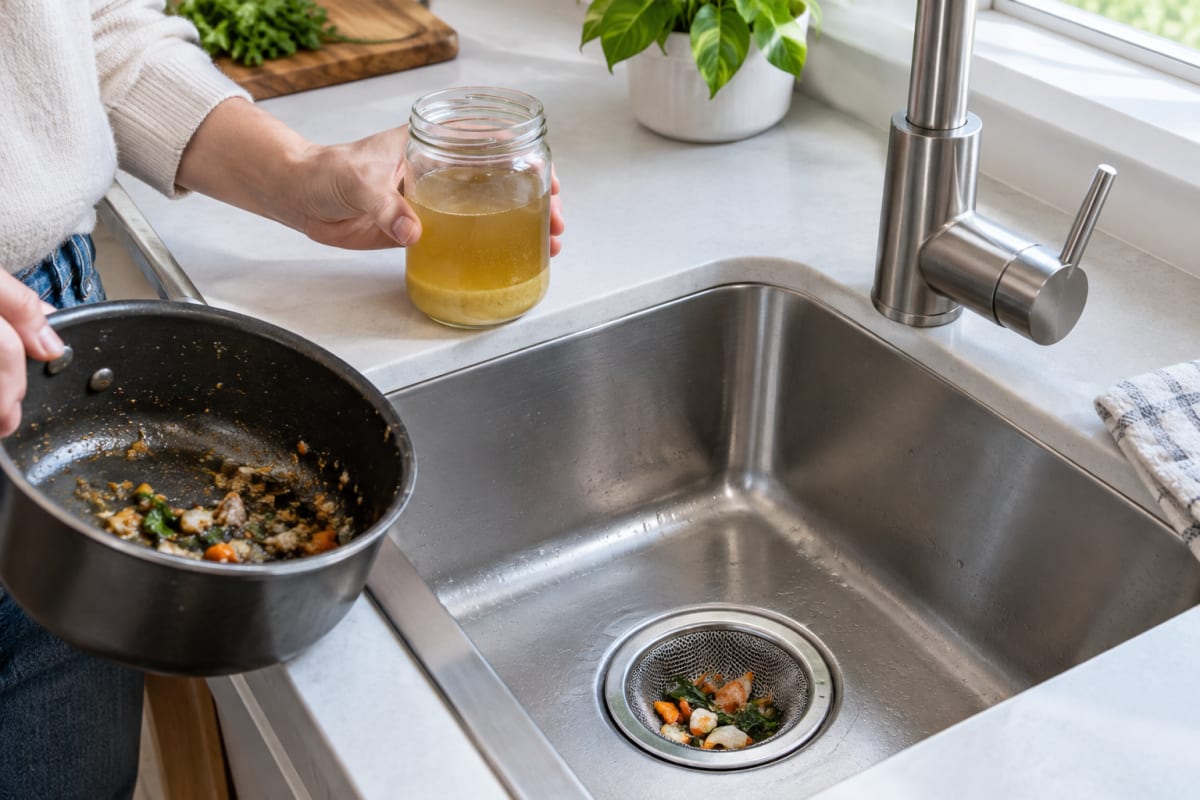
- Never pour cooking fat or oil down the sink: Allow cooking grease to cool in the pan and wipe it into the bin with kitchen paper, or pour liquid oil into a sealed container for disposal.
- Scrape plates thoroughly before washing: Always clear leftover food into the food waste caddy or bin before rinsing dishes. To explore modern sink setups, read our guide on choosing a kitchen sink: practical solutions for every kitchen.
- Use a fine-mesh drain strainer: Most modern kitchen sinks come fitted with a basket strainer waste that intercepts solid food particles before they enter the waste pipe. Empty this basket into the rubbish regularly.
- Install an accessible sink trap: An easy-to-reach bottle trap makes routine cleaning painless. If you want to maximise storage inside your base cabinet, the compact Laufen space-saving bottle trap is an ideal choice.
For more tips on maintaining fixtures and surfaces, check out our guides on sink and faucet maintenance and cleaning granite sinks.
Commercial Kitchens and Food Service: Grease Trap Guidelines
In commercial kitchens and high-volume catering facilities, wastewater lines require strict monitoring and robust grease interceptors:
- Adhere to the 25% rule: Grease traps must be pumped out and cleaned before the combined volume of floating grease and settled solids reaches 25% of the tank's total capacity or liquid depth.
- Avoid discharging boiling or excessively hot water: Water temperatures above 60°C (140°F) liquefy the grease stored inside the interceptor. Melted fat slips past the internal baffles and congeals further down the sewer line.
- Schedule regular professional servicing: Work with a licensed maintenance provider for scheduled pump-outs and hydro-jetting to ensure continuous regulatory compliance.
Bathroom Drains: Hair Accumulation and Reliable Drainage Solutions
In the bathroom, the combination of loose hair and soap scum forms the vast majority of clogs, binding together into dense, stubborn obstructions.
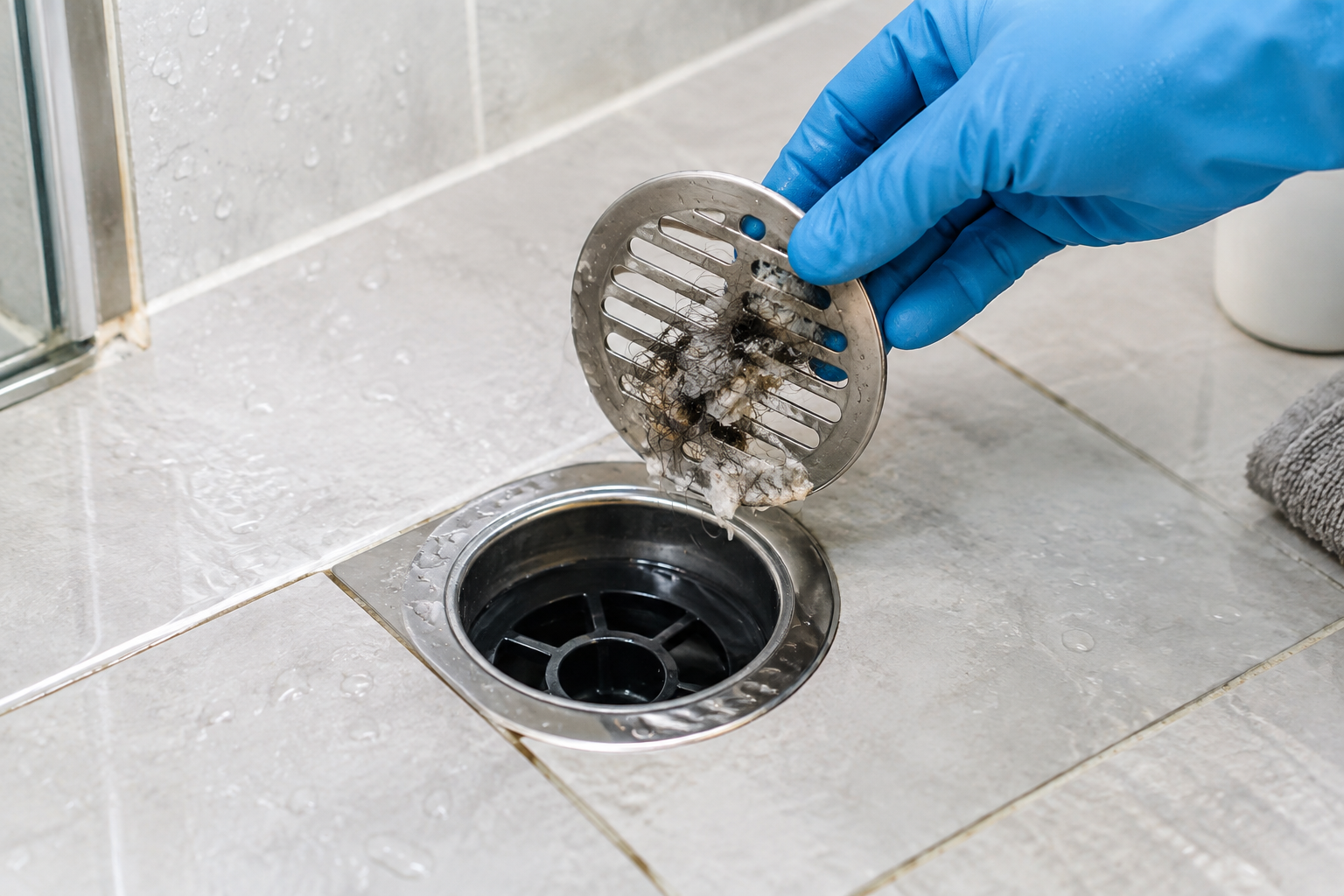
To ensure water drains freely away, rely on consistent upkeep and quality waste fittings:
- Clean waste outlets regularly: Clear hair and soap residue from the shower grate and bath strainer after every use, and periodically remove and rinse the basin's pop-up waste plug.
- Install high-performance shower traps: Engineered units such as the Harma Venus shower enclosure trap and the Harma Urban shower enclosure trap guarantee fast, unimpeded drainage. To block sewer odours and backflow, the Harma Luuna shower enclosure trap provides a dependable barrier.
- Choose durable bath waste fittings: A watertight, trouble-free installation depends on resilient components, like the Blue Wave bath waste pipe or a complete Deante bath waste and overflow set in white.
- Equip basins with dependable bottle traps: Designer washbasins deserve clean-lined, reliable fittings. High-quality options include the Hatria Accessori universal waste trap with ceramic cover, the minimalist Hatria Accessori adjustable bottle trap in matte black, and the polished Hatria Accessori chrome ABS bottle trap.
When renovating, establishing correct pipe gradients and installing rigid shower trays are essential for efficient drainage. Learn more about the renovation stages in our guide on how to build a bathroom.
Items You Should Never Flush or Pour Down the Drain
Your plumbing system is engineered strictly for wastewater and toilet tissue. Never wash or flush away items that do not disintegrate naturally, including:
- Wet wipes and baby wipes (even those marketed as "flushable")
- Cotton buds, cosmetic pads, and dental floss
- Sanitary towels, tampons, and nappies
- Kitchen roll, facial tissues, and disposable cloths
- Construction residues (such as tile grout, plaster, or cement dust), paint, and harsh chemical solvents
Common Mistakes When Using Chemical Drain Cleaners
Pouring caustic drain openers down a blocked pipe often does more damage than good when handled incorrectly:
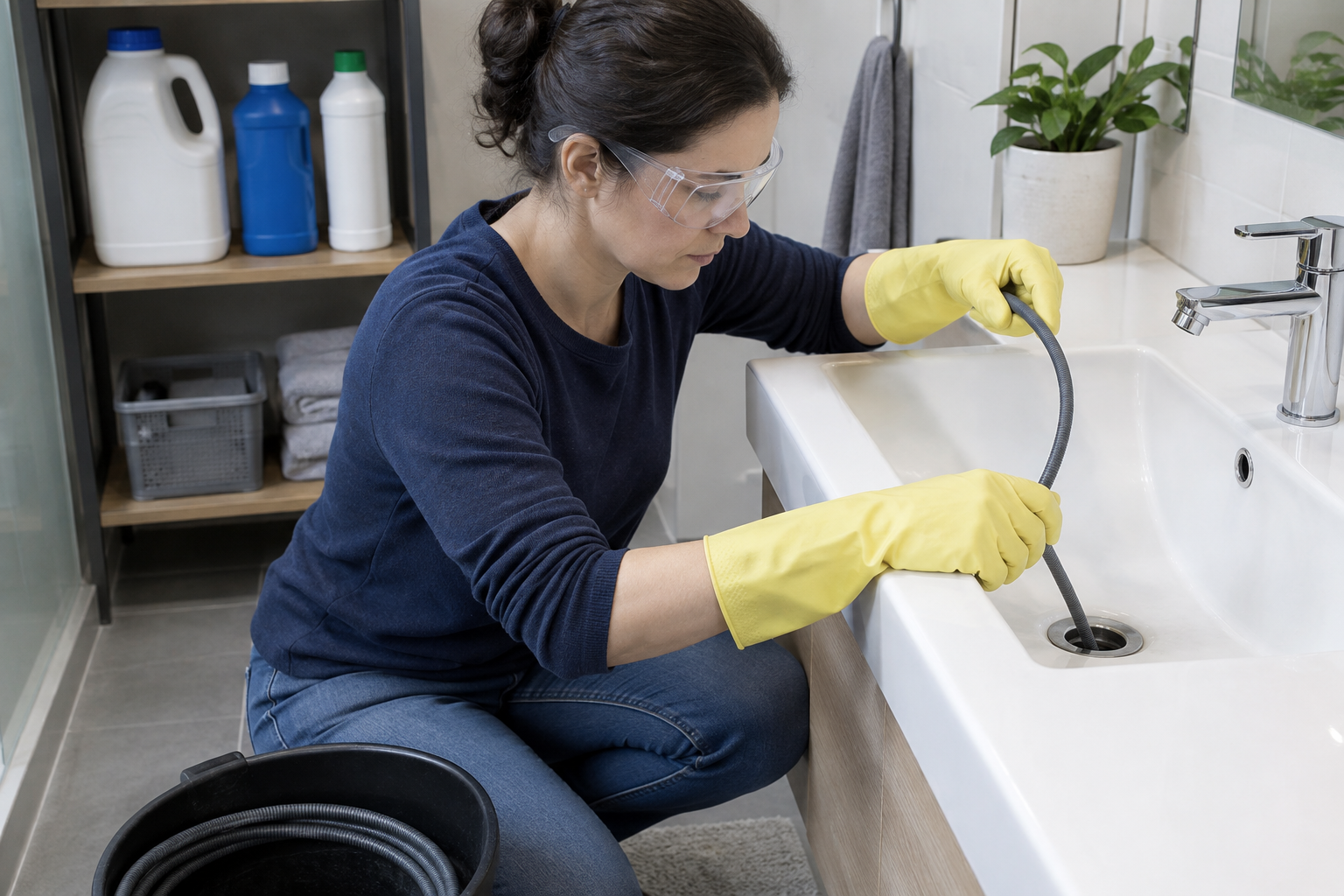
- Mixing different chemicals: Never combine different drain unblockers or use them alongside standard household cleaners (such as mixing bleach with acidic descalers). This can spark violent exothermic reactions and release hazardous, toxic fumes.
- Skipping protective gear: Highly alkaline and acidic formulas cause serious chemical burns and eye damage. Always wear rubber gloves and protective eyewear, pouring the liquid gently and close to the plughole to prevent splashes.
- Relying on aggressive formulas too frequently: Corrosive chemicals generate intense heat, which deteriorates rubber seals and weakens PVC joints over time. When water begins to pool, clear the bottle trap manually or use gentler enzyme-based treatments first.
When to Call a Professional Plumber
When slow drainage affects more than a single fixture, the obstruction is almost certainly deeper within the soil stack or main sewer pipe. Contact a licensed plumber if you notice any of these red flags:
- Simultaneous slow drainage: Sinks, showers, and toilets across the house all begin draining sluggishly at once.
- Backflow between fixtures: Wastewater surfaces in the shower tray or floor drain whenever the washing machine discharges or the toilet is flushed.
- Gurgling sounds in the pipework: Persistent bubbling or sucking noises coming from plugholes or the toilet point to blocked air vents or a severe downstream obstruction.
- Lingering sewer smells: A constant odour of sewage or rotten eggs indicates standing wastewater or a breached water trap seal.
Good daily habits, proper grease disposal, and regular strainer cleaning will keep your drains clear and help you avoid costly emergency callouts. Whether you are building from scratch or upgrading an existing space, discover our complete collection of quality sanitaryware online at Vipex or visit our showrooms in Tallinn and Tartu.