


Mosaic Tile in Bathroom Design: Patterns, Materials, and Expert Installation
Beyond their timeless aesthetic appeal, high-end mosaic installations can increase a property’s value by as much as 8%. In the bathroom, mosaic tiling offers more than just beauty; it provides significant functional advantages, from superior slip resistance to the ability to seamlessly wrap around complex curves and architectural features.
Trending Mosaic Patterns and Design Ideas
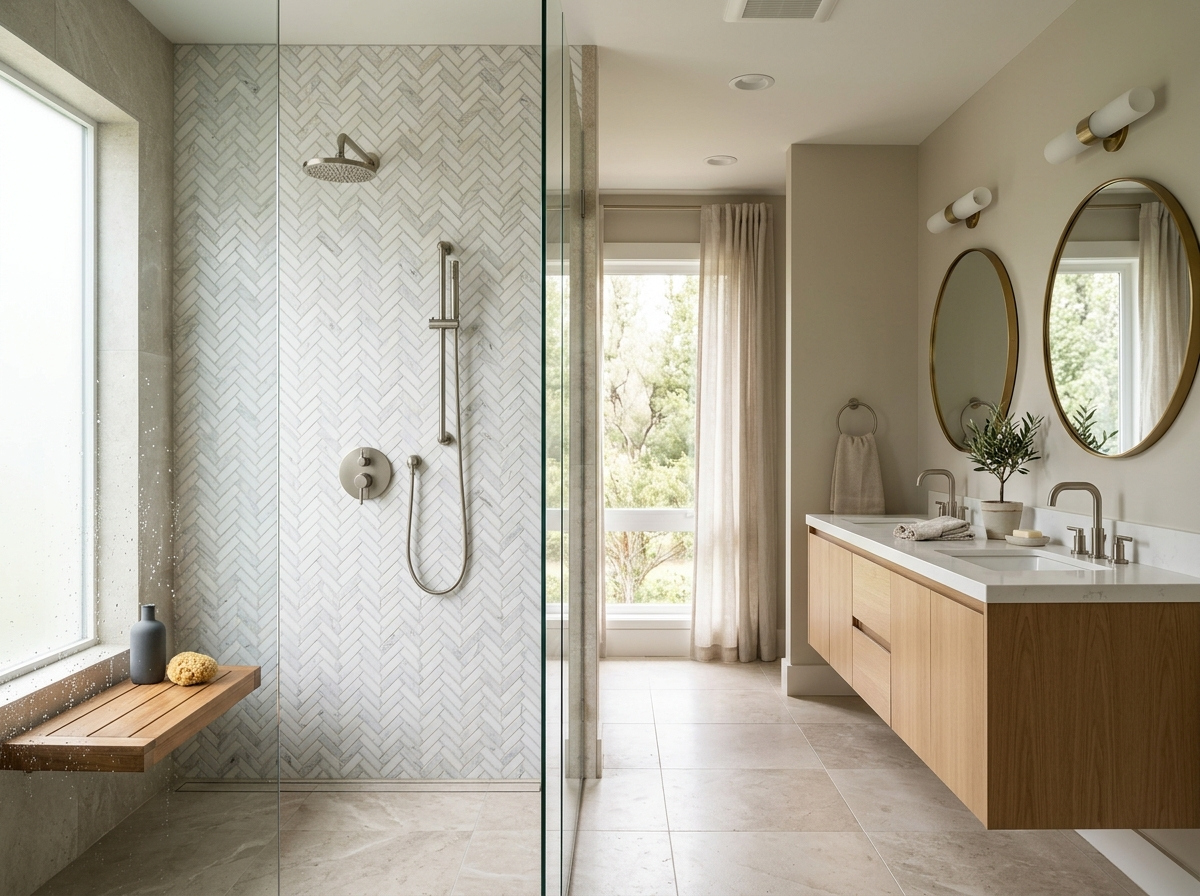
The diversity of mosaic tiles offers endless possibilities for both residential and commercial interiors. One of the most enduringly popular choices is the herringbone pattern, which adds a sense of movement and visual depth to a room. Design research suggests that a herringbone layout can increase the perceived luxury of a space by up to 10%, making it an ideal accent for shower feature walls or bathroom floors.
Geometric shapes remain at the forefront of modern interior design. For instance, the hexagonal Mayolica Essence black hexagon provides a sophisticated, contemporary edge. Smaller hexagons and "penny round" patterns are particularly effective in wet areas, as the high density of grout lines creates natural traction and improves safety underfoot.
For those who prefer a classic look, the subway pattern is a versatile staple. When installed vertically, narrow mosaic tiles draw the eye upward, making low ceilings feel higher; a horizontal layout, conversely, helps a narrow bathroom feel wider. To create a more organic, spa-like atmosphere, consider shapes like fish scales or pebbles. The Jack Black natural stone mosaic, for example, introduces authentic texture and earthy tones into the home.
Choosing the Right Material: Porcelain, Glass, or Natural Stone?
Selecting the right tile requires balancing visual style with technical requirements. Each material possesses unique properties that dictate where it will perform best within the bathroom environment.
Porcelain and Ceramic
Porcelain mosaic is a premier choice for bathrooms due to its exceptionally low water absorption rate (less than 0.5%). This makes the tiles highly durable and easy to maintain, even in high-moisture zones. Ceramic options, such as Graniser ISLA beige dot, often serve as a cost-effective alternative for wall accents and low-traffic floors. When deciding on materials, it is helpful to review how to choose ceramic tiles to ensure you are combining practicality with your personal aesthetic.
Glass Mosaic and Natural Stone
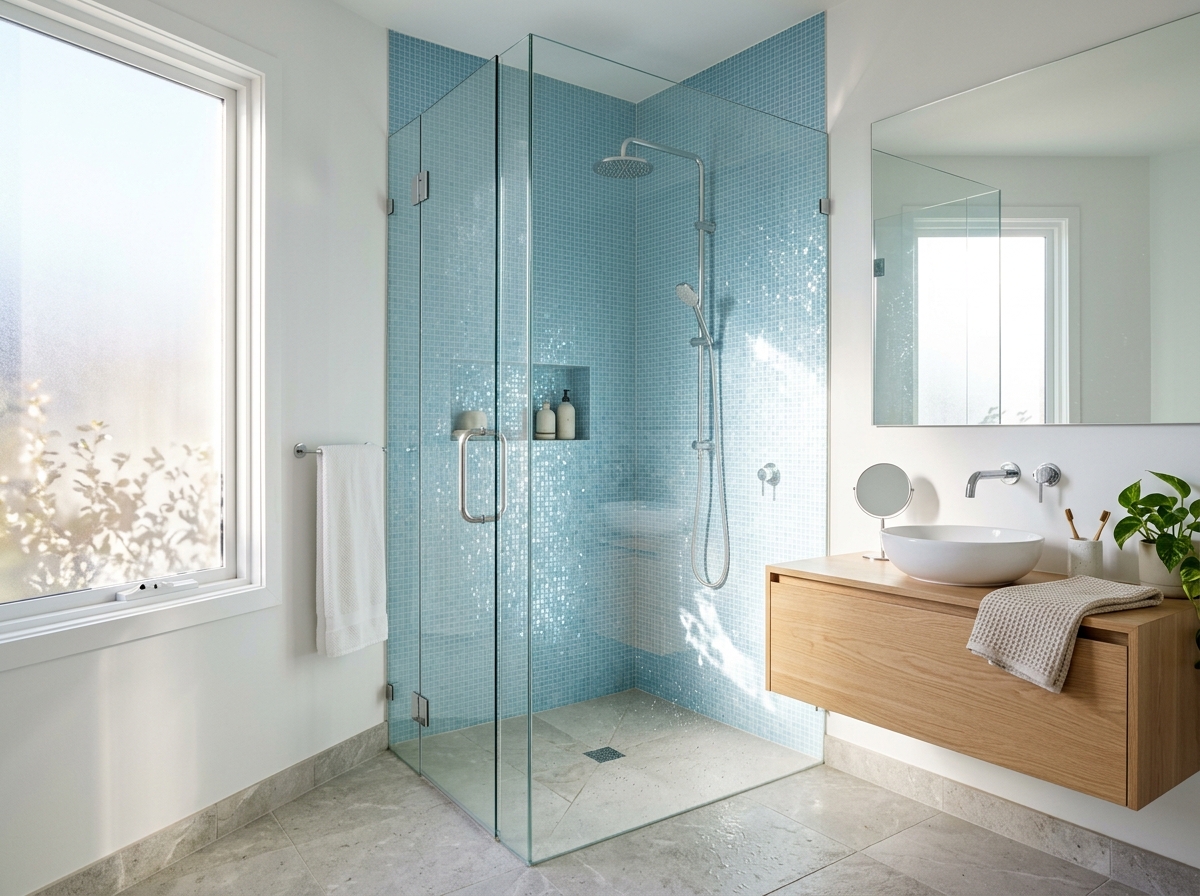
Glass is a non-porous material, making it a hygienic and stylish choice for shower walls or vanity backsplashes. Its light-reflecting properties—found in products like this light blue glass mosaic mix—can make small bathrooms feel more spacious and luminous. You can explore more about this material in our guide to the art of using glass mosaic.
Natural stone tiles, including marble and slate, offer one-of-a-kind patterns that cannot be replicated. However, because stone is naturally porous, it requires regular sealing to prevent staining. While they are a stunning choice for luxury accent walls, they require more careful planning and maintenance when used in wet environments.
Professional Installation Tips
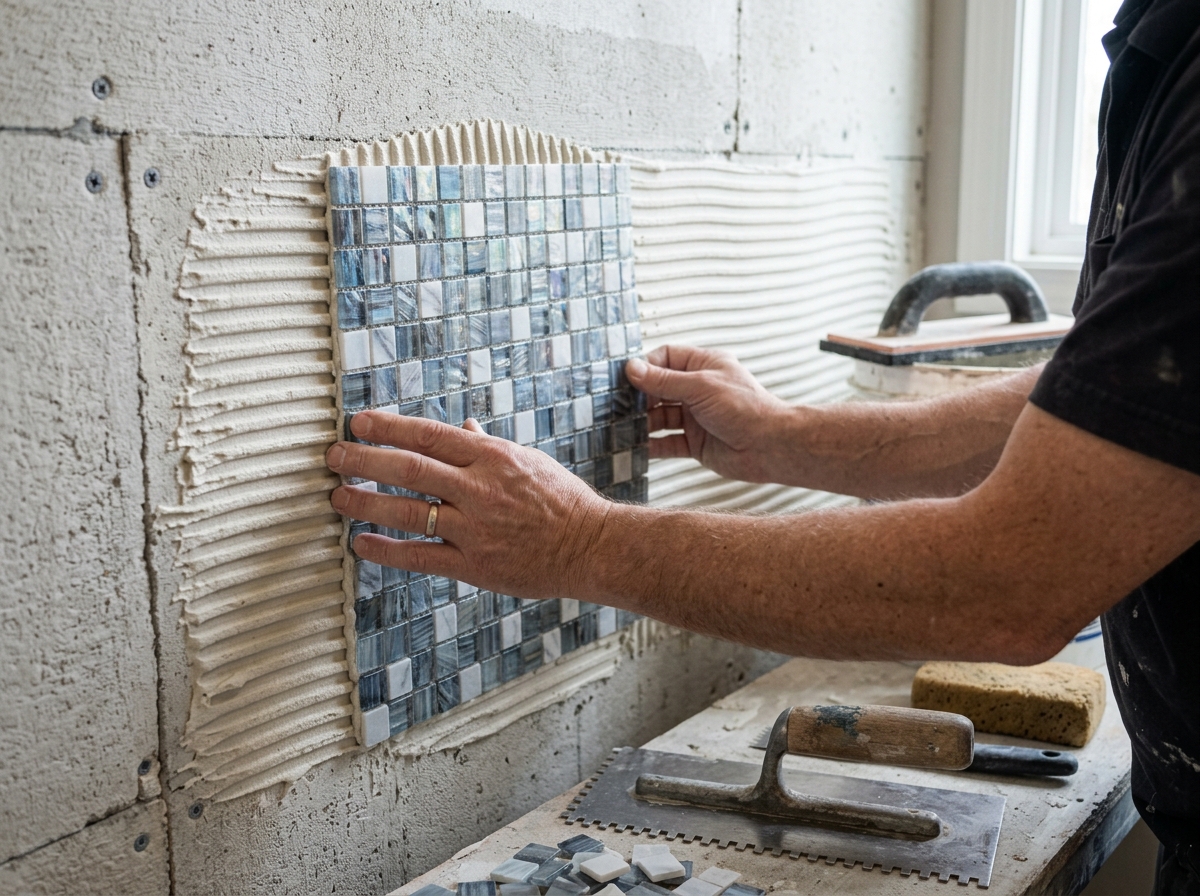
Installing mosaic tiles requires a higher degree of precision than large-format tiling. Because mosaics are typically mounted on a mesh backing, the underlying substrate must be perfectly level and smooth.
- Waterproofing is Mandatory: Before the first tile is set, the substrate must be treated with a high-quality waterproofing membrane. This is critical in wet rooms to prevent mold growth and structural rot.
- Use the Right Adhesive: Always use a flexible tile adhesive and the correct notched trowel size. Applying the adhesive too thickly can cause it to "squeeze through" the joints, making the grouting process difficult and messy.
- Grouting and Finish: With so many joints to fill, grout selection is vital. Choosing a grout color that matches the tile creates a seamless, monolithic look, while a contrasting grout highlights the geometric pattern of the mosaic.
- Safety Standards: For bathroom floors, prioritize tiles with a slip resistance rating of at least R10. For a deeper look at the process, refer to our tile installation and maintenance guide.
Planning and Cost Estimation
Accurate budgeting and ordering are key to a successful renovation. For mosaic projects, it is standard practice to allow for a 10–15% wastage margin to account for cuts and future repairs. Mesh-mounted sheets, such as Soap Stone grey or Soap Stone black, significantly speed up installation but require a keen eye to ensure the seams between sheets remain invisible.
With thorough preparation and high-quality materials, your mosaic bathroom will remain a beautiful and safe sanctuary for decades. To see our full range of products in person or to speak with an expert, visit our showroom or browse the Vipex online store.