


District Heating vs. Your Own Water Heater in an Apartment: Pros and Cons
Whether you are purchasing a new apartment or renovating an older one, deciding between centralized district heating and an individual domestic water heater is a critical choice. The wrong decision can easily lead to inflated utility bills, awkward plumbing layouts, or the frustration of stepping into an unexpectedly cold shower. Both options come with distinct technical, regulatory, and financial trade-offs.
How District Heating and In-Unit Water Heaters Work
To make an informed choice, it helps to understand the engineering behind each approach. In a multi-family building, these systems function fundamentally differently, shaping both your day-to-day comfort and the property's shared mechanical infrastructure.
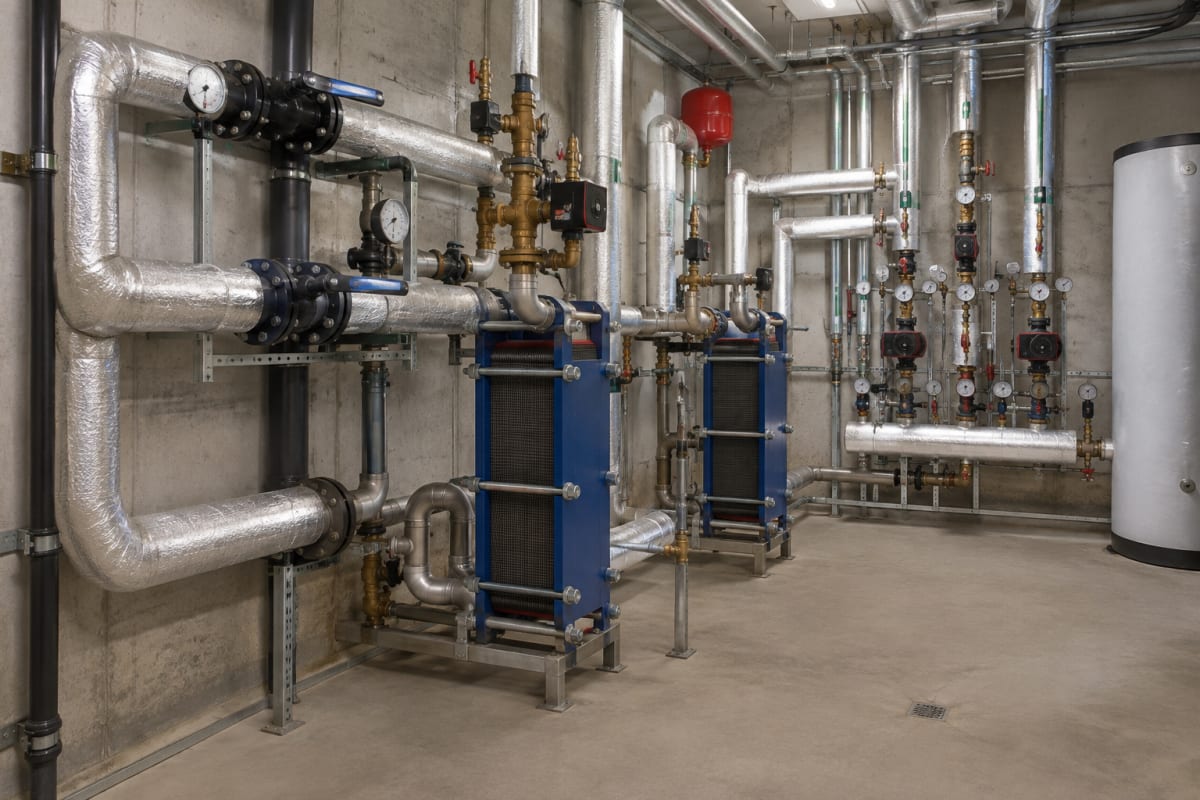
In a district heating network, thermal energy is produced off-site at central boiler plants or combined heat and power (CHP) facilities. It travels through insulated underground mains directly into the building's central heating substation. Inside the substation, commercial-grade heat exchangers transfer this thermal energy into closed loops that supply the building's radiators and domestic hot water (DHW). In Estonia, for instance, renewable sources and industrial waste heat accounted for roughly 75% of district heating in 2023, with consumer price caps set by the Estonian Competition Authority based on audited, cost-justified tariffs.
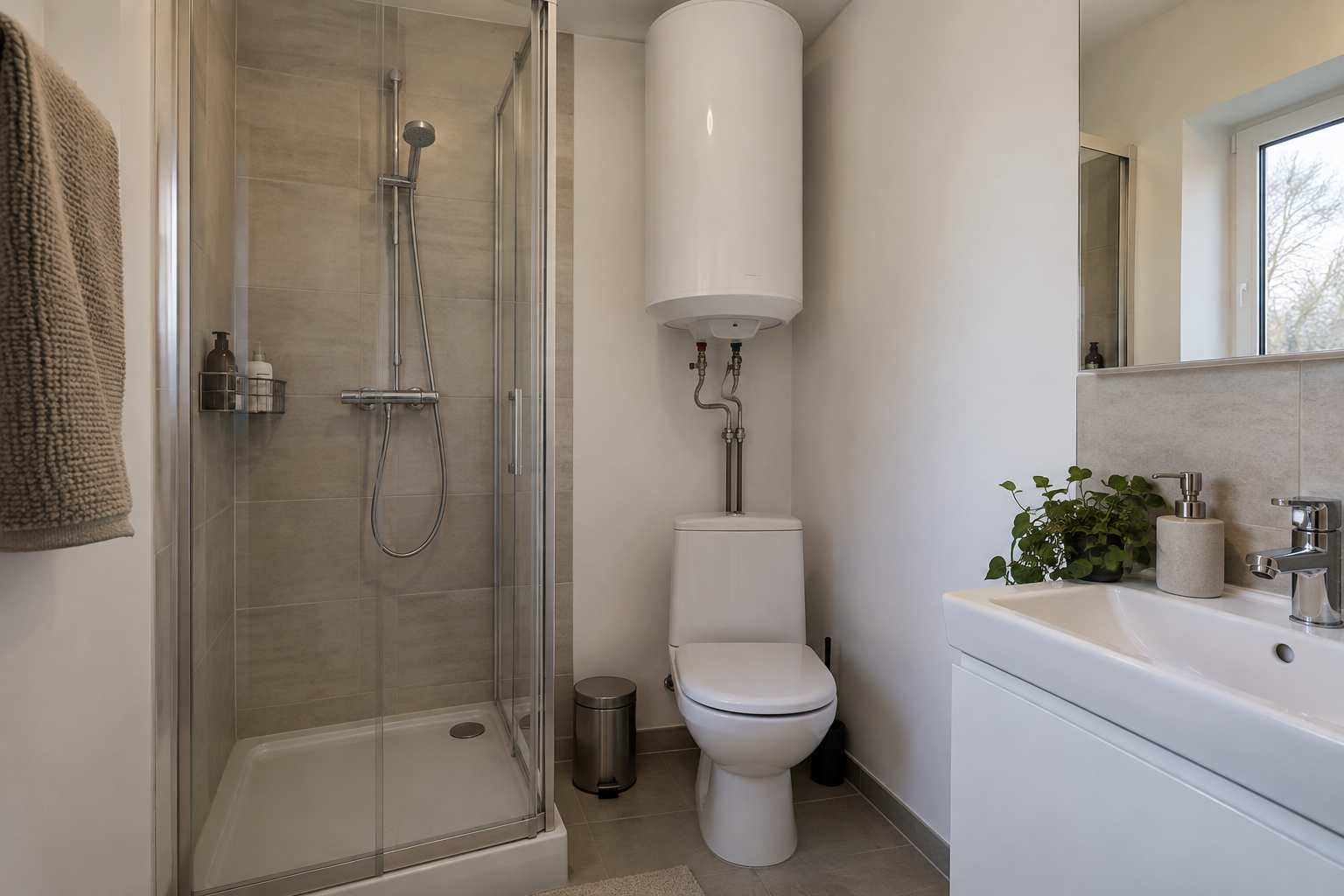
With an individual setup, the building supplies only cold water directly to your flat, where an in-unit appliance heats it on demand or stores it. The most common arrangement is an electric storage water heater or hybrid unit, which heats water inside a heavily insulated tank and holds it at a preset temperature. This gives you complete autonomy over your domestic hot water consumption and operating schedules, independent of your neighbors or building management.
If you are planning extensive remodeling across your property, explore our comprehensive guide to house renovation and planning the work.
Convenience and System Control
For most apartment owners, the day-to-day balance between convenience and independent control is the deciding factor.
Pros and Cons of District Heating in an Apartment
The primary appeal of district heating is completely hands-off operation. Hot water is available on tap in virtually unlimited quantities, and you do not have to sacrifice precious floor or wall space to house bulky appliances. Routine maintenance, scale removal, and component replacements are handled entirely by the building association’s contracted technicians, sparing you unexpected repair bills and servicing hassles.
The main drawback is your dependence on collective decisions. Heating schedules and seasonal changeovers are determined by building management or homeowner association votes. During volatile shoulder seasons in spring and autumn, this can leave your living space feeling drafty or overly warm before communal adjustments are made.
Pros and Cons of an Individual Water Heater in an Apartment
An in-unit water heater gives you year-round, pinpoint control over your water temperature and heating cycles. Modern smart units let you schedule heating cycles around off-peak electricity tariffs or engage self-learning eco modes that align with your family's daily habits.
However, tank capacity is finite. Once the stored hot water is exhausted, you have to wait for the element to recover. When sizing a unit, nominal tank volume is only half the story; you should also check the appliance's first-hour rating (FHR), which measures how much hot water it can supply during peak continuous use. In addition, finding space for a tank in a compact bathroom or utility cupboard can pose a genuine design challenge.
Energy Efficiency and Monthly Operating Costs
The thermal energy required to produce domestic hot water depends on three key variables: water volume, the specific heat capacity of water (roughly 4.2 kJ to raise one kilogram of water by one degree Celsius), and the delta between incoming mains water and the target tap temperature.
With district heating, billing relies on heat meters installed at the building substation alongside individual apartment sub-meters. Your monthly charge is determined by your local regulated heat tariff and your building association's agreed cost-allocation model.
For an electric water heater, running costs consist of direct heating energy plus standby loss—the heat that continuously dissipates through the tank walls into the surrounding room. Investing in a unit with dense, premium insulation substantially curbs standby loss, ensuring less electricity is wasted keeping reserve water up to temperature.
For deeper insights on boosting overall thermal efficiency, take a look at our guide on heating system energy efficiency at home.
Legal and Technical Restrictions
Before altering your apartment's hot water setup, you must account for municipal regulations and building-level technical constraints:
- District heating zone regulations: If your property falls within a designated municipal district heating zone, the building is connected as a single legal entity. In most jurisdictions, individual owners are legally prohibited from disconnecting from the central network independently.
- Homeowner association approval: Capping a central hot water riser to install a standalone electric tank requires formal notification and board approval. You must also confirm that your apartment's electrical service panel and incoming breaker capacity can accommodate the extra electrical load.
- Structural and plumbing requirements: A water-filled storage tank is heavy and demands a solid load-bearing wall, adequate circuit protection, and clear clearance for service access.
- Gas safety standards: If you plan to install a gas-fired boiler or water heater, the room must feature compliant ventilation, an approved flue/chimney, and an active carbon monoxide detector. The appliance must also pass mandatory safety inspections by a licensed technician every four years.
Comparing District Heating and an Individual Water Heater
| Feature | District Hot Water | Individual Electric Water Heater |
|---|---|---|
| Upfront capital cost | None (infrastructure is already built-in) | Appliance purchase, fittings, and installation |
| Space footprint | Minimal (pipework and water meters only) | Requires dedicated wall or floor space |
| Hot water availability | Continuous and practically unlimited | Limited by tank capacity and recovery rate |
| Operational independence | Low (tied to central building schedules) | Total control over temperatures and runtimes |
| Routine maintenance | None for the owner (managed by the association) | Periodic anode replacement and tank descaling |
| Cost management | Rigid (set by municipal utility tariffs) | Flexible (can leverage off-peak power rates) |
How to Choose the Right Water Heater for an Apartment
If your apartment lacks central hot water or you have permission to install a dedicated unit, selecting the correct tank capacity and form factor is crucial. An undersized unit means running out of hot water mid-shower, while an oversized model wastes electricity keeping excess water heated.
For further advice, check out our articles on the 5 common mistakes when choosing a water heater and how to choose the right water heater.
Capacity Based on Household Size
- 1 to 2 people: A compact 50-liter model is typically ideal. The vertical Ariston LYDOS PLUS 50 V, for example, fits easily into smaller layouts and reheats quickly.
- 2 to 3 people: An 80-liter unit provides a comfortable cushion. Reliable choices include the vertical Ariston LYDOS PLUS 80 V and the classic Ariston BLU1 R 80 V. If you are dealing with low ceilings or niche spaces, the horizontal Ariston BLU1 R 80 H is a practical alternative.
- 3 to 4 people: A 100-liter tank guarantees an uninterrupted supply for busy family routines, with the vertical Ariston BLU1 R 100 V serving as a solid benchmark.
To plan your installation geometry, see our practical advice on water heater sizing and placement in an apartment. If you are evaluating flow rates against storage designs, read our detailed comparison of tankless vs. storage water heaters.
Slim and Hybrid Solutions
Where floor space is at a premium, dual-tank slimline appliances offer high performance without dominating the bathroom. The Ariston VELIS PRO 80 and the larger Ariston VELIS PRO 100 feature an ultra-shallow depth of just 27.5 cm and support both vertical and horizontal mounting. Built-in ECO EVO software monitors household usage habits to cut electricity waste by up to 14%.
For maximum energy savings, consider a heat pump hybrid unit such as the Ariston LYDOS HYBRID 100. By combining air-source heat pump technology with an auxiliary electrical element, it achieves an A energy rating and delivers up to 50% energy savings compared to standard Class B electric tanks.
Water Heater Maintenance and Longevity
While district systems require no personal intervention, an in-unit water heater needs regular preventative maintenance to stay efficient and avoid premature failure:
- Sacrificial anode inspection: The magnesium anode prevents corrosive elements from attacking the steel tank wall. It should be checked every 12 to 24 months and replaced once depleted.
- Descaling: Mineral deposits settle on heating elements over time, forming an insulating barrier that slows heat transfer, extends heating cycles, and spikes power bills.
For step-by-step instructions, read our guide on water heater maintenance and cleaning. If your current unit is leaking or producing audible rumbling while heating, review our diagnostic checklist on when to replace your water heater.
Finding the Right Solution for Your Apartment
Deciding between district heating and an individual water heater ultimately comes down to your building’s technical setup, available square footage, and personal comfort priorities. District heating offers seamless, maintenance-free operation with an endless hot water supply, whereas a dedicated water heater delivers complete autonomy and precise control over your energy expenditure.
Explore our full catalog of high-efficiency water heaters and room-heating hardware, including radiators and thermal storage heaters. To review all residential thermal solutions, visit our heating systems category. Visit the Vipex showroom or contact our technical team to find the ideal setup for your apartment.