


What are slip-resistant tiles and when are they needed?
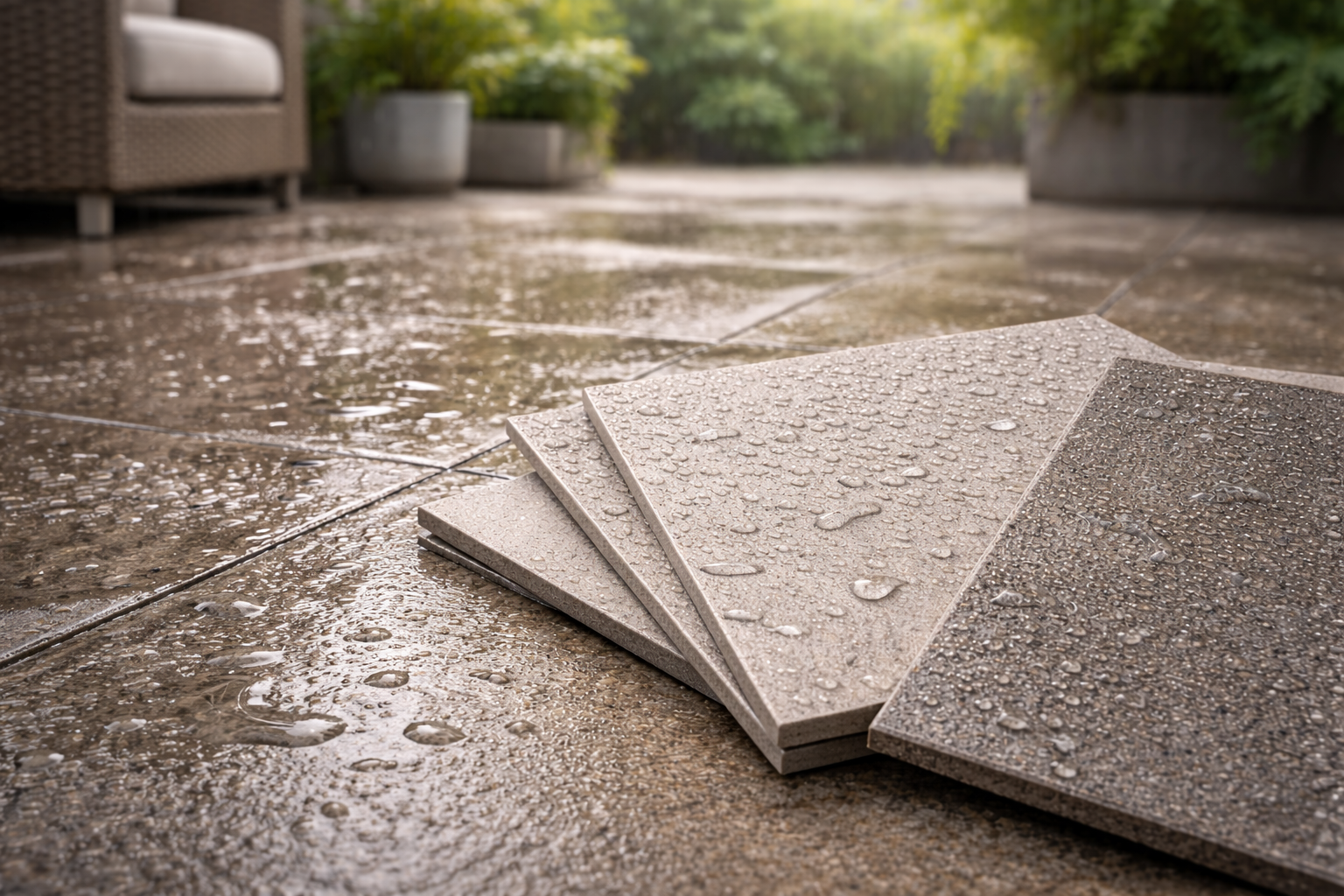
Slip-resistant tiles are not something you think about only after installation. This choice directly affects how safe and comfortable the space is in daily use, especially in areas where the floor gets wet or where there is frequent movement.
The risk of slipping is not just an inconvenience, but a real hazard. That is why floor tiles cannot be chosen based on appearance alone – they must also match the conditions of use and ensure secure movement in everyday situations.
What are slip-resistant tiles?
Slip-resistant tiles are floor tiles designed so that your foot has better grip even on a wet surface. This does not necessarily mean a rough or visually striking finish – even a subtle-looking tile can be safe if its surface is properly designed.
Slip resistance is not judged by appearance, but measured using an R rating, which provides a clear and comparable indicator.
R rating – what does it actually mean?
The R rating shows how slip-resistant a ceramic tile surface is, especially in wet and inclined conditions. The higher the number, the better the grip.
In practice, R9 is suitable for dry areas where the risk of slipping is low. R10 is a safe choice for bathrooms and hallways where the floor may occasionally get wet. R11 and higher are intended for outdoor areas and places with constant moisture.
The R rating system is based on the DIN standard, and additional guidance can be found in materials from the European Committee for Standardization.
It is important to understand that this is not just a number in a product description – it reflects how safe and stable the surface is in real use.
Where is slip resistance most important?
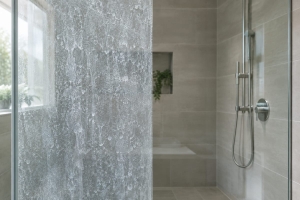
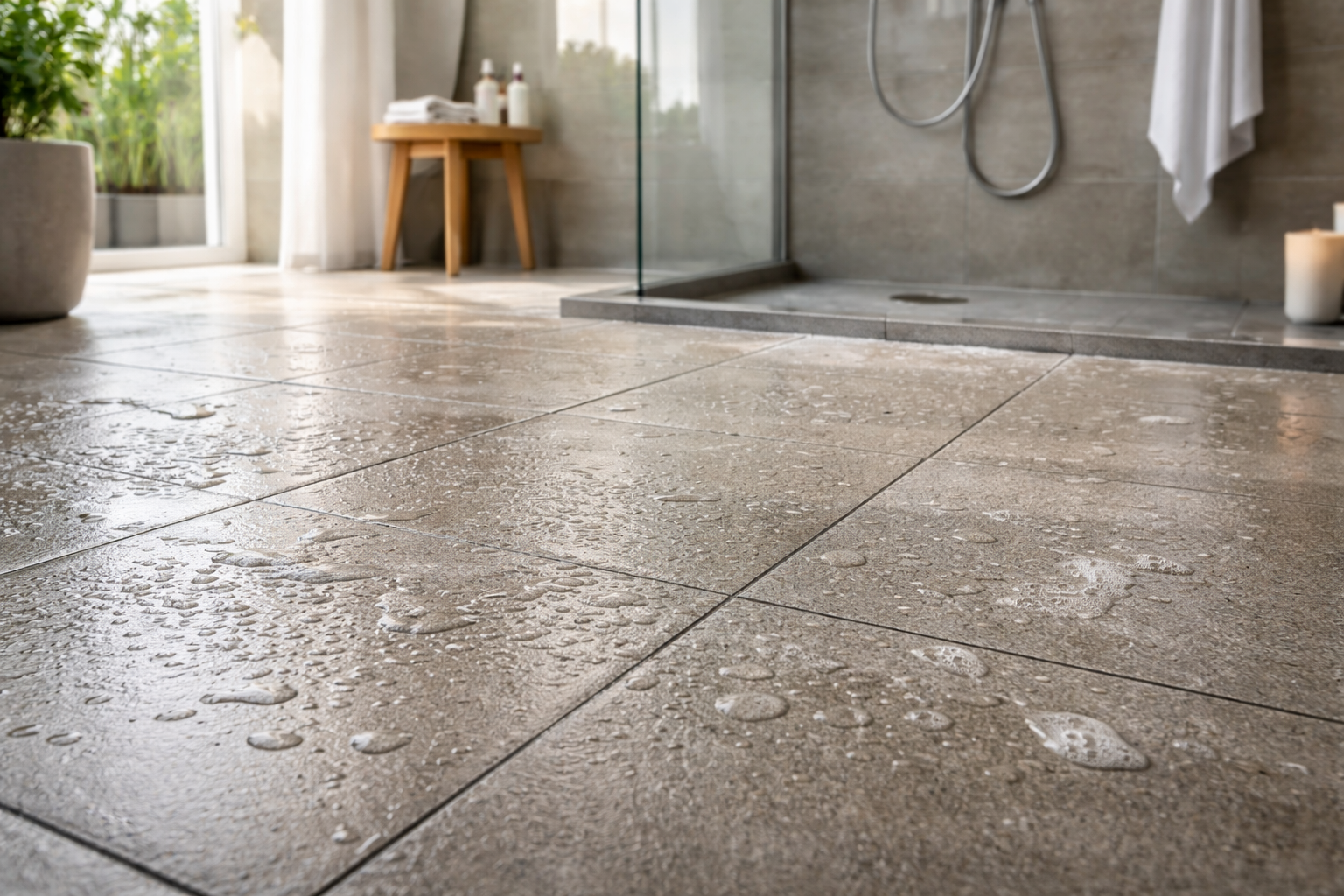
The most obvious example is the bathroom. In a shower area, the floor is constantly wet, so slip resistance is not optional but essential. At least R10 is suitable here, often R11, to ensure good grip even with water and soap on the surface. The same applies to the rest of the bathroom floor, where R10 is generally a safe and practical choice for daily use.
The hallway is another area where slip resistance is often overlooked. Wet shoes bring in water, snow, and dirt, and a smooth floor quickly becomes slippery in these conditions. That is why it makes sense to choose at least R10 rated tiles, which provide better grip in everyday use.
Terraces and balconies are even more demanding. Rain, ice, and temperature changes constantly affect the surface, increasing the risk of slipping. In these conditions, it is sensible to choose at least R11 tiles, which maintain grip even in wet and cold weather.
The same logic applies to garages and utility rooms. Even if the surface is not always wet, conditions change, and dirt or moisture can make it slippery. In these spaces, R10 is a good minimum, but with higher load and moisture, R11 is worth considering.
Surface finish and maintenance
Slip resistance depends mainly on the surface of the ceramic tile. A smooth surface is easier to clean, but becomes slippery more quickly when wet. A matte or slightly textured surface offers better grip, but requires a bit more attention when cleaning.
That is why the choice should be based on the room. In bathrooms and shower areas, it is sensible to prefer a surface with higher grip, even if it needs more maintenance. In living areas where the floor stays mostly dry, a smoother and easier-to-maintain finish is a practical choice.
PEI wear rating and why it matters
In addition to slip resistance, it is important to consider the tile’s wear resistance, known as the PEI rating. This shows how well the tile withstands daily use, foot traffic, and dirt that inevitably ends up on the floor.
In areas with higher load, such as hallways, kitchens, or terraces, it is not enough for a tile to have good grip. It must also handle shoes and constant movement. If the wear resistance is too low, the surface will start to wear over time, and its original grip may also decrease.
That is why these two properties should not be viewed separately. Slip resistance and wear resistance need to work together to ensure the floor remains both safe and durable over time.
How to choose the right solution
Slip-resistant tiles in the Vipex selection
The Vipex selection includes floor tiles suited for different spaces and usage conditions.
Taurus series tiles with R10 slip resistance are a good solution for bathrooms and hallways, where the floor may occasionally get wet but still needs to remain comfortable for everyday use. For terraces and balconies, there are ceramic tiles with higher grip designed for outdoor conditions.
Wall tiles help keep the space balanced – the floor remains practical, while the walls create a lighter and calmer overall look.
We also recommend exploring other Vipex blog posts and browsing the tile selection in the Vipex e-shop to find a solution that fits your space and its use.
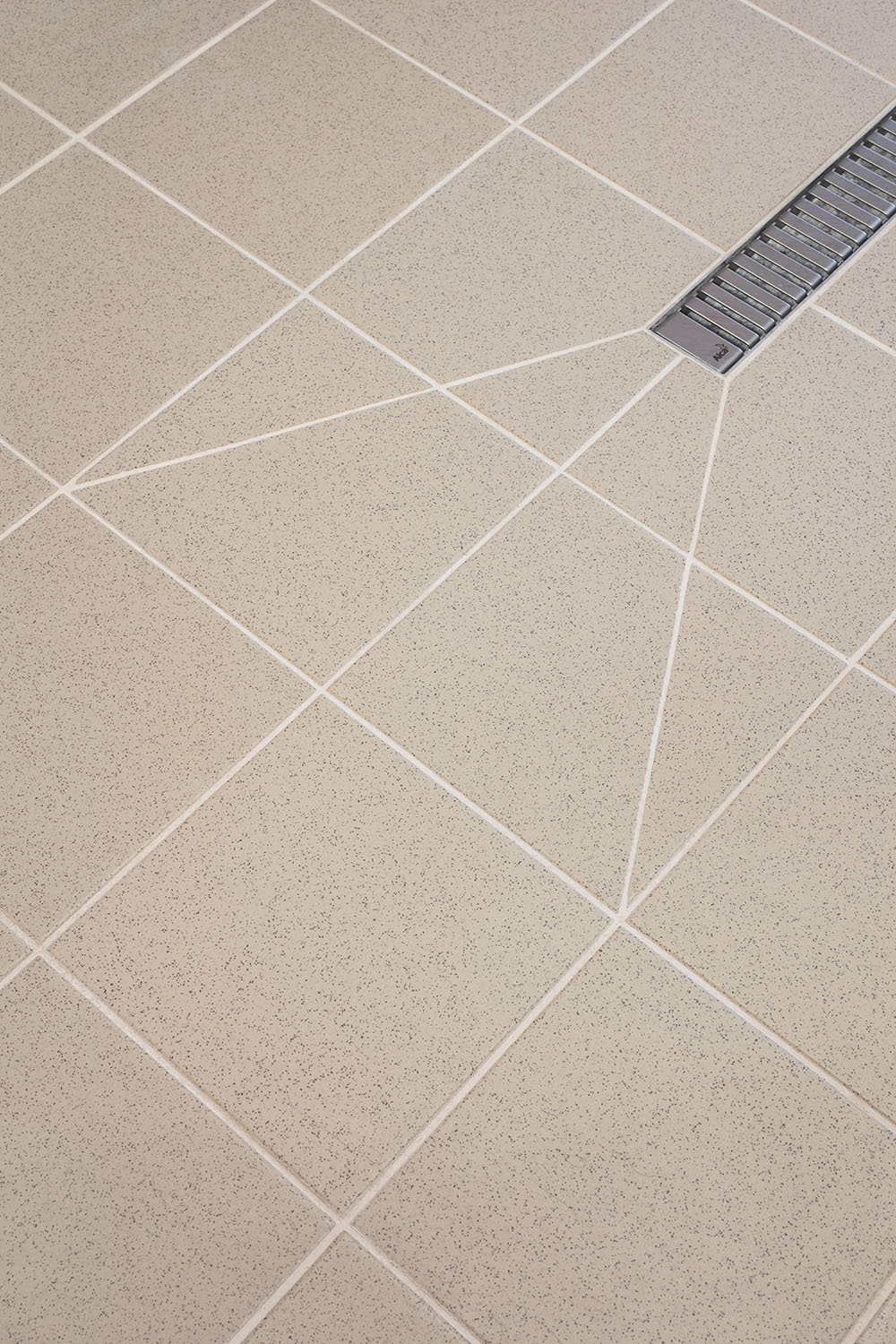
Slip-resistant ceramic tiles are not a detail to leave until last. They determine how safe and comfortable the space actually is.
The R rating is a good starting point, but the final choice always depends on where and how the surface is used. When the choices are right, you get a surface that holds up in daily use and also looks good. If you need help finding the right solution, feel free to contact the Vipex team.