


Tiled Accents: How the Right Details Elevate an Interior
True style is found in the details. Elements like windowsills, recessed niches, and stair treads often determine whether a room feels merely functional or masterfully designed. Tiled accents do more than just tie an interior together—they provide a level of durability and hygiene that paint or wood simply cannot match.
Windowsills: Integrating Style and Substance
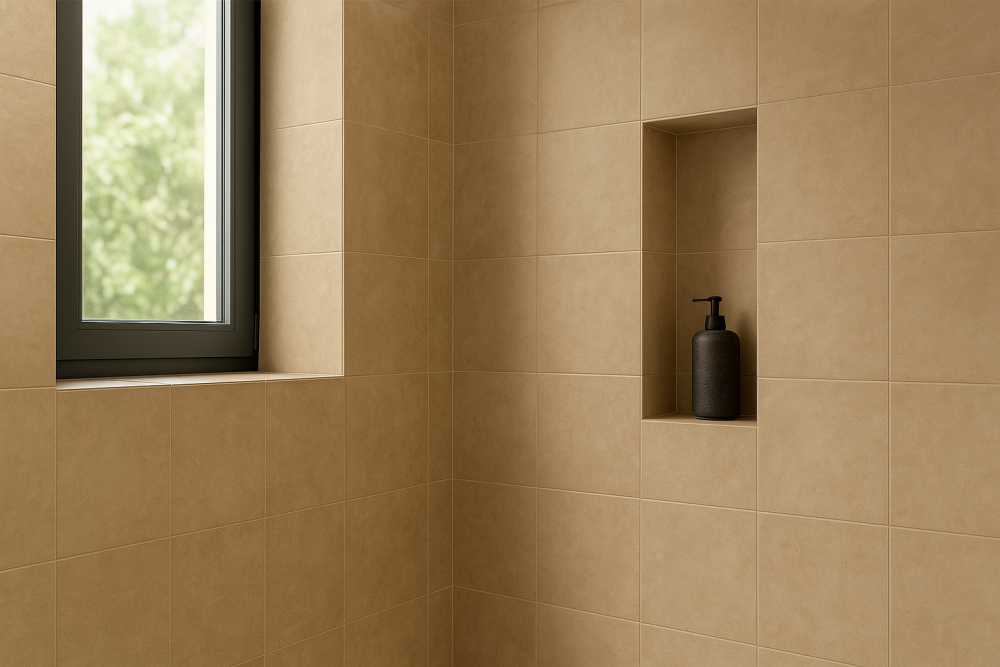
Tiled windowsills are far more than a practical surface; they offer an opportunity to frame a view and integrate the window into the room’s broader aesthetic. Glossy tiles reflect natural light, turning the ledge into a striking focal point, while soft matte finishes allow the surface to blend harmoniously with the walls.
For a more luxurious feel, consider marble-effect tiles such as the Apavisa Onice Ambar decorative tile, which adds depth and elegance to any room. You can explore the different visual impacts of these finishes in our guide to glossy and matte surfaces.
Custom Niches: Functional Elegance
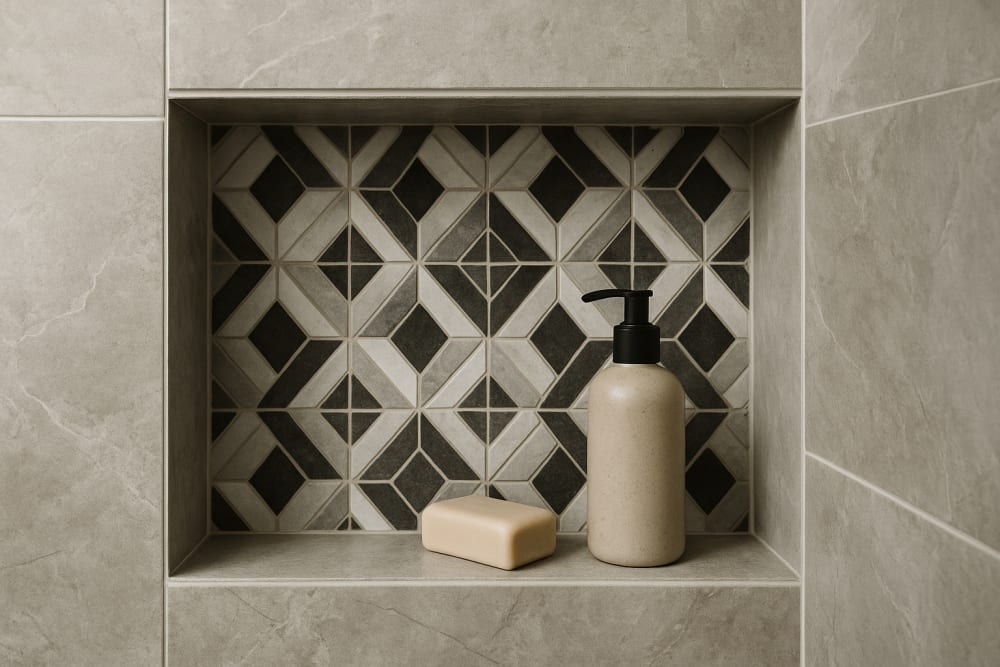
Tiled niches have become a hallmark of modern bathroom design. They provide convenient storage for toiletries while acting as a sophisticated design accent. By using the same tile as the surrounding walls, you can create a minimalist, "carved-out" look that maintains the flow of the room.
If you prefer a bolder statement, a niche is the perfect place for a design highlight. Glass mosaic tiles are particularly effective here, catching the light and adding visual texture. In smaller bathrooms, light tones and small-format mosaics—like the Alaska glass mosaic—help maintain a sense of openness and airiness.
Stair Treads: Balancing Aesthetics and Safety
When tiling staircases, safety is the primary concern. In moisture-prone areas or high-traffic zones, it is critical to select tiles with a slip-resistance rating of at least R10 or R11. High-quality ceramic or porcelain ensures the stairs remain both beautiful and structurally sound for decades.
Beyond ceramics, natural stone tiles remain a timeless choice. Granite treads, for example, offer a unique texture and individual character. Tiles can be used to extend the flooring design for a seamless transition between levels, or they can be used as a contrasting element to make the staircase an architectural centerpiece.

Edge Profiles: The Professional Finish
A common oversight in DIY tiling is neglecting the edges. Because the sides of a tile are typically unglazed and unfinished, they require protection. Finishing profiles (or trim strips) cover these exposed edges, preventing chipping and ensuring a clean, polished corner.
- Aluminum and stainless steel profiles are the gold standard for high-traffic areas where durability is paramount.
- PVC profiles offer a vast range of colors, making them an excellent choice for matching specific bathroom palettes.
- Sizing: The profile height should match the tile thickness, plus a 1–2 mm allowance for the thin-set mortar, to ensure a perfectly flush finish.
- Transitions: Using dedicated skirting tiles at the wall-to-floor transition, such as the Rako Betonico white-grey plinth, creates a clean look and protects the base of the wall from moisture and impact.
Installation Essentials: Planning for Perfection
Tiling intricate details requires meticulous planning. For complex surfaces involving significant cutting—such as niches and windowsills—it is wise to budget for 15% extra material rather than the standard 10%. This buffer accounts for the waste and precision cuts required for small spaces.
It is also vital to remember that all internal corners and changes in plane (e.g., where a niche meets a wall) act as movement joints. These should never be filled with standard grout, which is prone to cracking as the building settles; instead, use a flexible silicone. For more technical advice, refer to our comprehensive guide to ceramic tile installation and maintenance.
The "Tile Drenching" Trend: Seamless Visual Unity
One of the defining trends for 2025 is "tile drenching"—the practice of covering an entire space in a single tile type to create a serene, monochromatic environment. In these layouts, windowsills and niches disappear into the walls, making the room feel like a single, unified architectural unit. To achieve this look, modern ceramic tiles or innovative glass mosaics are the preferred materials for creating cohesive accent surfaces.
From the window ledge to the rise of a staircase, these subtle details define the character and longevity of a home. Vipex is an interior finishing expert with decades of experience in high-end solutions for both residential and commercial projects. Visit our Tallinn showroom or browse our online store to find the perfect materials to finish your home to a professional standard.