


Sockets in the Bathroom: IP Zones and Safe Installation
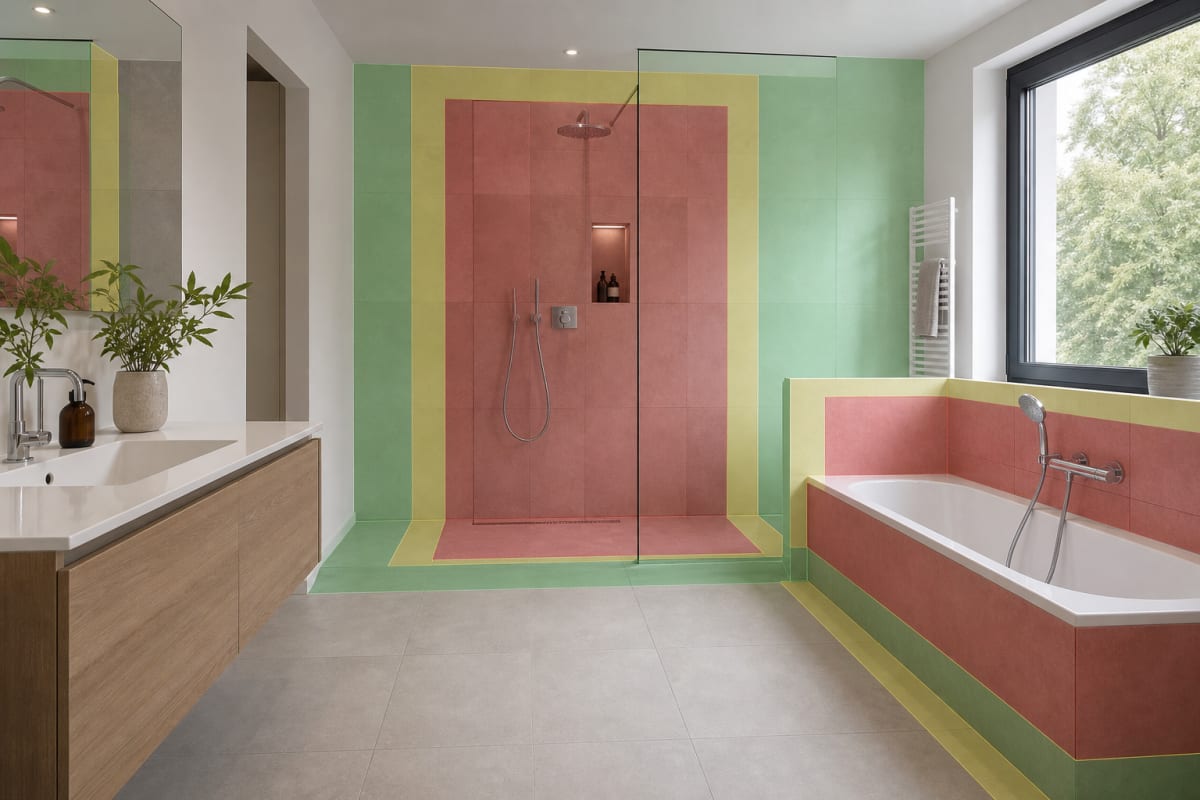
Do you know where electrical sockets can be safely installed in a bathroom to eliminate the risk of electric shocks and short circuits? Installing an outlet in the wrong spot can be extremely dangerous. However, by understanding electrical safety zones and IP ratings, you can easily create a space that is both practical and fully compliant with safety standards.
Electrical Safety Zones in the Bathroom
Because moisture significantly increases electrical risks, bathroom installations are subject to strict standards, such as IEC 60364-7-701. To ensure safety, the space is divided into distinct zones based on humidity levels and proximity to water sources:
- Zone 0: The interior of the bathtub or shower tray. Only specialized low-voltage equipment (up to 12V) with an ingress protection rating of at least IPX7 is permitted here. Sockets are strictly prohibited.
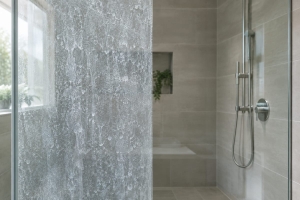
- Zone 1: The area directly above the bathtub or shower enclosure up to a height of 2.25 meters from the floor. Electrical fittings in this area must have a minimum rating of IPX4. Standard power sockets cannot be installed here.
- Zone 2: The area extending 0.6 meters outward from Zone 1, up to a height of 2.25 meters. Equipment installed here must also carry at least an IPX4 rating for splash resistance. Standard 230V sockets are not allowed in this zone.
- Outside Zones: Any area beyond Zone 2, situated more than 0.6 meters from the edge of the bath or shower. Sockets may be installed in these areas, provided they are protected by a residual current device (RCD).
When planning your overall layout and positioning fixtures, check out more practical advice in our guide to bathroom design.
Socket Placement Around Basins and Vanity Units
While standard regulations do not classify the area around a washbasin into numbered zones, a vital rule of thumb applies: never install sockets directly beneath a tap or anywhere they could be exposed to direct water splashes.
As a best practice, install outlets to the side of or above the basin, maintaining a minimum clearance of 60 cm from the center of the tap. Sockets should also be mounted at least 10–15 cm above the vanity countertop rather than resting flush against the surface.
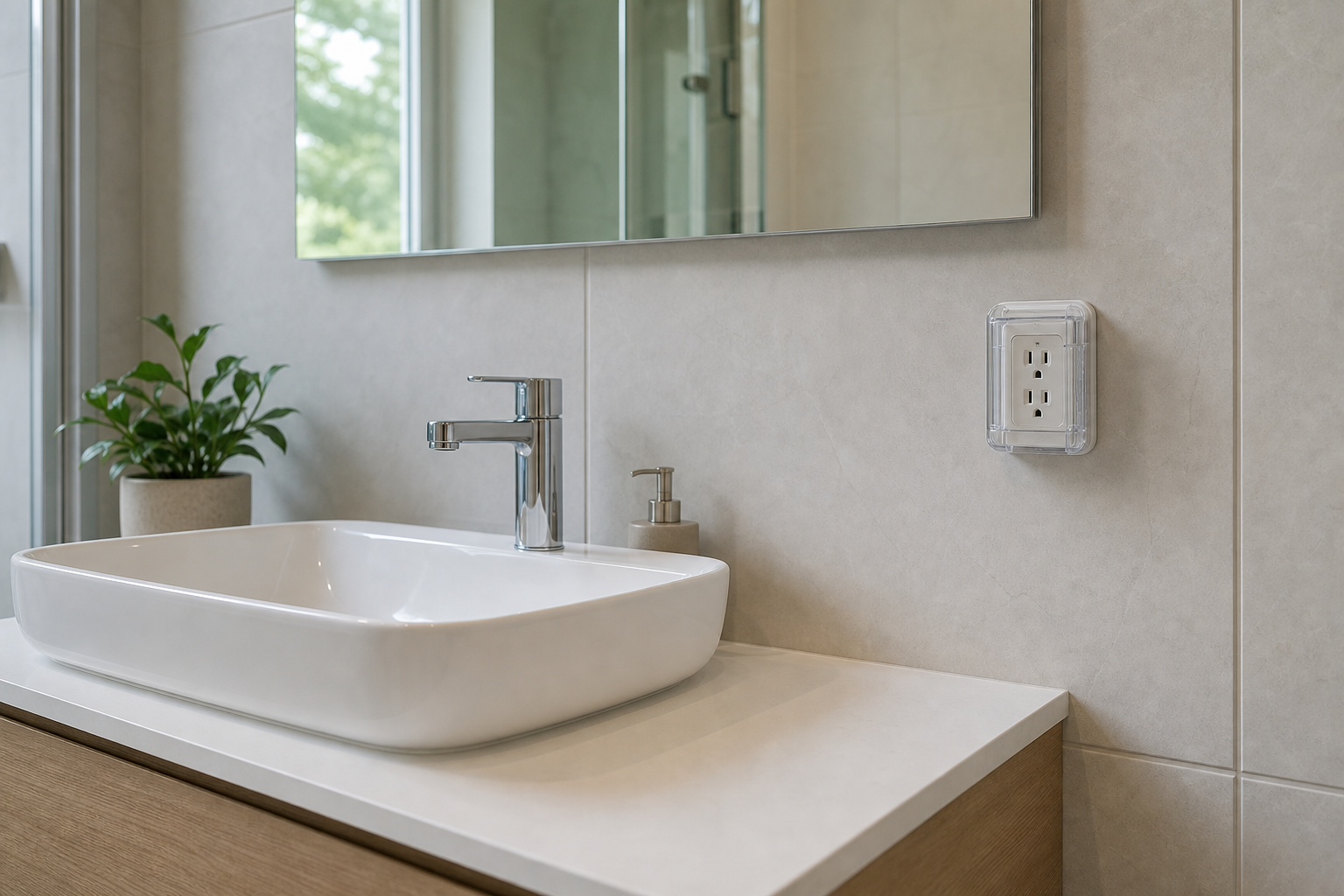
If you are currently configuring your storage and vanity setup, explore our collection of bathroom furniture. For more compact layouts, freestanding wall cabinets offer an ideal way to keep daily essentials and appliances safe from moisture.
Mirrored Cabinets with Integrated Sockets
One of the safest, most convenient ways to access power near the basin is with a mirrored cabinet featuring a built-in socket. These units combine lighting, mirrors, and power outlets inside a single splash-proof housing (typically IP44 rated).
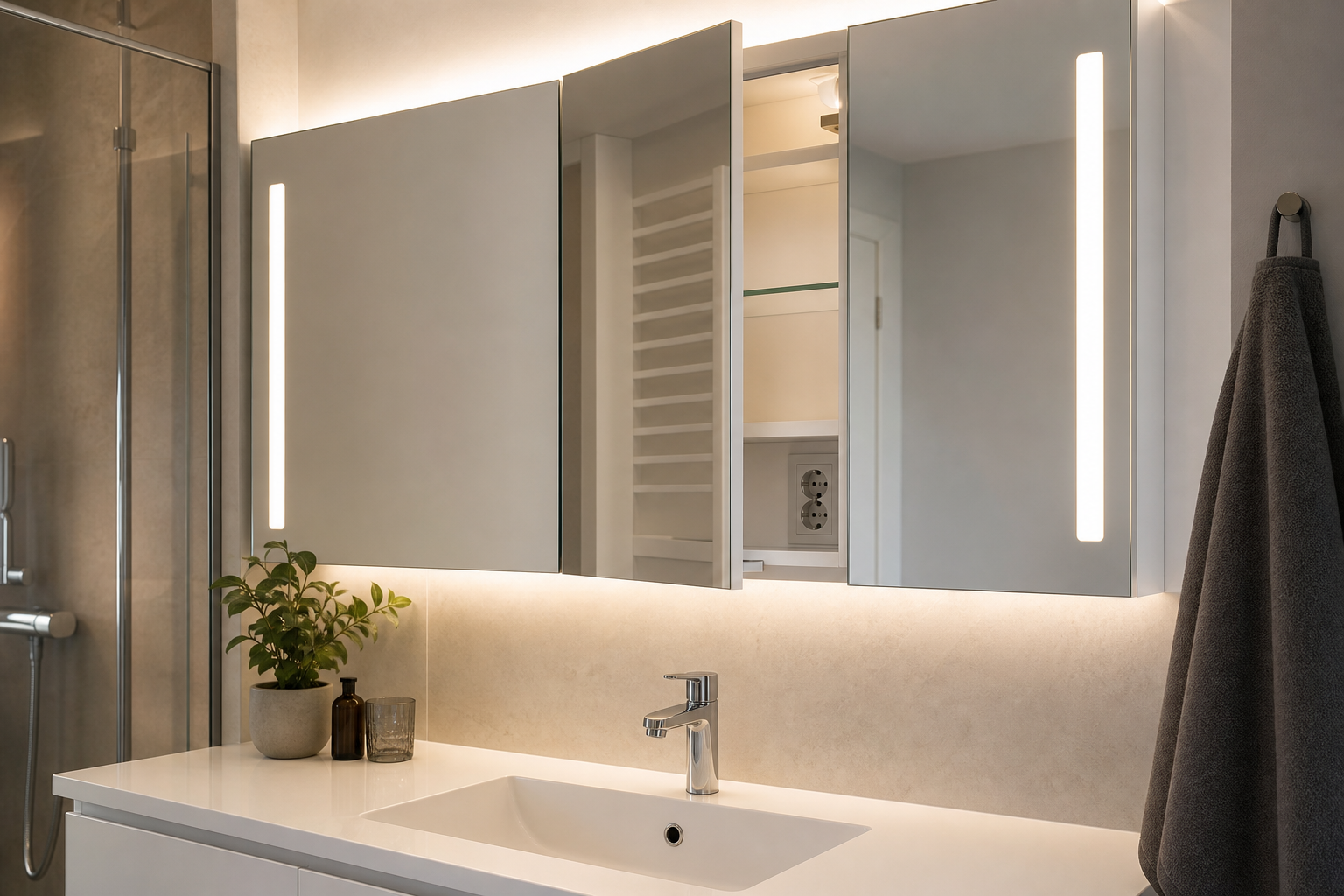
- The Harma Serena mirror cabinet set features soft-close doors, integrated LED lighting, and an IP44-rated switch and socket.
- For smaller bathrooms, the Harma LED-illuminated mirror cabinet delivers practical storage paired with dependable moisture protection.
- If you want a more expansive mirror and a high-end aesthetic, the Laufen MIMO mirror cabinet is an exceptional option.
To complement your vanity area, browse our full range of bathroom lighting, including the Harma Serena LED light. For low-voltage setups, ensure stable performance with the Harma transformer for LED lighting. For an in-depth breakdown of IP ratings, read our guide on choosing bathroom lighting.
Residual Current Devices and Installation Best Practices
Every standard socket in a bathroom must be protected by a 30 mA residual current device (RCD). An RCD continuously balances the circuit and cuts power in milliseconds if it detects a leak—such as an appliance dropping into water or damaged internal wiring.
Key considerations for your electrical installation:
- Wiring and layout: Complete all electrical conduit work and wiring before installing wall finishes and tile backer boards. Learn more about step-by-step planning in our guide on house renovation: where to start.
- Protecting waterproofing layers: Electrical back boxes must never compromise the integrity of the waterproofing layer behind your tiles. Read our detailed advice on bathroom waterproofing under tiles.
- High-draw fixtures: If your project includes underfloor heating or a mechanical ventilation unit, allocate dedicated wiring and separate circuit breakers during the design phase.
By following designated safety zones, installing RCD protection, and choosing the right IP-rated products, you can build a bathroom that is effortlessly functional and entirely safe. Explore our full range of moisture-resistant mirror cabinets and lighting fixtures in the Vipex online store, or come visit us in our showroom!