


Parquet Flooring Maintenance: How to Keep Hardwood Floors Beautiful for Years
Has your wooden floor lost its original luster, or are you starting to notice fine surface scratches? With the right care and cleaning routine, you can preserve the natural warmth of your parquet, extend its lifespan for decades, and avoid costly, disruptive refinishing down the road.
Daily Cleaning and Preventive Floor Care
Consistent day-to-day care is the simplest way to protect your floor’s protective finish. Loose dust, sand, and fine grit act like sandpaper underfoot, gradually grinding away the lacquer or oil coating under everyday traffic.
Follow these essential guidelines for day-to-day wood floor care:
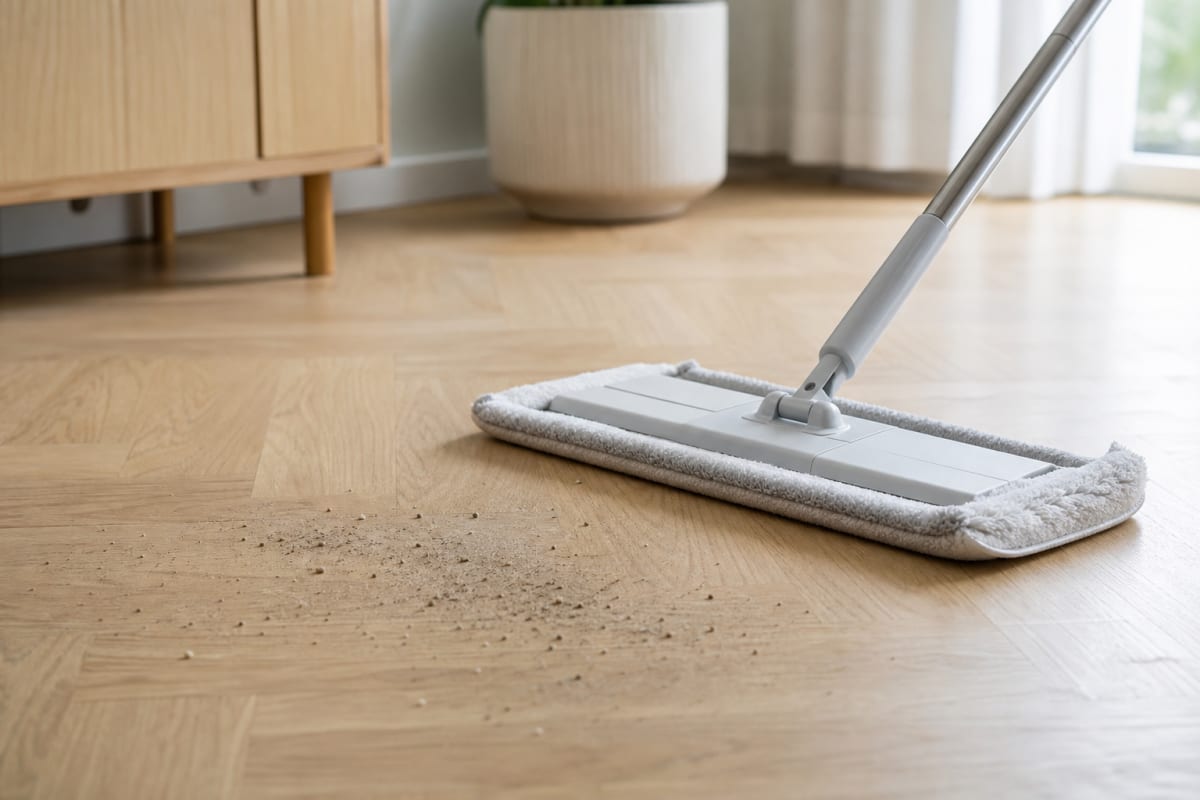
- Stick to dry cleaning: Sweep regularly using a microfiber mop or vacuum the surface using a soft parquet brush attachment.
- Avoid wet mopping: Never use a soaking wet mop or a steam cleaner. Steam and standing water can seep into micro-cracks between the boards, causing the edges to swell, cup, or warp while breaking down the protective seal.
- Wipe up spills immediately: If liquids spill on the floor, wipe them up immediately with a dry or lightly dampened cloth.
- Lay down protective mats: Place heavy-duty doormats at entryways to trap grit, dirt, and moisture before they reach the wood. Adding an absorbent mat near the kitchen sink is another smart preventive measure.
- Protect against furniture scuffs: Fit chair and table legs with dense felt pads, and always lift heavy furniture instead of dragging it across the room.
The Role of Indoor Climate in Floor Preservation
Wood is a living, hygroscopic material that naturally responds to changes in ambient temperature and relative humidity. Drastic humidity swings can cause hardwood planks to dry out, shrink, cup, or crack along the grain.
To maintain structural stability, keep your home’s relative humidity between 35% and 55% year-round. During the heating season, when dry air takes a toll on wood, running a humidifier will help safeguard your floors. In the summer, adequate ventilation or air conditioning keeps excess humidity under control.
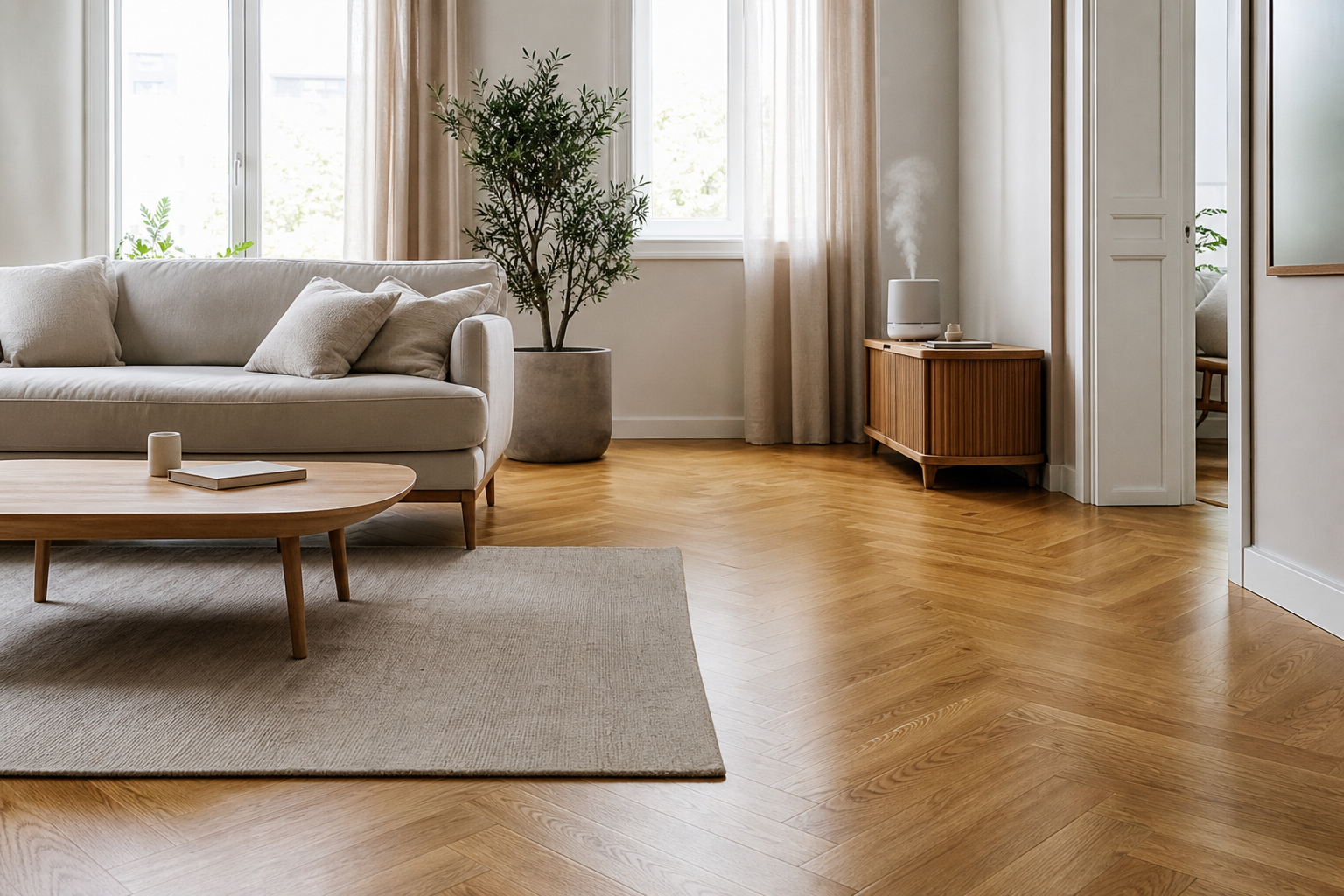
For zones exposed to persistent moisture—such as mudrooms, entryways, or wet areas—consider durable transition materials. Explore our guide on combining parquet and tiles for practical inspiration across different living zones.
Caring for and Restoring Lacquered Parquet
A lacquered finish forms an unbroken protective barrier across the surface of the timber, keeping dirt, stains, and spills at bay. High-quality products like Esta Parket, finished with factory-applied UV-cured lacquer, deliver outstanding wear resistance and effortless routine cleaning. The main trade-off is that localized spot repairs are trickier on lacquered surfaces than on oiled alternatives.
Cleaning Lacquered Floors
Once you have cleared away dry dust and grit, clean lacquered floors with a well-wrung, damp mop and a dedicated pH-neutral cleaner formulated for lacquered finishes. Steer clear of aggressive universal detergents and abrasive scrubbing pads, as they will dull the sheen over time.
Screen and Recoat (Interim Lacquering)
If your floor has accumulated light micro-scratches and lost its sheen over the years—but the wear has not penetrated the bare timber—there is no need for a full sanding. Instead, lightly abrade the top finish (screening or buffing) and apply 1–2 fresh coats of lacquer. This restores a factory-fresh luster without eroding the hardwood top layer.
Full Sanding and Refinishing
If the protective lacquer has worn away down to raw timber, or if the floor has sustained deep gouges or water damage, a full sand-down and complete recoating will be necessary to restore the surface.
Caring for and Re-oiling Oiled Parquet
Natural oil penetrates deep into the wood pores, highlighting the authentic grain while maintaining an inviting, tactile warmth underfoot. Read more about how to choose parquet for your home to compare the practical benefits of different surface finishes.
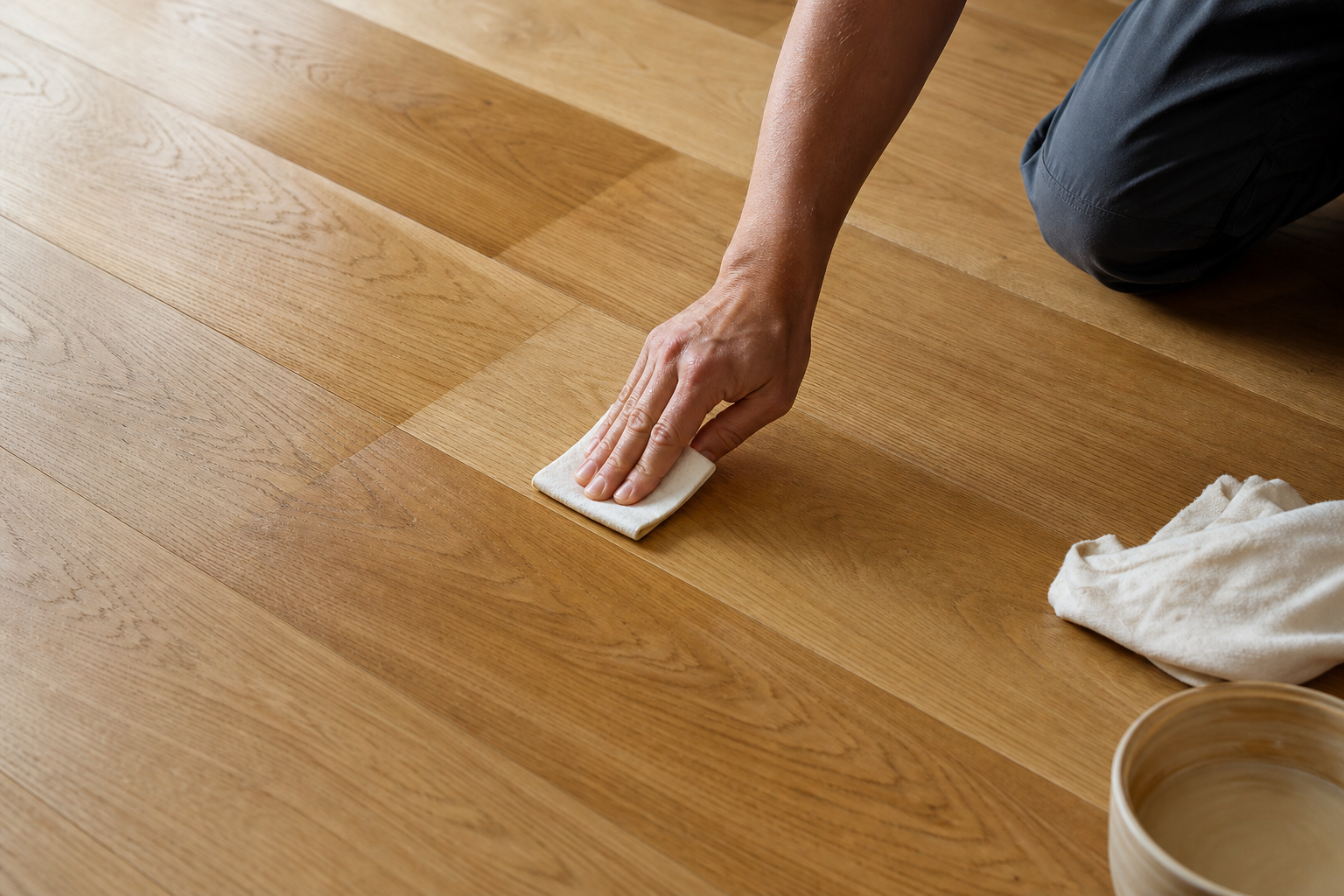
The distinct advantage of an oiled wood floor is that localized scratches and worn patches can be touched up seamlessly. However, it does require periodic maintenance oiling to replenish its moisture barrier and prevent dirt from setting into the grain. In typical residential environments, oiled parquet should be refreshed every 1.5 to 3 years, whereas high-traffic commercial spaces will need more frequent touch-ups.
Signs Your Oiled Floor Needs Re-oiling
- The timber looks faded, dry, or rough to the touch.
- The finish loses its even tone, showing grayish, dull wear patterns in high-traffic paths.
- Dirt and water stains start adhering to the surface, making everyday cleaning noticeably harder.
Steps for Maintenance Oiling
- Deep cleaning: Thoroughly clean the floor with an intensive wood cleaner designed for oiled surfaces, and allow it to dry completely.
- Applying the oil: Spread a thin, uniform coat of maintenance oil along the direction of the wood grain, ensuring no pools form.
- Buffing and wiping away excess: Wipe off all excess oil completely using a lint-free cotton cloth. The surface should feel dry with no tacky spots left behind. For large open areas, use a single-disc rotary buffer for a smooth, uniform finish.
- Drying and curing: While light foot traffic is usually safe within a few hours, the oil requires 7–10 days to fully cure. Avoid damp-cleaning or heavy foot traffic during this curing period.
Safety note: Rags and applicator pads soaked in finishing oil carry a risk of spontaneous combustion. Once finished, submerge all used cloths in water or store them in a tightly sealed, fireproof metal container.
Choosing the Right Care Routine
Every natural wood floor deserves thoughtful attention, but maintaining its character does not have to be complicated. Routine dry cleaning, a balanced indoor climate, and timely re-coating or maintenance oiling will protect your investment and keep your floors stunning for generations.
If you are planning a renovation or searching for premium, long-lasting wood flooring for your home or commercial project, explore the collection at the Vipex showroom and online store, or consult our flooring specialists for tailored advice.