


Moisture-Resistant Bathroom Wallpaper: A Guide to Selection and Installation
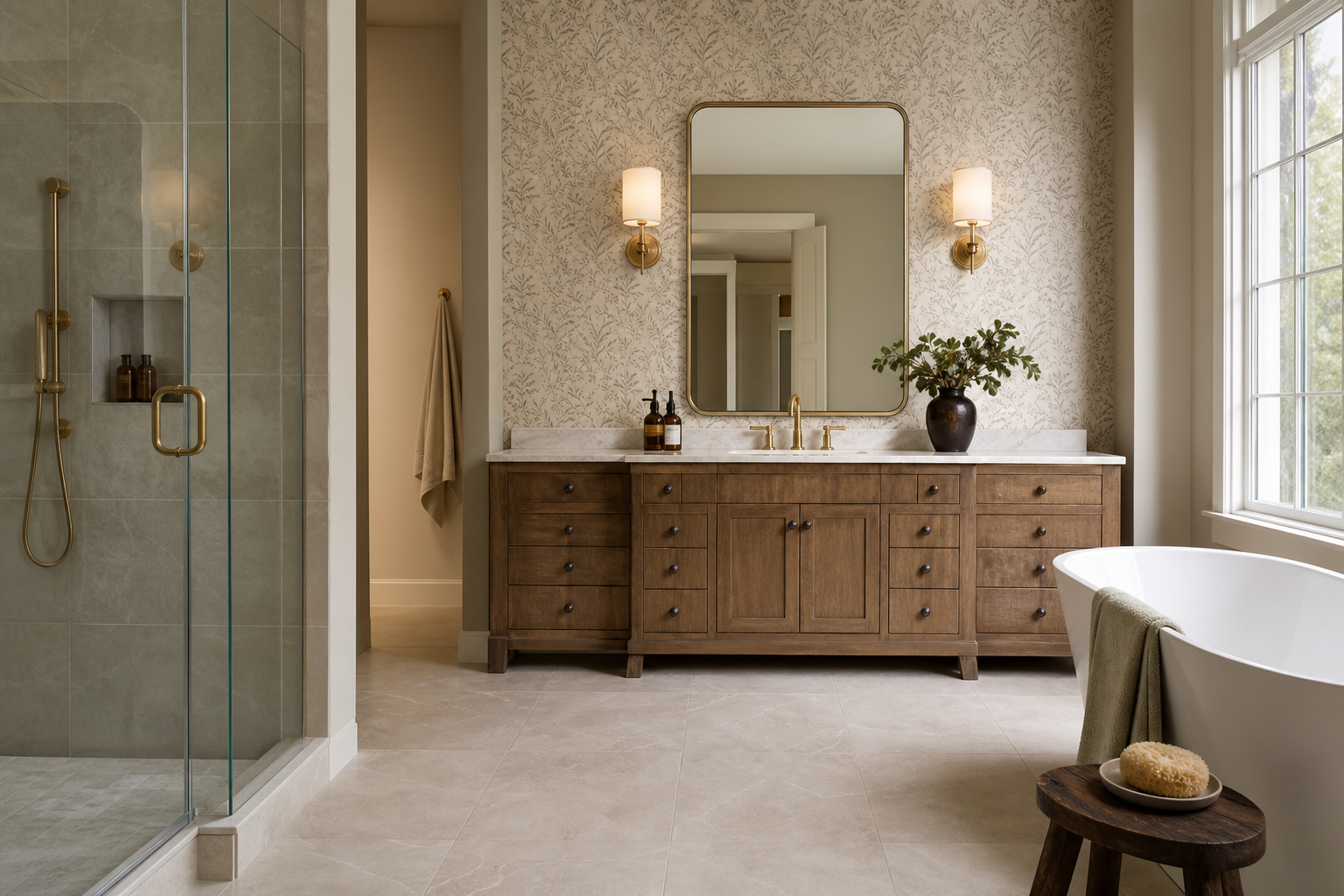
Is bathroom wallpaper a design risk or a sophisticated décor choice? With modern material innovations, you can now achieve a high-end look without sacrificing durability—provided you select the right products and follow professional installation techniques.
Choosing the Right Wallpaper for High-Humidity Spaces
The bathroom is the most demanding environment in the home. Relative humidity can spike above 60% in less than half an hour, making standard paper or textile wallpapers unsuitable; they absorb moisture quickly and become a breeding ground for mold growth. When designing your bathroom, prioritize materials specifically engineered for damp conditions.
The following options are best suited for bathroom environments:
- Vinyl Wallpaper: Often the top choice for bathrooms, its protective plastic or vinyl top layer prevents moisture from penetrating the backing. It is mold-resistant, easy to maintain, and can withstand scrubbing when necessary.
- Non-Woven Wallpaper: Known for its breathability and dimensional stability, non-woven material does not expand or contract when humidity fluctuates. This is an excellent choice for well-ventilated bathrooms where the walls do not come into direct contact with water.
- Fiberglass Wallpaper: An incredibly robust and moisture-proof solution. Fiberglass is immune to water damage and scratches, and when finished with specialized bathroom paint, it creates a fully waterproof and fire-resistant surface.
In our wallpaper selection, you will find versatile solutions ranging from the minimalist, neutral tones of the Pure & Easy series to the sophisticated patterns of the Artemis collection, designed to turn any wall into a focal point.
Strategic Placement and Practical Solutions
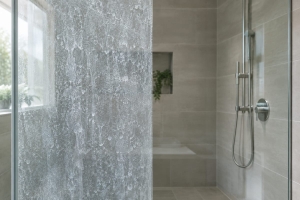
Even high-quality moisture-resistant wallpaper is not intended for "wet zones," such as the interior of a shower enclosure or the area directly above a bathtub where water runs down the walls. For these high-exposure areas, ceramic tiles remain the industry standard. Wallpaper is most effective as an accent on walls away from direct splashes or on the upper portion of a wall where the lower half is protected by a tiled wainscot.
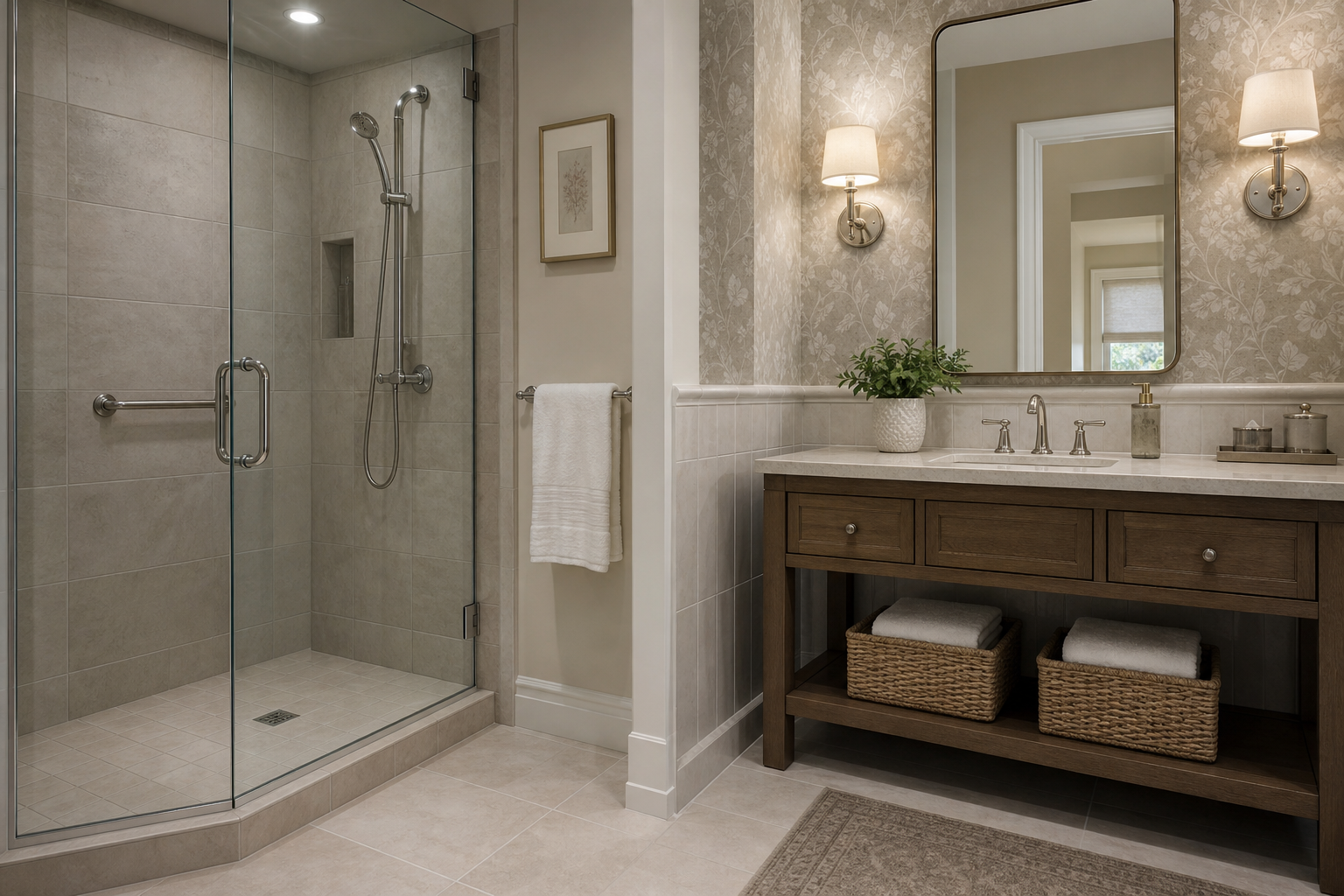
If you choose to install wallpaper behind a vanity, ensure the edges are meticulously sealed to prevent water from seeping behind the material. Strategic placement not only preserves the aesthetic but also significantly extends the lifespan of the wallpaper by preventing edge peeling.
Installation Tips for Long-Lasting Results
The longevity of bathroom wallpaper depends entirely on proper preparation. Before you begin, ensure the walls are completely dry; ideally, the moisture content of the substrate should be below 10%.
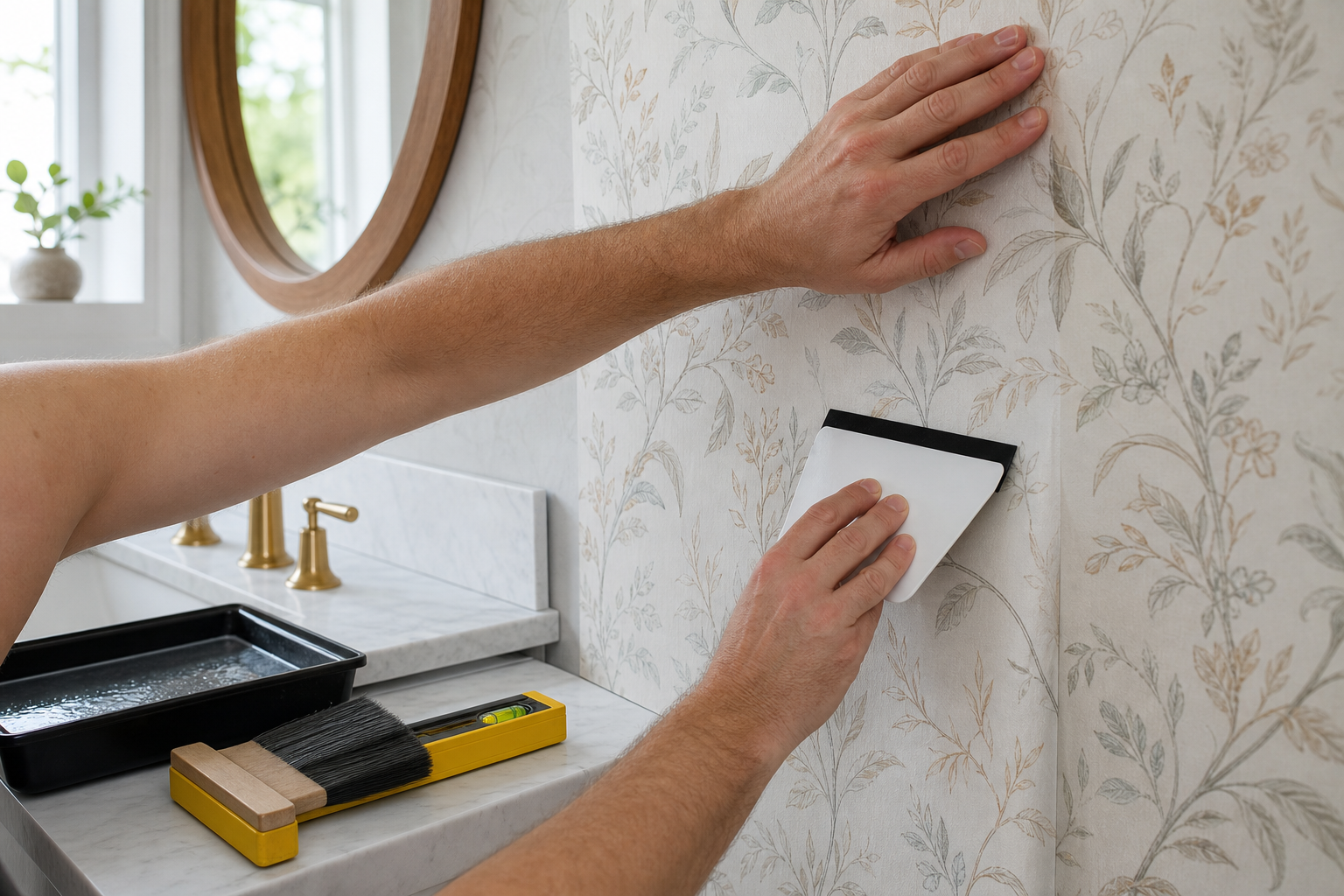
- Surface Preparation: Clean the walls thoroughly to remove dirt and oils. Apply a specialized anti-fungal primer to improve adhesion and prevent mold from developing behind the sheets.
- Adhesive Selection: Use a heavy-duty adhesive specifically formulated for wet rooms or vinyl. These pastes are less water-soluble and ensure the seams remain secure even in the steamiest conditions.
- Sealing the Edges: This is a critical final step. Apply a bead of clear sanitary silicone where the wallpaper meets the vanity, baseboards, or ceiling to create a watertight seal.
- Added Protection: For maximum durability, you can apply a coat of clear decorative varnish or lacquer over the dried wallpaper. This provides a fully washable finish that is highly resistant to staining.
Once installed, avoid using the shower for 24–48 hours. This allows the adhesive to cure completely before it is exposed to heat and steam.
The Importance of Effective Ventilation
No finish can withstand a damp environment without proper air exchange. Lingering humidity softens adhesives and encourages mold. To prevent condensation from settling on your walls, bathroom exhaust ventilation should maintain an extraction rate of at least 25 l/s.
Consider installing an extraction fan with an integrated humidity sensor that activates automatically and continues running until the air is dry. If ventilation ducts pass through unheated areas, they must be insulated to prevent condensation from draining back into the bathroom. You can find more technical details in our guide to planning bathroom ventilation.
Selecting a Timeless Style
For a look of timeless elegance, the Infinity series offers unique textures that add depth and character to the room. If you prefer a clean, effortless aesthetic, the Easy Wall range is a practical choice that fits any interior style.
Always remember that the foundation of a durable bathroom is high-quality waterproofing beneath the surface finishes, which protects your home's structure from hidden water damage.
Visit our showroom or browse our online store to find the perfect wallpaper and premium materials for furnishing your bathroom.