


Seamless Transitions: A Guide to Combining Parquet and Tile
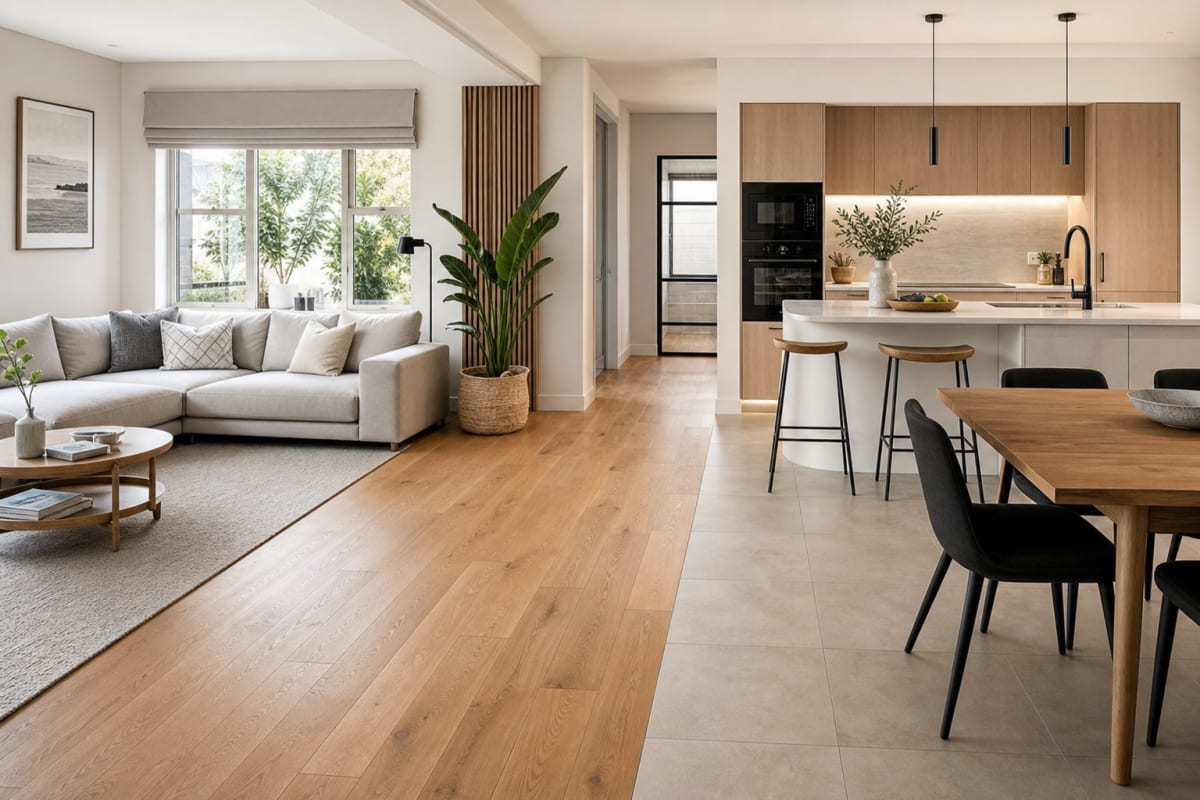
Are you planning an open-concept living space but worried that the transition between your tile and parquet might look uneven or crack over time? This is a frequent concern in modern home design. However, by selecting the right materials and following proper installation techniques, you can achieve a finish that is both visually stunning and built to last.
Why Mix Flooring Materials?
Modern interior design celebrates open-plan living, but different areas of the home serve different functional needs. While the warmth and comfort of natural wood are ideal for a cozy living room, high-traffic areas like hallways and kitchens require materials that can stand up to moisture, dirt, and heavy foot traffic.
Using different materials allows you to define functional zones without the need for physical walls, maintaining an airy feel while ensuring practicality where it matters most.
Choosing the right ceramic tiles is vital for "wet" or high-use zones, such as entryways or the area surrounding a kitchen island. To balance this, natural Esta Parket adds the acoustic comfort and warmth necessary for a relaxing living area. For a cohesive look, consider pairing a stone-effect tile—like the Limestone beige-grey tile—with a light oak parquet. This creates a unified, sophisticated color palette that flows naturally from one zone to the next.
Technical Essentials: Mastering Transitions and Joints
The most critical aspect of joining two different flooring types is the technical execution. Wood and ceramic are fundamentally different: wood is an organic, "dynamic" material that expands and contracts with changes in humidity, while ceramic tile is rigid and static. To prevent damage, you must account for this difference in movement.
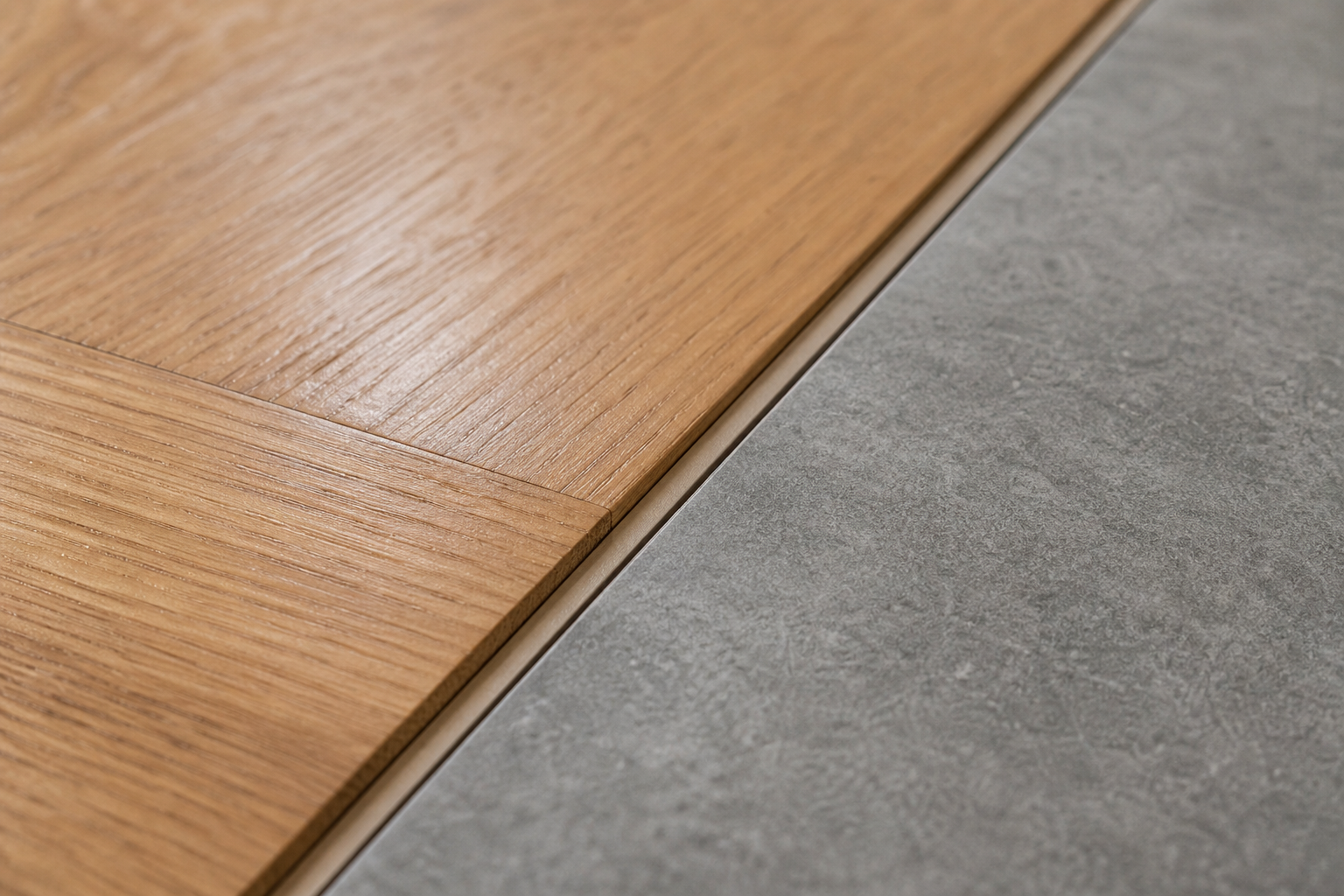
- Mandatory Expansion Joints: Industry standards dictate that an expansion joint is necessary whenever the substrate changes or two different materials meet. A proper expansion gap of at least 6–10 mm must be maintained between the parquet and the tile. This prevents the wood from buckling and ensures the tiles do not detach from the subfloor.
- Profiles and Fillers: If the two surfaces are perfectly flush, you can bridge the gap with specialized T-profiles, elastic cork strips, or a color-matched sealant. If there is a height difference, you will need a reducer profile (transition strip) to create a safe, sloped edge that protects the materials from chipping.
- Precision Height Planning: Tile and adhesive layers are often thicker than laminate but may be thinner than high-end engineered wood. To achieve a perfectly level floor, subfloor preparation and leveling must be calculated before installation begins.
Selecting Materials Based on Performance
The choice of flooring should always reflect the traffic load of the specific room. For commercial environments or busy entrance halls, full-body porcelain tiles like Moon Dark Grey are recommended for their extreme durability and stability. For residential interiors, the focus shifts toward a balance of safety and aesthetics.
Safety and Thermal Comfort
In areas prone to moisture, such as bathrooms or front entries, it is essential to check the slip resistance or R-rating of your tiles. For home use, an R10 rating—found in tiles like the Disenia beige ceramic tile—offers excellent slip resistance even when exposed to water or cleaning agents.
If you are installing underfloor heating, ceramic tiles are the superior choice for heat conduction and distribution. When it comes to wood, always opt for engineered wood flooring over solid planks. Engineered wood is far more stable under temperature fluctuations, making it the perfect partner for modern heating systems.
Design Trends and Visual Harmony
Looking ahead to 2025 flooring trends, interior design is shifting away from cool grays toward warmer, more natural tones. A major trend involves pairing natural wood with stone-effect tiles to create a layered, tactile interior that feels grounded and organic.
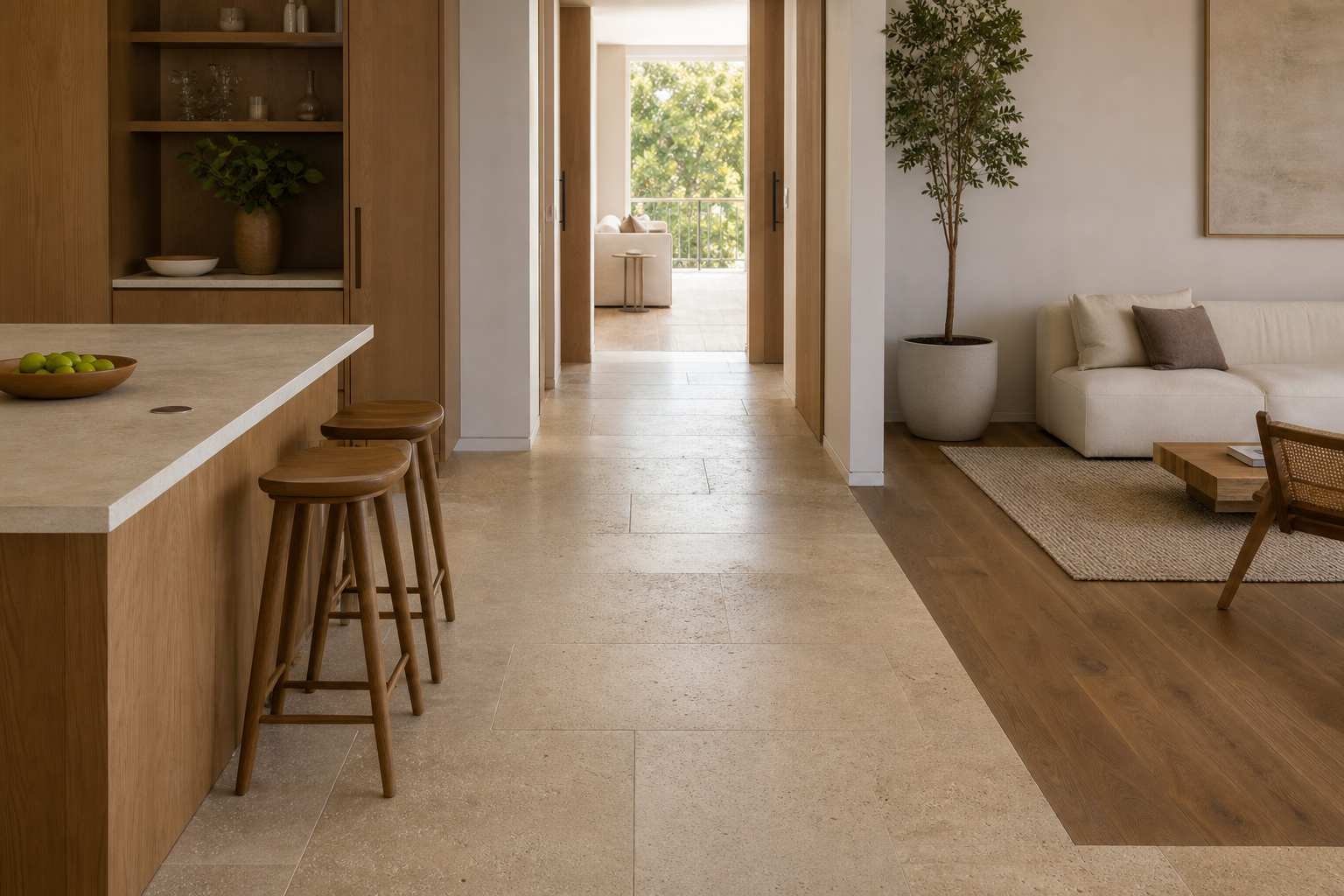
For a touch of luxury, a Travertin brown ceramic tile pairs beautifully with warm-toned parquet. To keep the look clean and serene, consider large-format tiles; fewer grout lines create a more seamless transition to the wood floor. By staying within a similar color family, you can maintain the functional benefits of both materials while creating a sense of expansive, uninterrupted space.
The right combination of materials and professional execution ensures a floor that remains both beautiful and functional for decades. If you are looking for the perfect combination for your next project, explore our wide selection of ceramic tiles online or visit the Vipex showroom to see the latest trends in person.