


Sintered Stone: The High-Performance Standard for Modern Surfaces
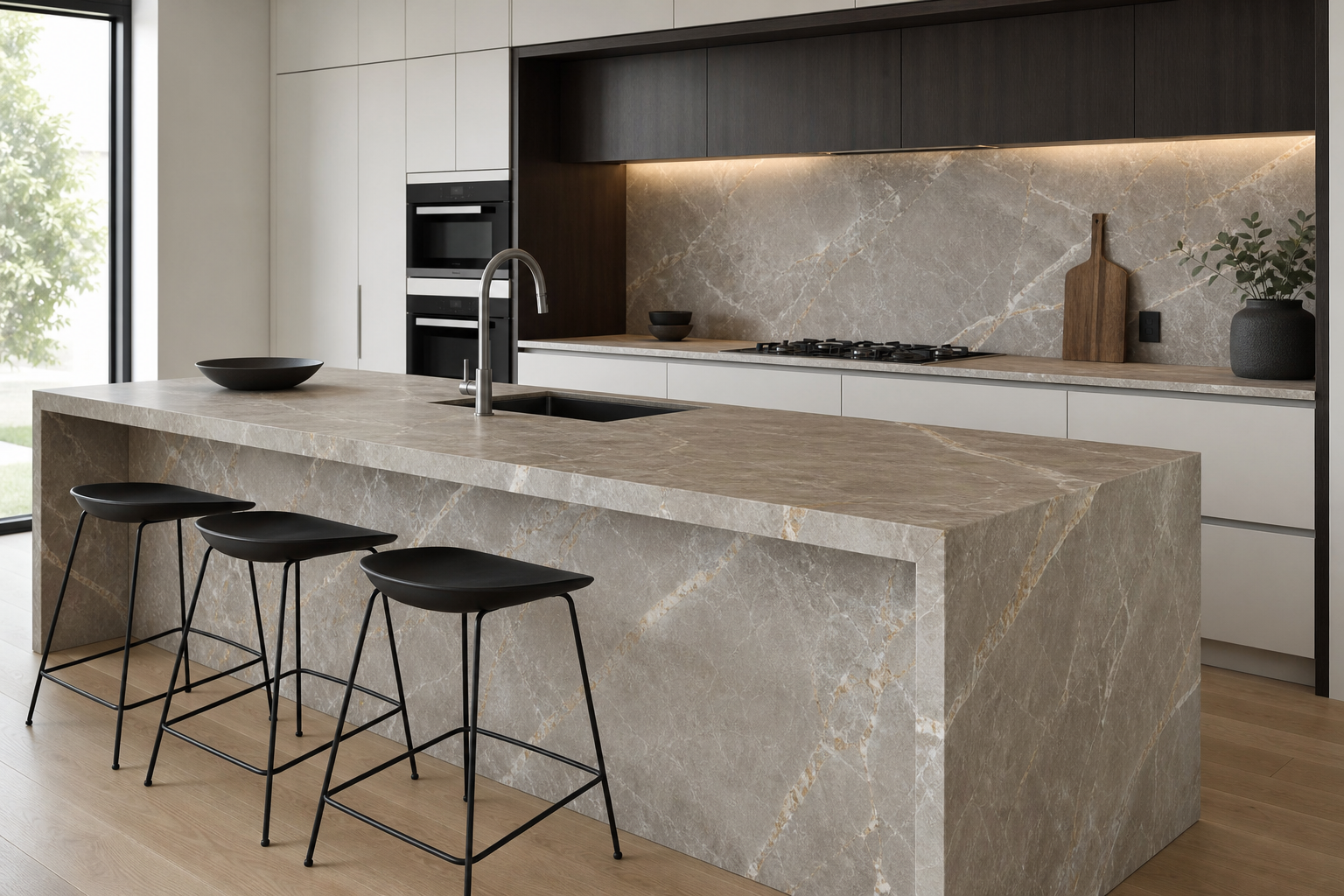
In the search for a material that marries the raw beauty of natural stone with industrial-grade resilience, sintered stone has emerged as a definitive solution. Engineered to withstand intense kitchen heat, the rigors of outdoor environments, and the moisture of luxury bathrooms, this next-generation material is redefining expectations for surface durability and hygiene.
What is Sintered Stone?
Sintered stone is an advanced engineered surface composed of pure natural minerals, including quartz, feldspar, silica, and clay. Unlike traditional quartz surfaces, which rely on resins and polymer binders to hold the material together, sintered stone is entirely mineral-based.
The material is created through a high-tech process known as sintering. This involves subjecting the mineral blend to extreme pressure (up to 100 MPa) and firing it in kilns at temperatures exceeding 1200°C.
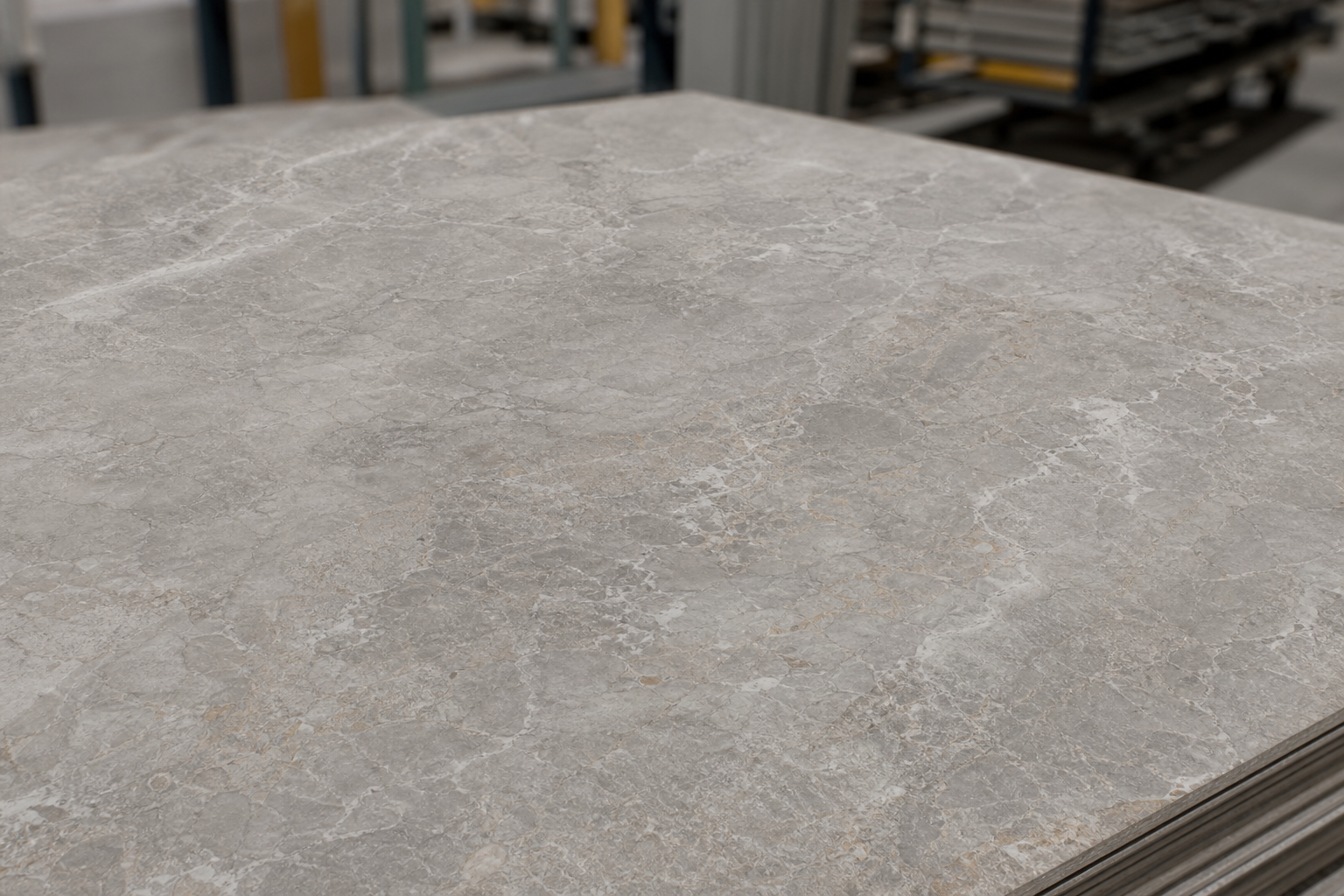
This industrial method replicates the natural formation of stone deep within the Earth's crust, accelerating a process that usually takes millennia into just a few hours. The result is an ultra-compact, virtually non-porous slab with a water absorption rate typically below 0.09%. For those looking to move beyond traditional tiling, Vipex offers a wide selection of ceramic tiles and large-format slabs that provide a seamless, monolithic aesthetic.
Comparing Sintered Stone, Clinker, and Traditional Ceramics
Choosing the right material requires understanding the technical nuances that dictate a surface’s lifespan and maintenance requirements.
- Sintered Stone vs. Clinker: Clinker tiles are generally manufactured through extrusion, which results in a slightly more porous structure. While this porosity is advantageous for creating a strong bond with mortar on exterior facades, sintered stone offers superior density and a more contemporary aesthetic, making it the preferred choice for high-end interior design and demanding weather conditions.
- Sintered Stone vs. Standard Ceramic Tiles: Traditional ceramic tiles are fired at lower temperatures (roughly 1000–1100°C), leaving them with water absorption rates between 3% and 10%. Sintered stone, by contrast, is a "full-body" material—meaning the color and pattern run through the entire thickness—making it significantly more wear-resistant and capable of handling heavy mechanical loads.
- Sintered Stone vs. Natural Stone: While natural stone tiles offer a unique, organic beauty, their inherent porosity requires regular sealing and specialized cleaning agents. Sintered stone is virtually maintenance-free and entirely immune to the acids (such as lemon juice or wine) that would permanently etch natural marble or limestone.
The Advantages of Sintered Stone
The rapid adoption of sintered stone in both residential and commercial sectors is driven by physical properties that traditional materials cannot match.
- Extreme Thermal Resistance: Because it contains no resin binders, sintered stone will not burn, smoke, or crack when exposed to heat. Hot pans and baking sheets can be placed directly on the surface without fear of discoloration or damage.
- Superior Scratch Resistance: Rating 6–7 on the Mohs hardness scale, the surface is nearly impossible to scratch with standard kitchen utensils or ceramic knives.
- UV and Weatherproof Performance: The material is UV-stable and frost-proof. It does not fade in direct sunlight or degrade in freezing temperatures, making it the gold standard for outdoor kitchens, terraces, and ventilated facades.
- Unmatched Hygiene: Its near-zero porosity means there is no room for bacteria, mold, or mildew to penetrate the surface. It is completely food-safe and requires only basic cleaning to maintain its pristine appearance.
Applications in Contemporary Design
Thanks to the availability of large-format slabs and various thicknesses, sintered stone is incredibly versatile, spanning applications from sleek residential kitchens to high-traffic commercial lobbies.
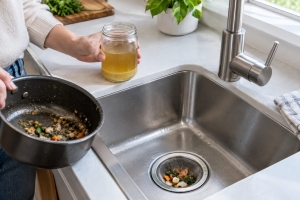
- Kitchen Countertops and Islands: Its stain resistance and durability make it a favorite for active kitchens, allowing for food preparation directly on the slab.
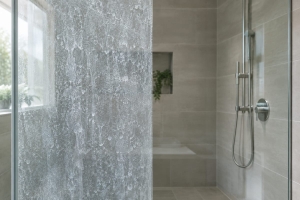
- Bathrooms and Wet Rooms: As a water- and mold-resistant material, it creates a clean, cohesive look with minimal grout lines. For further inspiration, see our guide to choosing ceramic tiles to find the perfect style for your renovation.
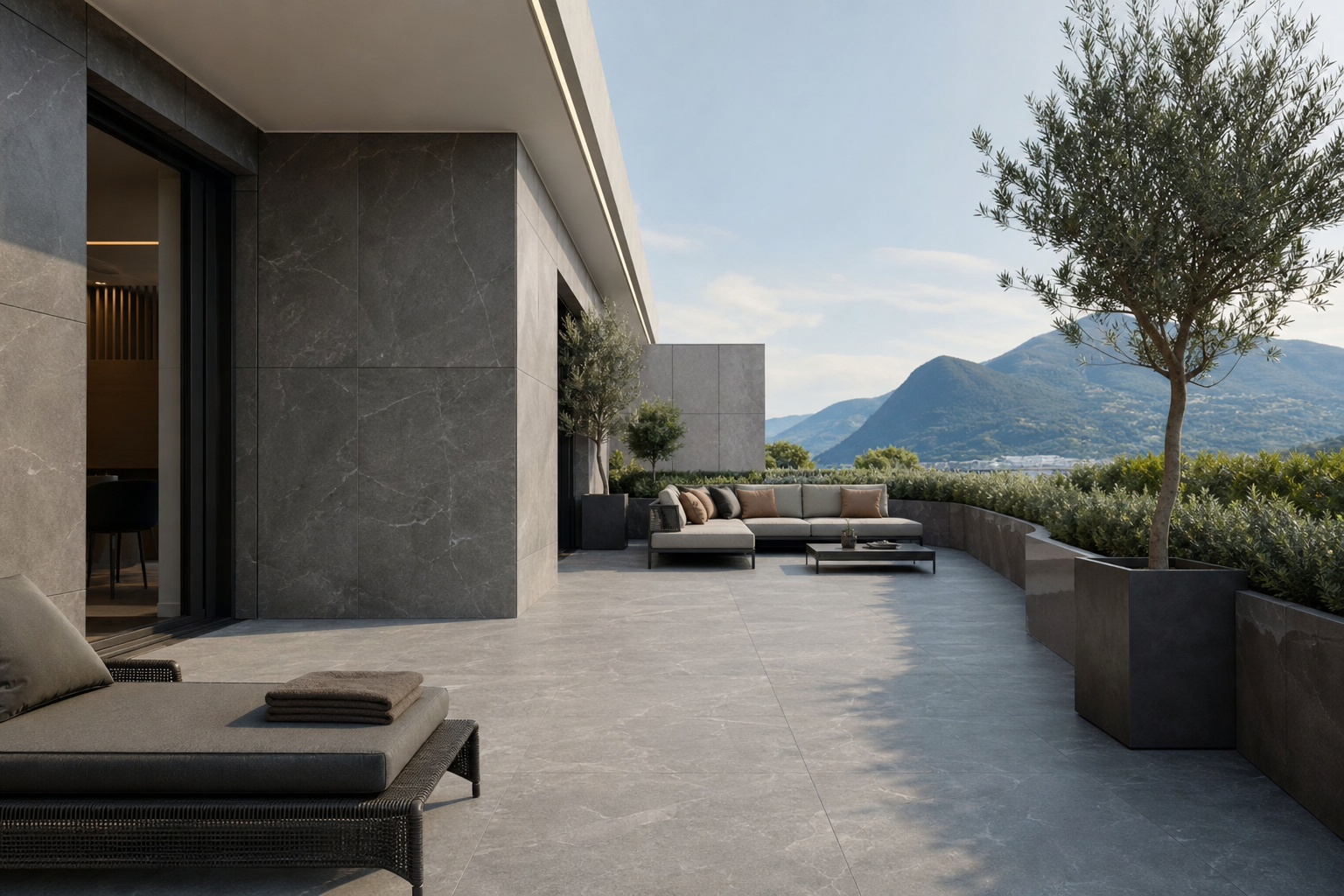
- Facades and Outdoor Living: Sintered stone remains unchanged for decades regardless of the weather. Products like the stone-effect Arcana Tepuy-R Mix bring organic charm to exterior landscapes with the added benefit of modern performance.
- Commercial and Hospitality: In high-traffic environments like hotel lobbies, polished options such as the Root Ash tile offer a prestigious aesthetic without compromising on long-term durability.
Sintered stone represents a long-term investment that merges cutting-edge technology with the timeless appeal of natural minerals. Whether you prefer the trendy terrazzo-effect Arcana Stracciatella-R Nacar or a more minimalist stone texture, Vipex provides solutions built to last. Visit our showroom to explore our collection in person, or browse our online store where our specialists can help you select the ideal finish and dimensions for your project.