


How to Choose Bathroom Lighting: A Guide to Safety and Style
Selecting the wrong light fixture for a bathroom isn’t just an aesthetic mistake—it can be a safety hazard. Because electricity and water are a dangerous combination, planning a bathroom lighting scheme requires a careful balance between interior design and strict technical standards. Whether you are outfitting a residential home or a commercial space, understanding the requirements for high-moisture environments is essential for a worry-free renovation.
The bathroom is subject to daily steam, high humidity, and direct water splashes. This makes standard indoor fixtures unsuitable for the space. Achieving a safe and functional result depends on two main factors: precise placement and the correct Ingress Protection (IP) ratings.
IP Ratings and Bathroom Safety Zones
The most critical technical specification for any bathroom fixture is its IP (Ingress Protection) rating. This rating indicates how effectively a fixture’s housing prevents solids and liquids from reaching its electrical components. To ensure safety, bathrooms are divided into specific "zones" based on their proximity to water sources.
Zone 0: This is the area inside the bathtub or shower basin. Fixtures here must be fully waterproof (minimum IP67) and capable of withstanding temporary immersion.
Zone 1: This covers the area directly above the bath or shower to a height of 2.25 meters. Fixtures in this zone must be at least IP65 (jet-proof) or IP44 (splash-proof), depending on the specific water pressure they may encounter.
Zone 2: This area extends 60 cm beyond the edge of the bathtub or washbasin. An IP44 rating is the standard here, ensuring the device is protected against water splashes from any direction.
The Outside Zone: While lower protection ratings are technically permissible in areas furthest from water, it is best practice to choose moisture-resistant products throughout the entire room to ensure longevity. High-quality bathroom lighting, such as the Harma Serena LED series, is specifically engineered to meet these rigorous safety standards.
The Three Layers of Lighting
A functional bathroom requires a layered lighting plan consisting of ambient, task, and accent lighting.
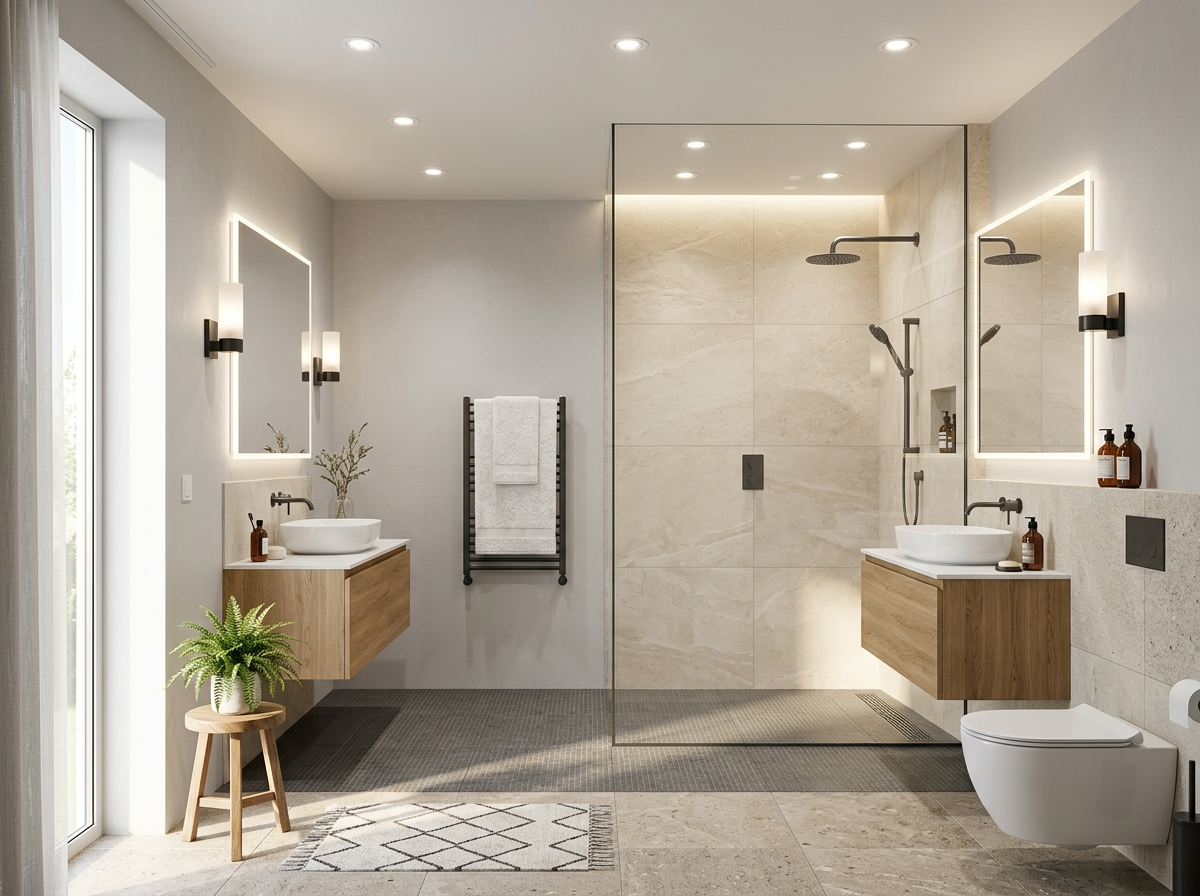
- Ambient Lighting: This provides general illumination and is usually achieved through ceiling-mounted fixtures or recessed LED panels. For a small bathroom, a total output of 1,500–3,000 lumens is generally sufficient, while larger master baths may require 3,000–4,000 lumens to eliminate dark corners.
- Task Lighting: The most important task area is the vanity. To avoid unflattering shadows while shaving or applying makeup, light should fall evenly across the face. The most effective solutions are wall-mounted sconces on either side of the mirror or mirror cabinets with integrated LED strips. If you are looking for tips on how to make a small bathroom look bigger, illuminated mirrors are a top recommendation for adding depth and a sense of openness.

- Accent Lighting: This decorative layer highlights architectural features or premium tiling. Soft LED strips in niches or under cabinets can also serve as a gentle "guiding light" for nighttime use without the glare of main overhead lights.
Color Temperature and Ambiance
The color temperature of your bulbs significantly impacts the "feel" of the room.
- Warm White (2700K–3000K): Preferred for residential bathrooms to create a cozy, relaxing, spa-like atmosphere.
- Cool White (4000K+): Often used in commercial settings, hotels, and offices to emphasize cleanliness and provide high visibility for maintenance.
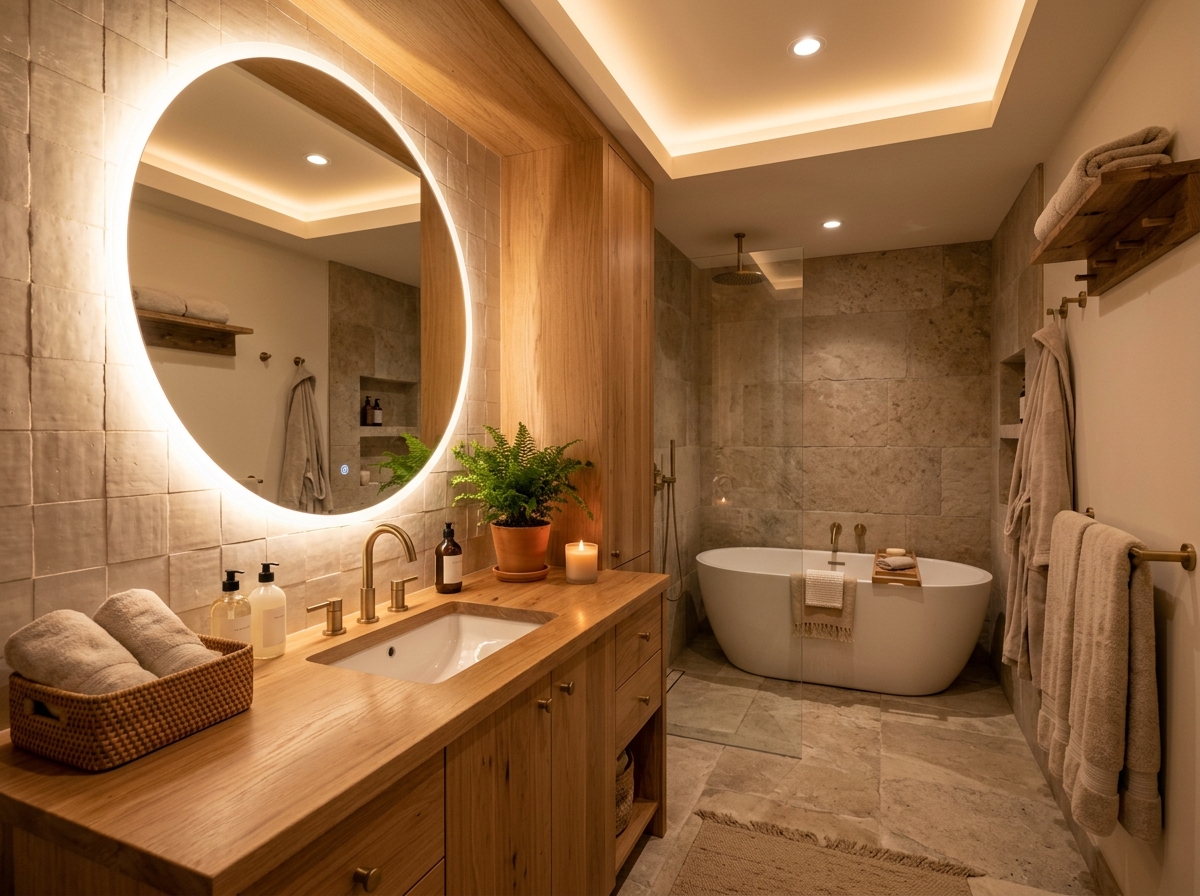
For the best results at home, look for a high Color Rendering Index (CRI 90+). A high CRI ensures that skin tones and makeup colors appear natural in the mirror, which is vital for any daily beauty routine.
Commercial Requirements and Energy Efficiency
In high-traffic environments like hotels and offices, the priorities shift toward durability and low operating costs. Integrating motion sensors and dimmable LEDs can significantly reduce energy consumption and extend the lifespan of the fixtures. It is also important to select bathroom furniture and lighting that are easy to clean and built to withstand intensive use.
Common Mistakes to Avoid
The most frequent error is ignoring IP ratings, which can lead to short circuits or corrosion over time. Another common mistake is relying on a single, powerful ceiling light; light coming only from directly above casts deep shadows on the face, making mirror tasks difficult. Finally, ensure all bathroom electrical circuits are protected by a Ground Fault Circuit Interrupter (GFCI) to prevent electrical shock.
Lighting is a long-term investment that dictates both the safety and style of your home. To ensure a cohesive design, it is helpful to research how to choose bathroom materials that complement your light fixtures. Proper foresight is also key to understanding how to plan a renovation so your bathroom lasts for years to come.
If you are ready to create a safe, stylish, and functional bathroom, explore our full range of products online or visit the Vipex showroom, where our specialists can help you design the perfect lighting solution.