


Small Bathroom Design: Clever Solutions for Compact Spaces
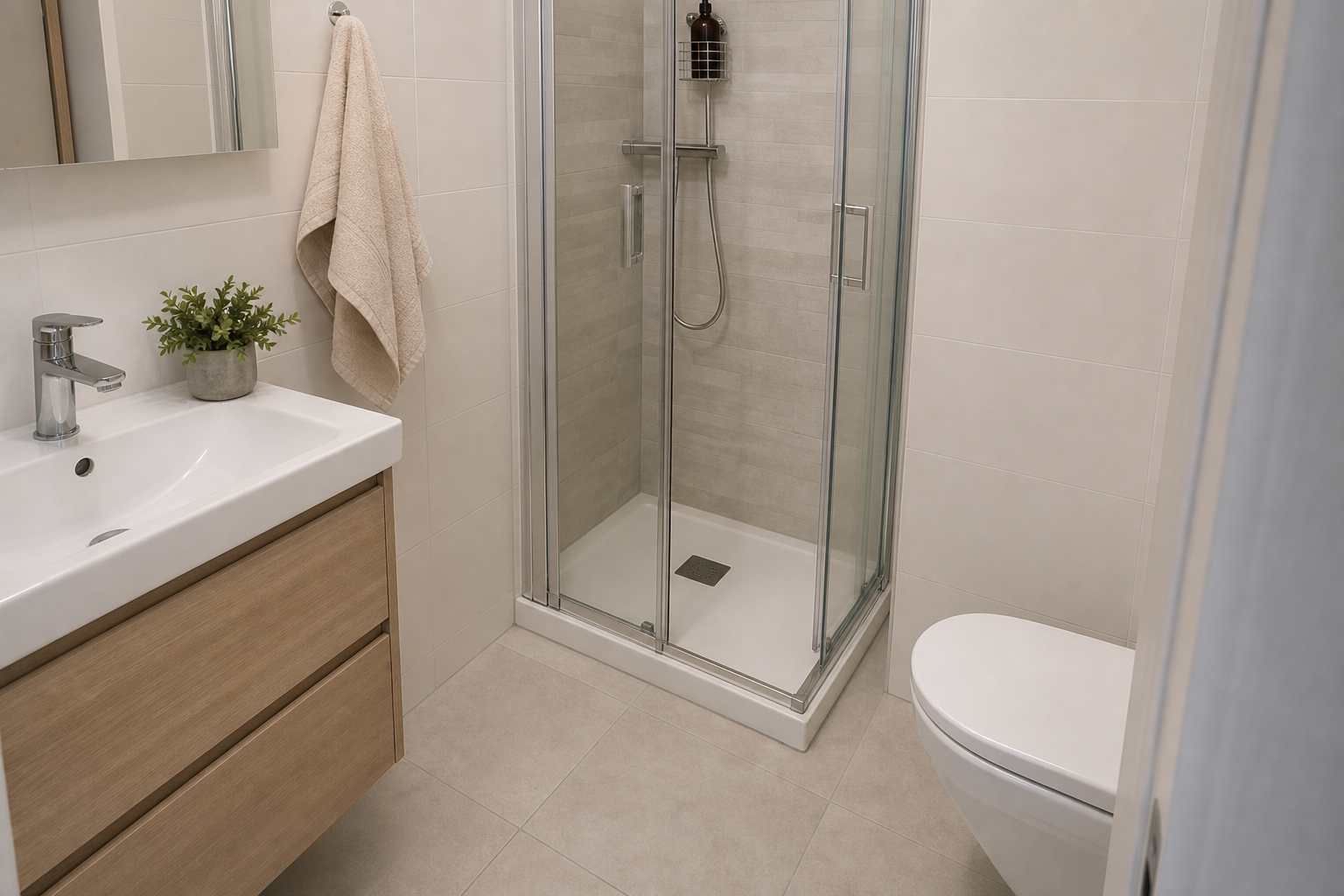
Is your bathroom more of a cramped utility closet than a relaxing sanctuary? Limited square footage doesn’t have to mean compromising on style or comfort. With strategic planning and compact furnishings, even the smallest layout can be transformed into a functional, visually open haven.
Ergonomics and Layout: Making Every Millimeter Work
In a small bathroom, movement and flow are everything. Ensuring the space doesn’t feel suffocating requires precise bathroom planning to avoid bottlenecks. As a general rule, you should maintain at least 70 cm of clearance in front of a shower or bathtub to allow for comfortable entry and toweling off.
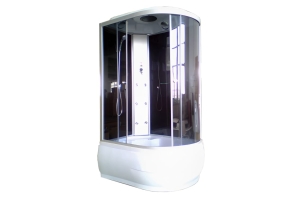
For standard apartments and commercial properties, 80x80 cm shower enclosures are often the most practical choice. These units fit snugly into corners while providing adequate room for daily use. The Harma DN033 round shower enclosure is particularly effective for tight spaces; its sliding doors require no extra clearance, keeping the external floor area unobstructed.
Floating Furniture and Vertical Storage
The most effective trick for maximizing visual space in a small bathroom is to keep the floor visible. Wall-mounted or "floating" furniture creates an airy, open feel by extending the sightline across the floor.
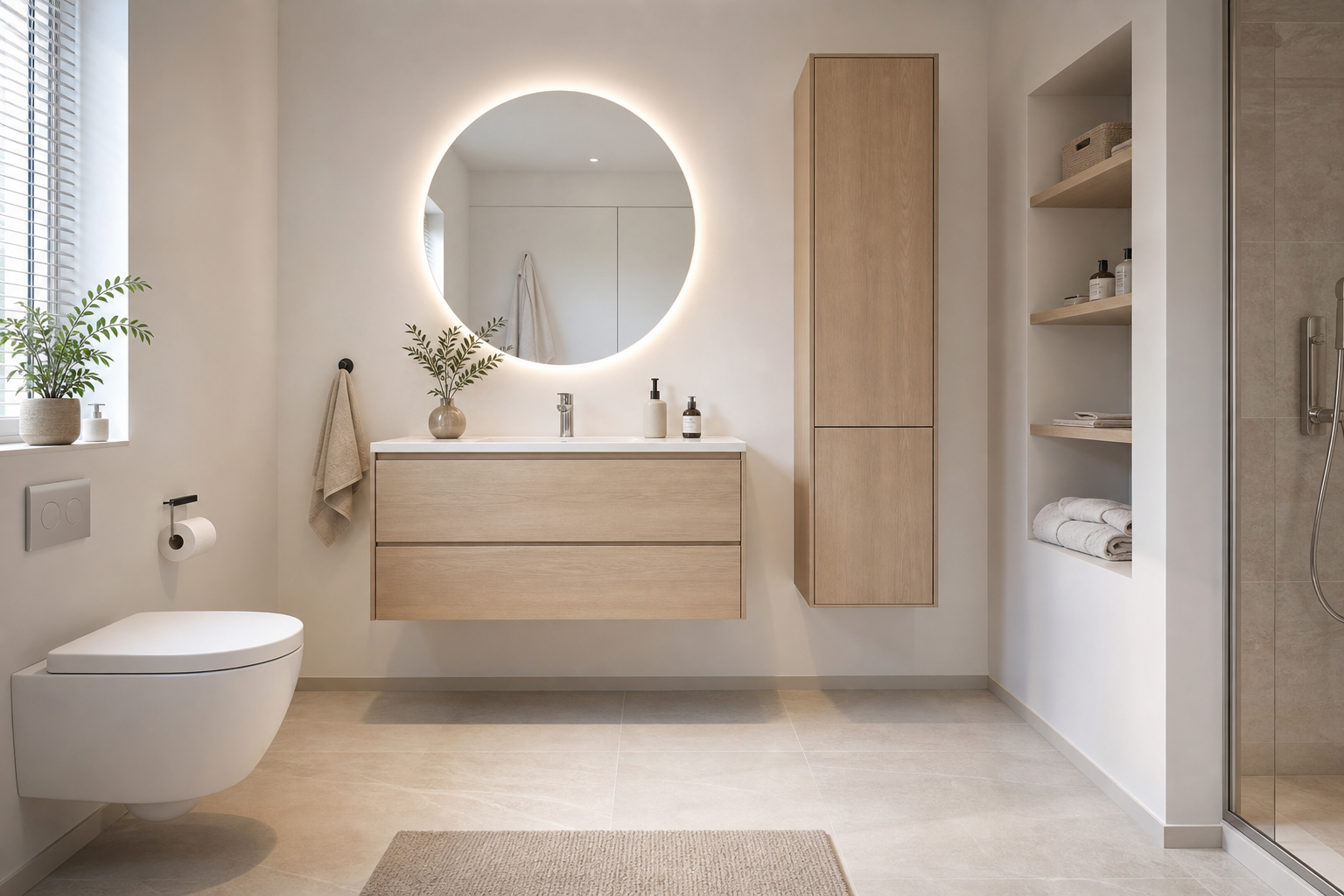
- Vanity Units: The Cersanit Crea 40 is a premier choice for narrow layouts; at just 40 cm wide, it provides essential storage without the bulk. For those with slightly more room, the Harma Serena basin and cabinet set in light oak offers a comfortable depth and a modern aesthetic.
- Mirror Cabinets: Combining reflection and storage into one piece is a classic space-saver. The Harma Serena mirror cabinet includes integrated LED lighting and a power socket, keeping countertops clear of toiletries and electronics.
- Tall Storage: When floor space is at a premium, look up. A narrow Harma Serena tall wall cabinet can house towels and cosmetics using vertical space that would otherwise go to waste.
Visual Techniques to Open Up the Room
Color palettes and material choices heavily influence how we perceive a room's dimensions. Light tones—such as white, beige, and soft gray—reflect light, visually "pushing" the walls outward.
- Tile Selection: Large-format tiles often work better in small spaces because fewer grout lines create a more seamless, uninterrupted surface.
- Orientation: Vertical tile patterns can make ceilings feel higher, while horizontal layouts make a narrow room appear wider.
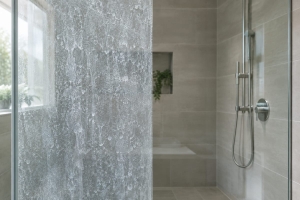
- Transparency: A clear glass shower screen eliminates visual barriers. Selecting the right shower enclosure allows light to flow freely through the entire room.
Lighting and Safety in High-Moisture Areas
Effective bathroom lighting should always be layered. In addition to general ambient lighting, focused task lighting at the mirror is vital to eliminate shadows. In small, high-moisture rooms, ensure all fixtures have an appropriate IP rating (preferably IP44 or higher) to protect against splashes and steam.
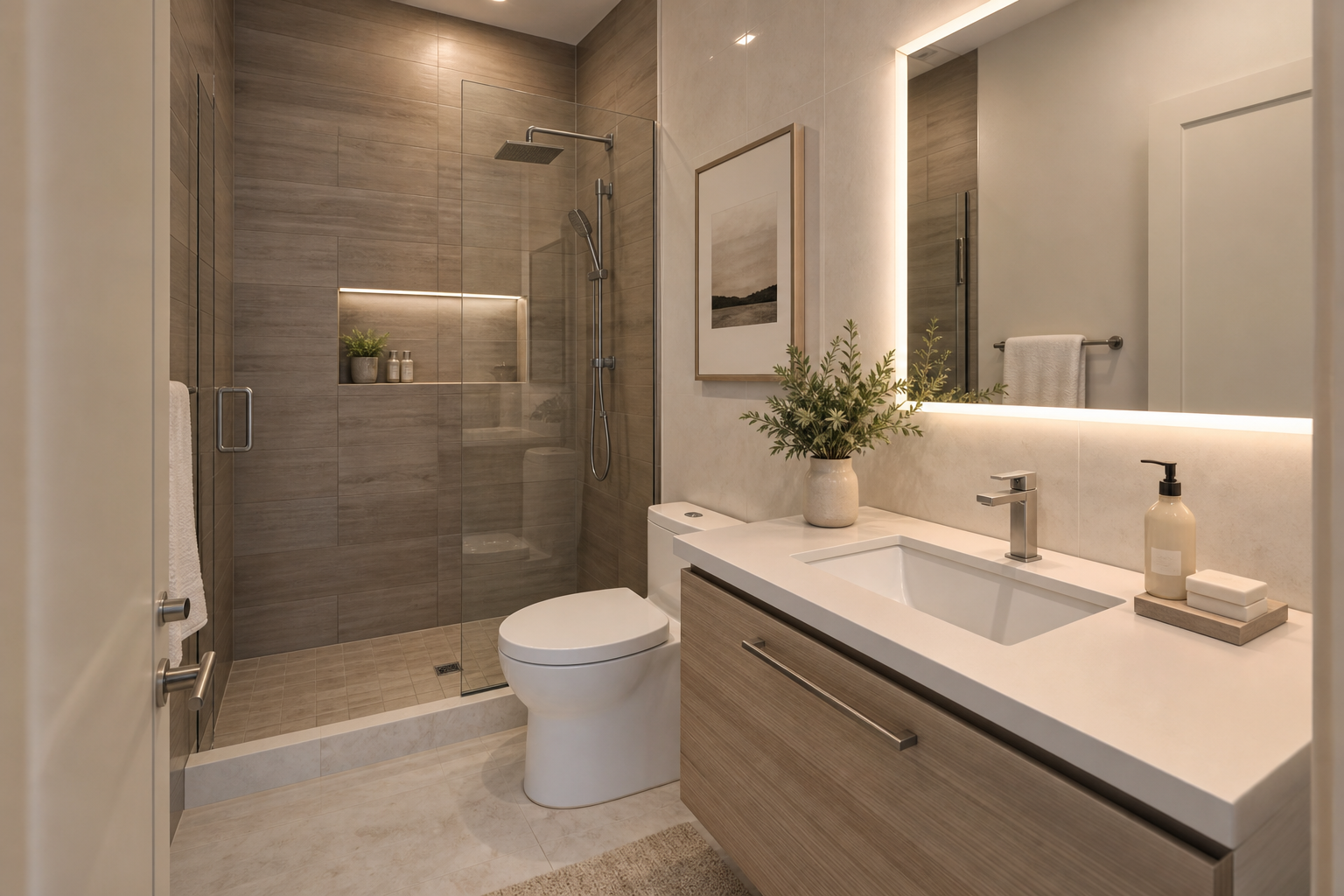
Safety is equally important when selecting finishes. For bathroom floors, look for tiles with an R10 slip-resistance rating. This provides a secure grip for wet feet while remaining easy to clean and maintain.
Durable Solutions for Commercial Spaces
In hotels and office washrooms, the priorities are durability and ease of maintenance. Practical vanity units and wall-mounted fixtures make floor cleaning faster and more efficient, which is a major factor in reducing long-term operational costs. For these environments, high-traffic materials that withstand frequent sanitization are the best investment.
Whether you are designing a private home or a commercial project, the perfect small bathroom starts with smart furniture and ends with the right light. Explore our full range of bathroom furniture at the Vipex online store or visit our showroom to find the ideal solution for your space.