


Tankless vs. Storage Water Heaters: Which One Is Right for You?
Few things disrupt a morning routine quite like a sudden blast of cold water mid-shower—or an unexpectedly high electricity bill at the end of the month. Choosing between an on-demand tankless system and a conventional storage water heater comes down to three key factors: your household’s peak hot water demand, your available electrical capacity, and your physical space constraints.
How Do Water Heaters Work?
The primary difference between these two systems is how and when they heat water. Each technology operates on a distinct set of principles, making them suited to different types of homes and usage habits.
Tankless Water Heaters
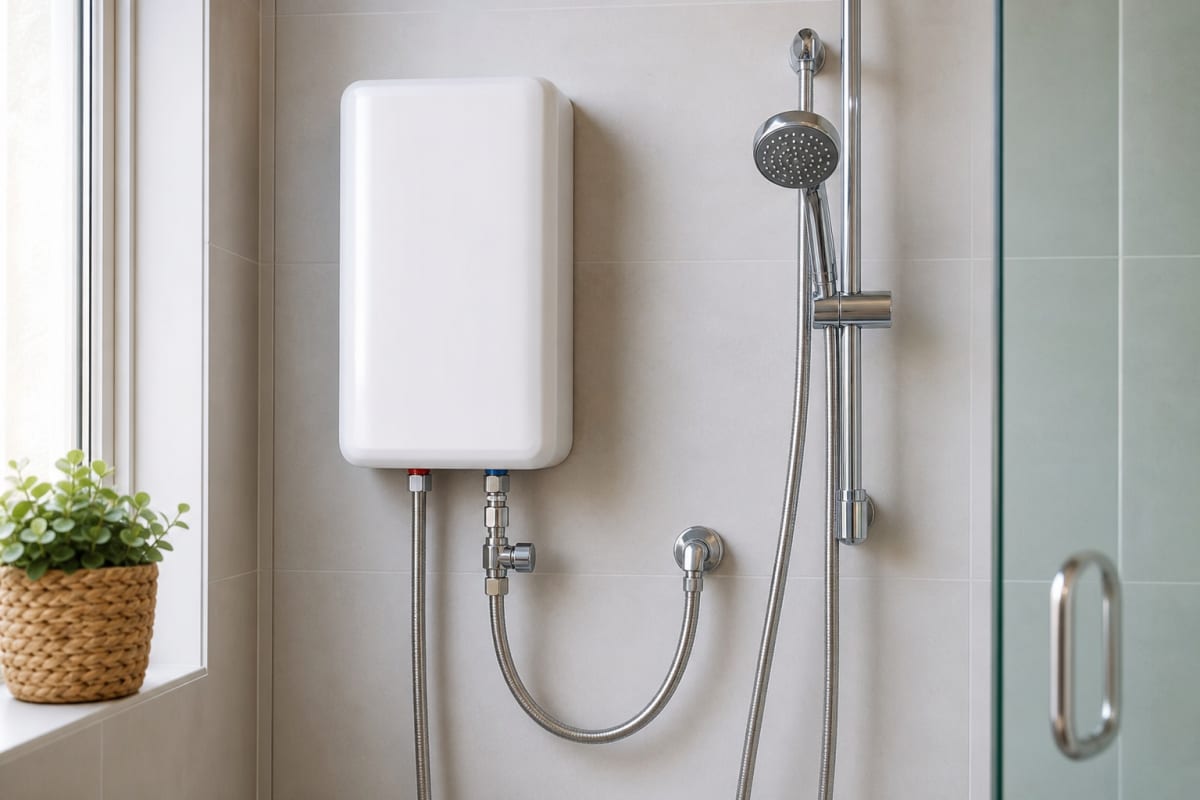
A tankless water heater (also known as an instantaneous or on-demand heater) heats cold water directly as it flows through high-powered heating elements. Because it does not store water, there is no bulky reservoir keeping gallons of water hot in advance.
- Zero standby energy loss: The unit consumes electricity only when a hot water tap is opened.
- Continuous hot water supply: You won't run out of hot water as long as your total usage stays within the unit’s maximum flow rate capacity.
- High peak power demand: To heat cold water instantly to a comfortable temperature, whole-home electric tankless models require substantial electrical power—often between 18 and 36 kW—which may demand an electrical service upgrade of up to 200 A.
Storage Water Heaters
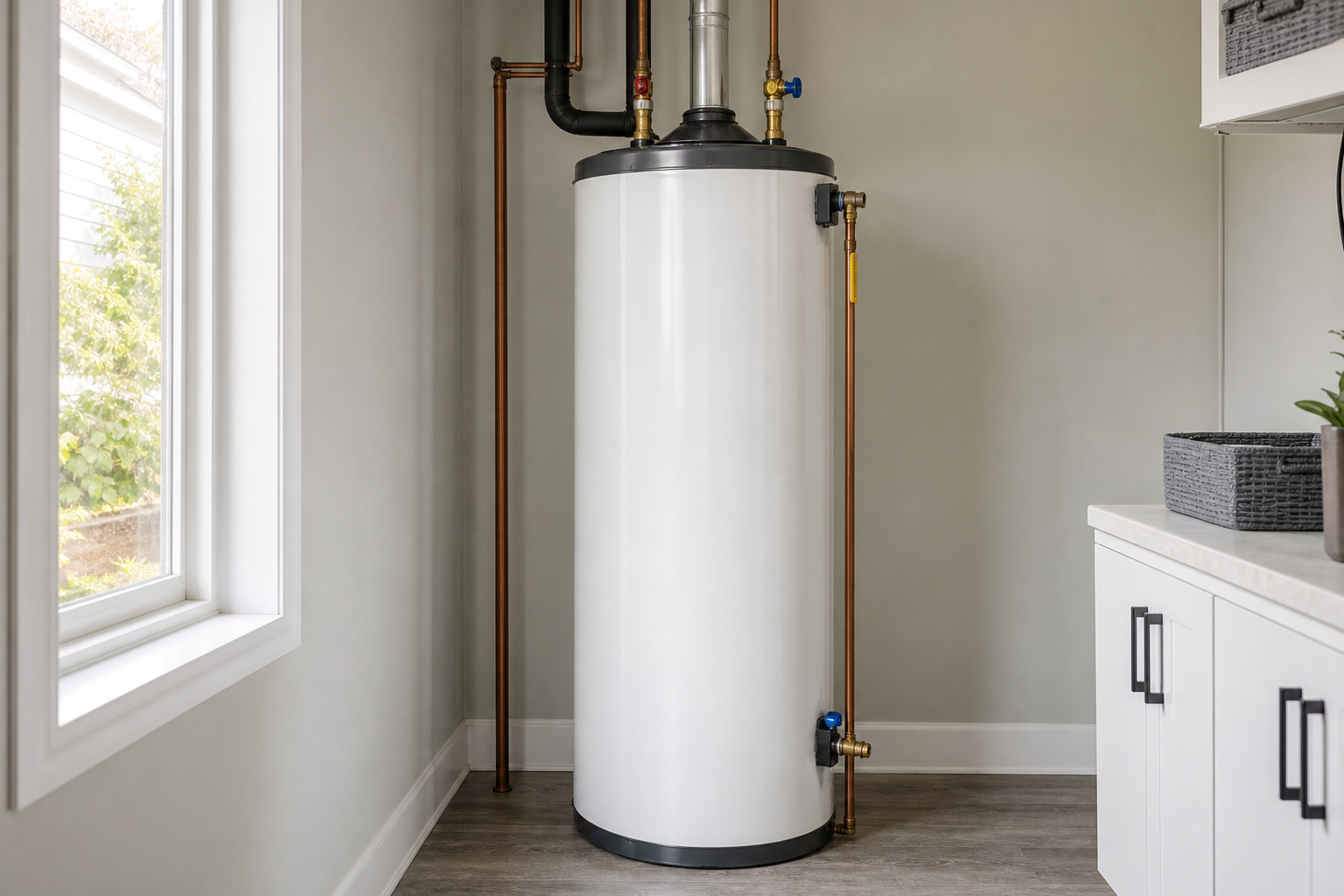
A storage water heater keeps a dedicated volume of water heated inside an insulated tank, maintaining it at a steady, preset temperature (typically between 65 °C and 75 °C) via an internal thermostat.
- Stable water pressure and consistent temperatures: Hot water is readily available across several fixtures simultaneously without overloading your home's electrical panel.
- Low power draw: Standard heating elements generally draw just 1.2 to 1.8 kW, allowing them to run on standard domestic electrical circuits.
- Standby heat loss: Keeping water constantly hot causes some thermal loss through the outer casing, making good insulation and high energy ratings essential.
Comparing Tankless and Storage Water Heaters
| Feature | Tankless Water Heater | Standard Storage Water Heater | Smart or Hybrid Storage Water Heater |
|---|---|---|---|
| Energy Efficiency | Very high (no standby losses) | Class B or C (due to standby losses) | Class A (up to 50% more efficient) |
| Peak Power Demand | Very high (9–36 kW) | Low (1.2–1.8 kW) | Low (e.g., 1.2 kW) |
| Space Requirements | Ultra-compact | Requires dedicated tank space | Slim, space-saving designs available |
| Simultaneous Fixture Use | Limited (may cause pressure/temperature drops) | Excellent (until the tank is depleted) | Excellent, with rapid reheating |
| Installation Complexity | Demanding (often requires heavy-duty wiring) | Straightforward standard installation | Straightforward standard installation |
Pros and Cons of Tankless Water Heaters
Tankless units offer sleek convenience, but their practicality depends heavily on your property's electrical infrastructure.
- Endless hot water at a single fixture: A single tap or showerhead can run indefinitely without the water running cold.
- Compact, wall-mounted footprint: Freeing up valuable floor space, these units are ideal for summer cottages, workshops, guest suites, or small offices.
- High efficiency for low-demand use: According to the U.S. Department of Energy (DOE), tankless systems can be 24% to 34% more energy-efficient than standard storage heaters in homes using moderate amounts of hot water daily, primarily by eliminating standby losses.
- Performance drops with simultaneous use: Running a dishwasher or kitchen tap while someone is in the shower can lead to noticeable drops in both flow rate and water temperature.
- Substantial electrical requirements: Providing whole-house hot water requires immense electrical capacity, which often involves an expensive main panel upgrade.
- Sensitivity to cold inlet water: During winter months, when incoming ground water is frigid, the heater must work harder, significantly reducing the maximum litres-per-minute flow rate.
Pros and Cons of Storage Water Heaters
Modern water heaters remain the most popular and versatile solution for residential hot water needs.
- Compatible with standard electrical wiring: Units connect seamlessly to standard residential electrical setups without requiring major panel upgrades.
- Reliable multi-point delivery: A storage heater can supply multiple bathrooms and kitchen taps at the same time while maintaining uniform pressure and temperature.
- Intelligent energy management: Modern smart units feature adaptive technologies such as ECO EVO or i-Memory, which learn your daily routines and reduce energy consumption by up to 14%.
- Finite capacity: Once the stored hot water is exhausted during heavy use, you must wait for the tank to reheat the incoming cold water.
- Physical space footprint: Storage tanks require dedicated space in a utility room, cupboard, or bathroom.
How to Choose the Right Water Heater for Your Property
Select a model that matches your fixture count, family size, and available installation area.
Small Apartments, Offices, and Dedicated Sinks
For isolated fixtures where hot water is needed only for handwashing or rinsing dishes, a compact point-of-use unit like the ARISTON BLU EVO R 15/3 EU is an efficient solution. Its 15-litre tank and 1.2 kW element can heat water to 45 °C in just 44 minutes, fitting neatly above or below a sink.
1–2 Person Households with Limited Space
In compact bathrooms, slim vertical units like the ARISTON LYDOS PLUS 50 V or the standard vertical ARISTON BLU1 R 80 V EU provide an ideal balance of capacity and size. For rooms with lower ceilings or horizontal layout constraints, the ARISTON BLU1 R 80 H EU offers a dependable horizontal alternative.
If you need maximum flexibility, the dual-tank ARISTON VELIS PRO 80 EU features an ultra-slim depth of just 27.5 cm and can be mounted either vertically or horizontally to fit tight spaces.
3–4 Person Families and Detached Homes
A 100-litre capacity comfortably covers the everyday hot water needs of a standard family home.
- For quick recovery times, the ARISTON VELIS PRO 100 EU uses twin-tank engineering to prepare enough water for a shower in just 50 minutes.
- For cutting long-term utility costs, the heat pump water heater ARISTON LYDOS HYBRID 100 delivers an Energy Class A rating, using hybrid heat pump technology to cut power consumption by up to 50% compared to standard Class B electric heaters.
High-Demand Households and Commercial Spaces
Homes with multiple full bathrooms or large soaking tubs require heavy-duty performance. Equipped with a dry ceramic heating element, the ARISTON HPC MO 150 EU is engineered for high capacity and exceptional durability, even in areas with hard, scale-prone water.
To learn more about optimizing your domestic hot water system, explore our in-depth guides:
- How to Choose the Right Water Heater for Your Home
- 5 Common Mistakes When Choosing a Water Heater
- Water Heater Sizing and Placement in Daily Life
- Heating System Energy Efficiency and Saving Tips at Home
- When Should You Replace Your Old Water Heater?
- Regular Water Heater Maintenance and Descaling
- In-Depth Review: Ariston Lydos Hybrid 100 Heat Pump Water Heater
Making the Right Energy-Smart Choice
Choosing the right water heater ensures everyday comfort while keeping your utility bills under control. While tankless units excel at single, isolated draw-off points, modern smart and hybrid storage heaters provide the steady pressure, dependable volume, and electrical compatibility that modern households rely on.
Discover our full selection of premium Ariston appliances at the Vipex heating systems online store, or visit our showroom to speak with our heating specialists about finding the perfect model for your home.