


Glass Blocks vs. Glass Tiles: Choosing the Right Solution for Your Space
How can you flood a room with natural light without compromising on privacy? The choice between glass blocks and glass tiles ultimately depends on whether you require a load-bearing architectural structure or a decorative surface finish. In this guide, we compare the properties and applications of both materials to help you determine the best fit for your residential or commercial project.
Glass Blocks: Architectural Light and Structural Integrity
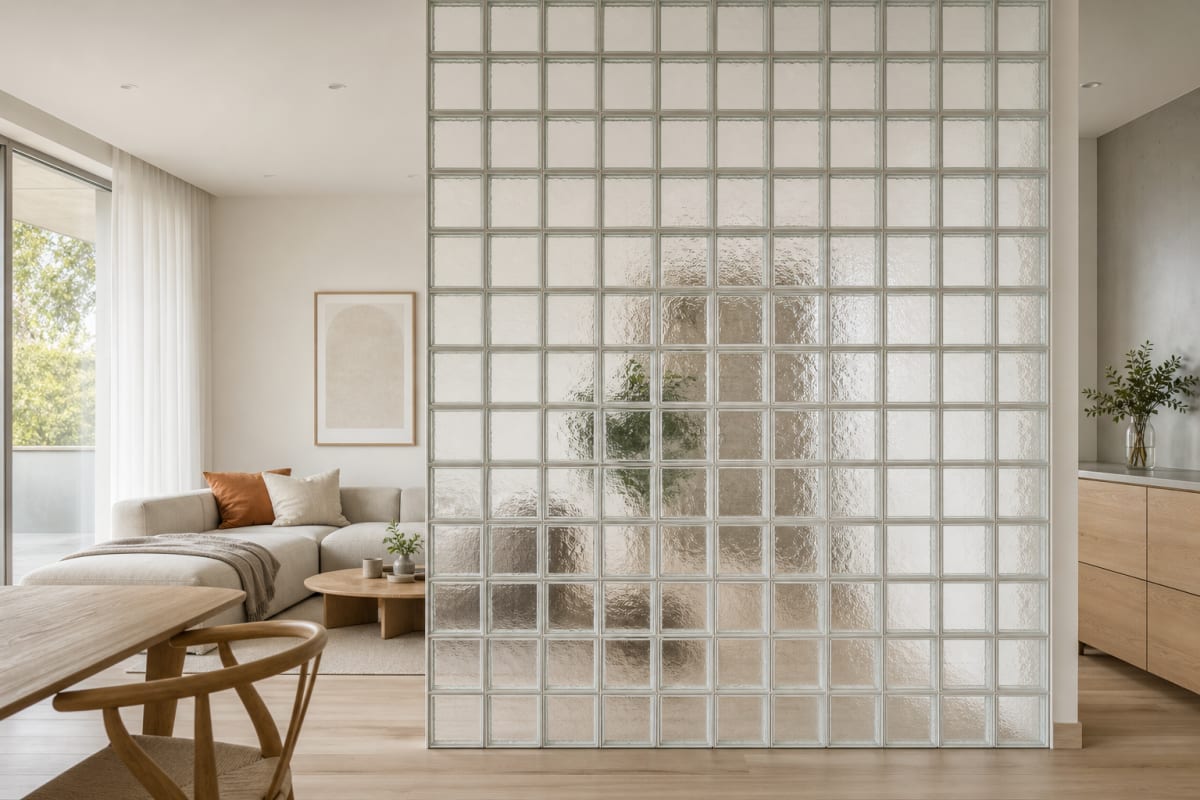
Glass blocks are a versatile building material that bridges the gap between a window and a solid wall. Unlike standard tiles, a glass block is a self-supporting structural element. They have become a staple of modern interior design, allowing for the creation of various partitions and enclosures that define a space while maintaining an open, airy feel.
Key benefits of glass blocks in interior architecture:
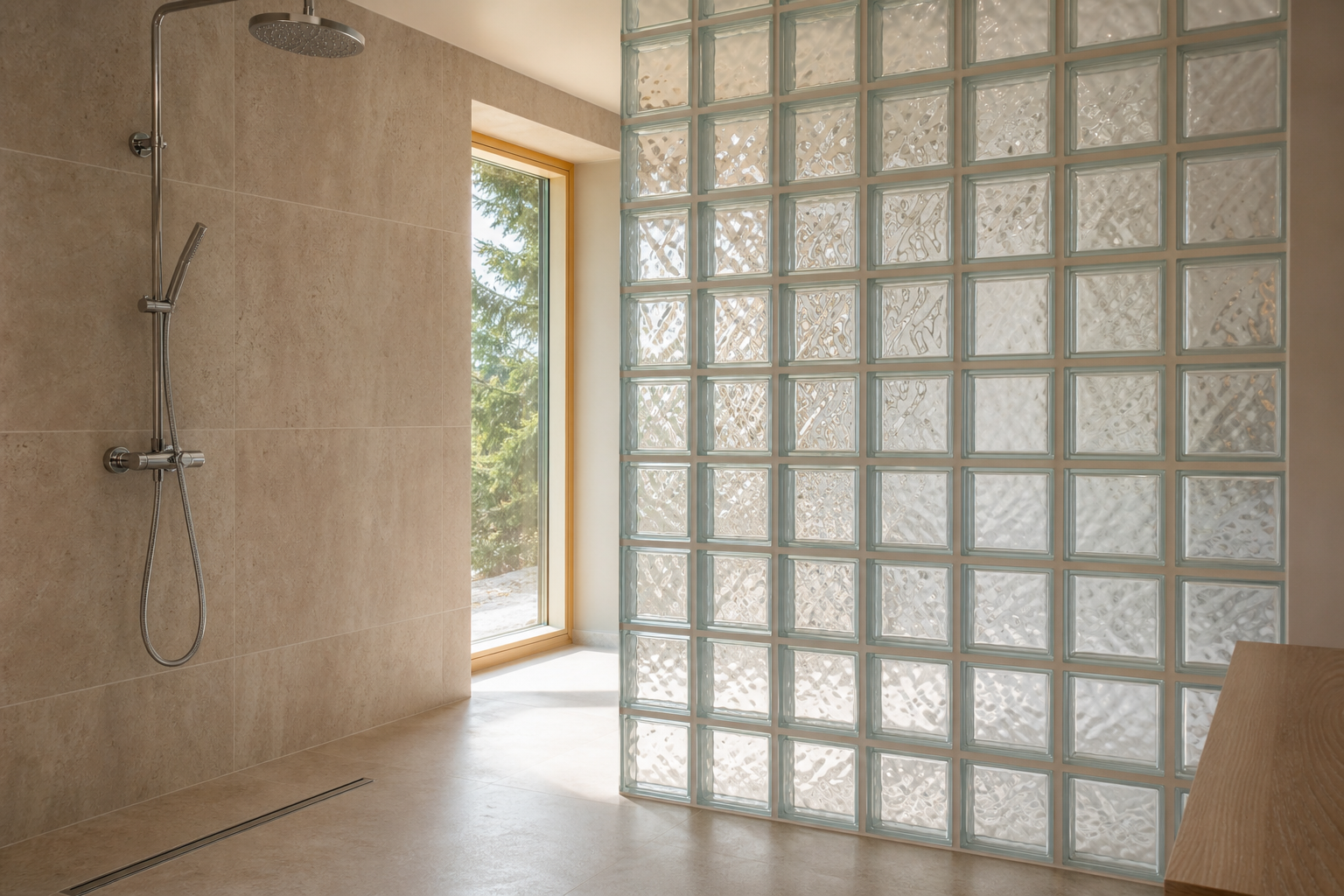
- Light Transmittance and Privacy: Glass blocks allow between 40% and 80% of light to pass through. Depending on the pattern and finish, they can diffuse or obscure the view to ensure total privacy. For instance, the classic Wave glass block distorts images for a soft effect, while Sahara glass blocks with a matte finish are ideal for areas where visual protection is the top priority.
- Acoustic and Thermal Insulation: Each block contains a hermetically sealed air chamber, providing impressive sound reduction (up to 49 dB) and better energy efficiency than standard single-pane glass. This makes them an excellent choice for quiet office environments and meeting rooms.
- Fire Resistance and Safety: Specialized technical models, such as the 1919/10 30F fire-rated glass block, offer EI30-certified fire resistance. These blocks can prevent the spread of flames and smoke for up to 30 minutes without compromising the aesthetic of the building.
Glass Tiles and Mosaics: Decorative Elegance
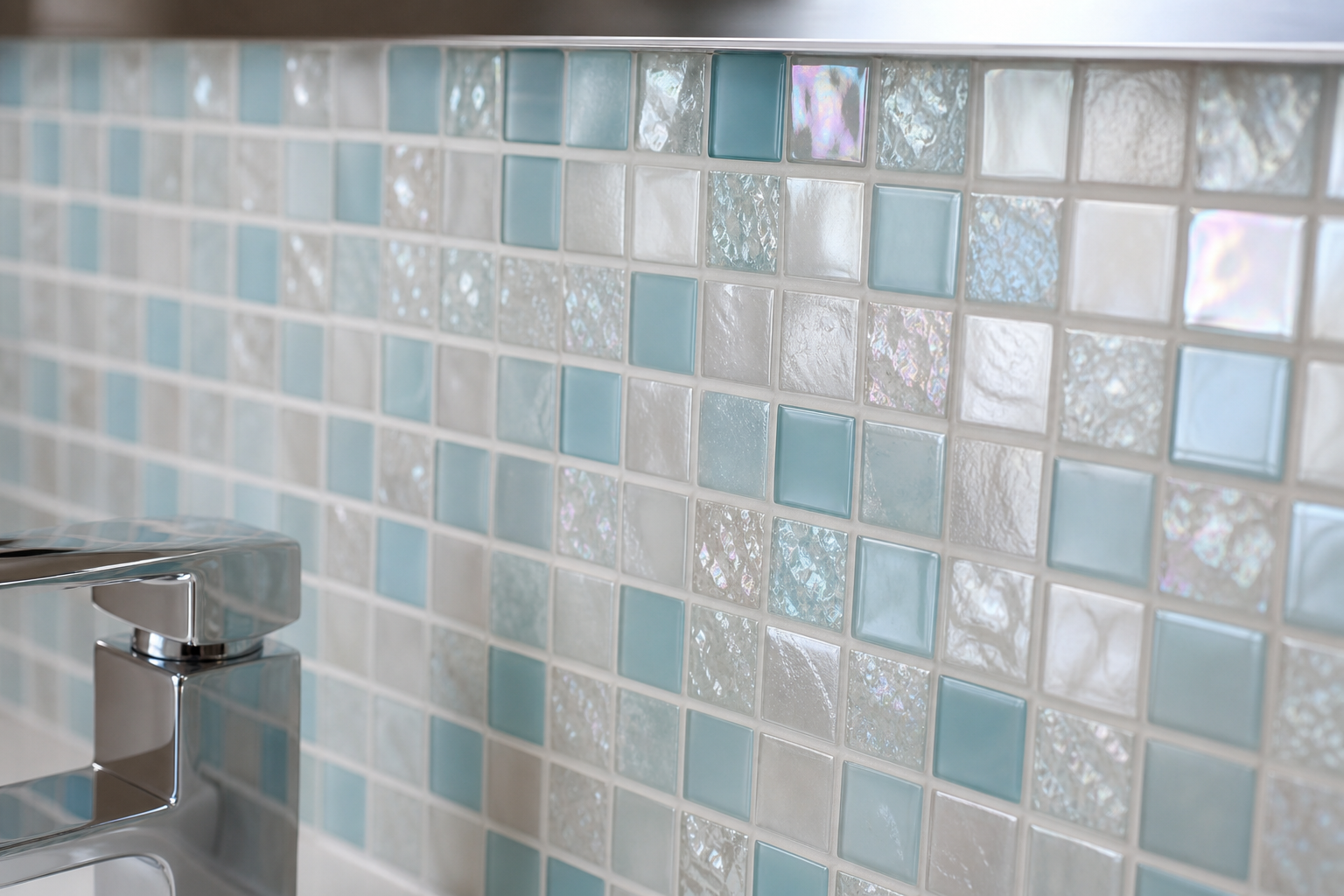
While glass blocks are used for construction, glass tiles and glass mosaics are designed to finish and enhance existing surfaces. These are typically supplied on 32.7 x 32.7 cm mesh-backed sheets, ensuring that installation is both fast and precise.
Why choose glass mosaics?
- Hygiene and Moisture Resistance: As a non-porous material, glass does not absorb water, odors, or bacteria. This makes glass mosaic an exceptionally hygienic and easy-to-clean choice for shower walls and kitchen backsplashes.
- Visual Depth and Brilliance: Glass interacts with light differently than ceramic or stone, offering a unique sense of depth and a high-gloss finish. The palette ranges from vibrant, saturated tones to understated matte variants that complement any interior style.
- Design Versatility: Because they consist of small individual tesserae (typically 3 x 3 cm) on a flexible mesh, glass mosaics are the perfect solution for curved surfaces, including rounded shower stalls, columns, and bespoke architectural features.
Which Solution Is Right for Your Project?
The best choice depends on the specific functional requirements of the room. Both materials are highly durable, but they serve very different roles.
Bathrooms and Wet Rooms
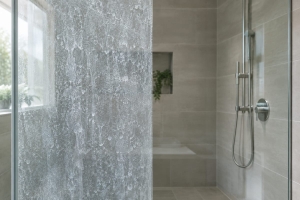
If you need to build a partition to separate a shower area from the rest of the room, glass blocks in the bathroom are the ideal solution. They create a sturdy, frameless wall that allows light to circulate. However, if you are looking to update an existing wall with a luxurious, shimmering accent, glass mosaic is the superior choice for its variety of textures and colors.
Windows and Exterior Applications
Glass blocks are a practical and secure alternative to traditional windows in areas where light is needed but security or privacy is a concern, such as in basements, garages, or stairwells. They offer superior thermal performance and impact resistance. Glass tiles, by contrast, are rarely used for exterior applications unless they are specifically certified for such use by the manufacturer.
Kitchen Design
In the kitchen, glass mosaic is a perennial favorite for backsplashes due to its decorative appeal and low maintenance. Glass blocks are typically used in kitchens as structural accents—for example, as a base for a breakfast island or as a translucent divider in open-concept living spaces.
Key Installation Requirements
The installation techniques for glass blocks and glass tiles differ significantly and require specific expertise to ensure longevity.
- Structural Integrity: For glass block walls larger than 1.1 m², horizontal reinforcement is required to ensure the stability of the structure. Installing glass blocks requires great precision; the first row must be perfectly level to ensure the entire wall remains straight.
- Modern Dry-Installation Systems: For interior projects, the Seves Quicktech system offers a faster alternative. This system uses specialized profiles and adhesive, allowing for a professional finish without the mess of traditional mortar.
- Surface Preparation for Tiles: Glass tiles require a perfectly smooth, clean substrate. Because glass is susceptible to thermal expansion, it is vital to use a specialized adhesive designed specifically for glass and to ensure thorough waterproofing in wet areas.
In summary, glass blocks are the right choice when you need a structural solution that balances privacy with natural light. Glass tiles and mosaics are the preferred option for achieving decorative elegance and superior hygiene on existing surfaces.
Explore the full range of glass blocks and glass mosaics at the Vipex online store, or visit our showroom for expert advice and to see these materials in person.