


5 Costly Mistakes to Avoid When Choosing a Water Heater
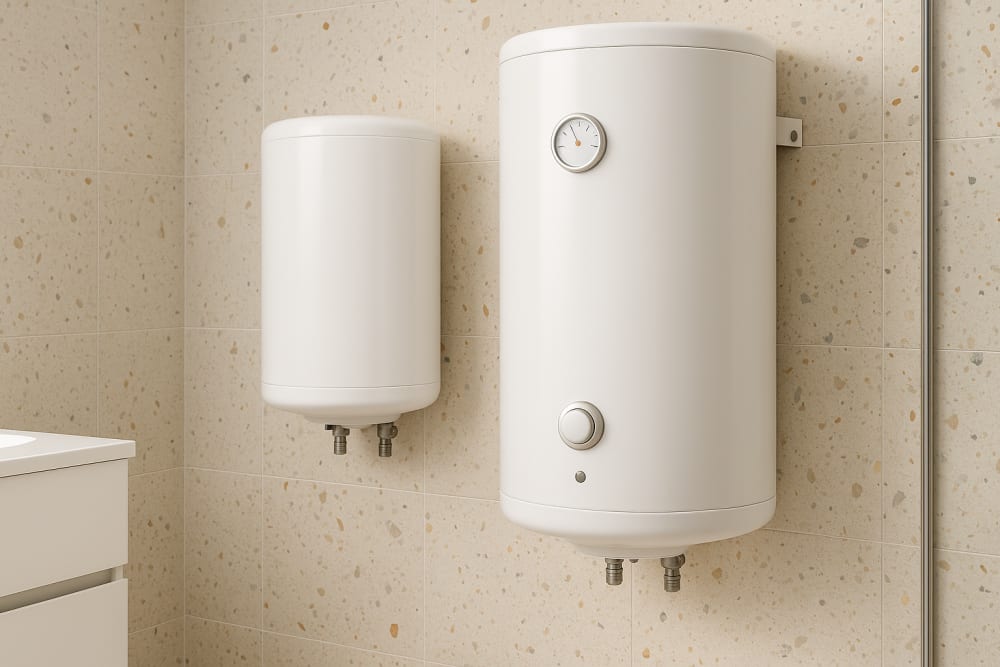
There are few morning surprises worse than turning on the shower only to be met with an icy blast—except, perhaps, opening an eye-watering electricity bill at the end of the month. Choosing the right water heater is a major decision that directly affects your daily comfort, household safety, and long-term utility expenses.
To help you make an informed investment, we have broken down five of the most common pitfalls homeowners face when buying a new water heater—and how to avoid them.
1. Misjudging Capacity and Power Output
The most frequent mistake buyers make is miscalculating the tank capacity and heating power their household actually requires.
- Too small: You will constantly run out of hot water halfway through showers or dishwashing cycles.
- Too large: You waste substantial energy keeping dozens of liters of unused water hot around the clock.
As a general benchmark, one person consumes roughly 30 to 50 liters of warm water (around 40 °C) per shower.
- Families of 3–4: A 100–120-liter unit, such as the Ariston Velis Pro 100, is typically the ideal fit.
- Single occupants or low-demand use: A compact option like the Ariston Lydos Plus 50 V or a dedicated point-of-use undersink/oversink unit such as the Ariston Blu Evo R 15 will easily suffice.
For a deeper dive into tank sizing and specifications, take a look at our comprehensive guide on how to choose the right water heater.
2. Ignoring Energy Labels and Operating Costs
A low retail price tag can be deceptive. Selecting a cheap, inefficient model often leads to steep electricity bills that far outweigh any upfront savings over the appliance’s lifespan.
When comparing models, always review the EU Energy Label:
- Energy efficiency rating (aim for higher-rated models).
- Declared load profile (e.g., S, M, L).
- Estimated annual energy consumption (kWh/annum).
Modern hybrid units offer significant long-term savings. For instance, a hybrid heat pump water heater like the Ariston Lydos Hybrid cuts energy use by up to 50% compared to standard Class B electric heaters. Its integrated i-Memory software learns your daily routine and heats water only when you need it.
To see how system efficiency impacts your bottom line, read more about home heating system energy efficiency.
3. Overlooking Installation and Clearance Requirements
A water heater’s performance and service life depend heavily on proper placement and professional installation.
Installing the tank too far from primary draw-off points (such as bathrooms or the kitchen sink) results in long wait times for hot water, thermal loss along extended pipe runs, and wasted water. Maintenance access is another critical factor: vertical units typically require at least 50 cm of clearance beneath the tank for plumbing connections and servicing.
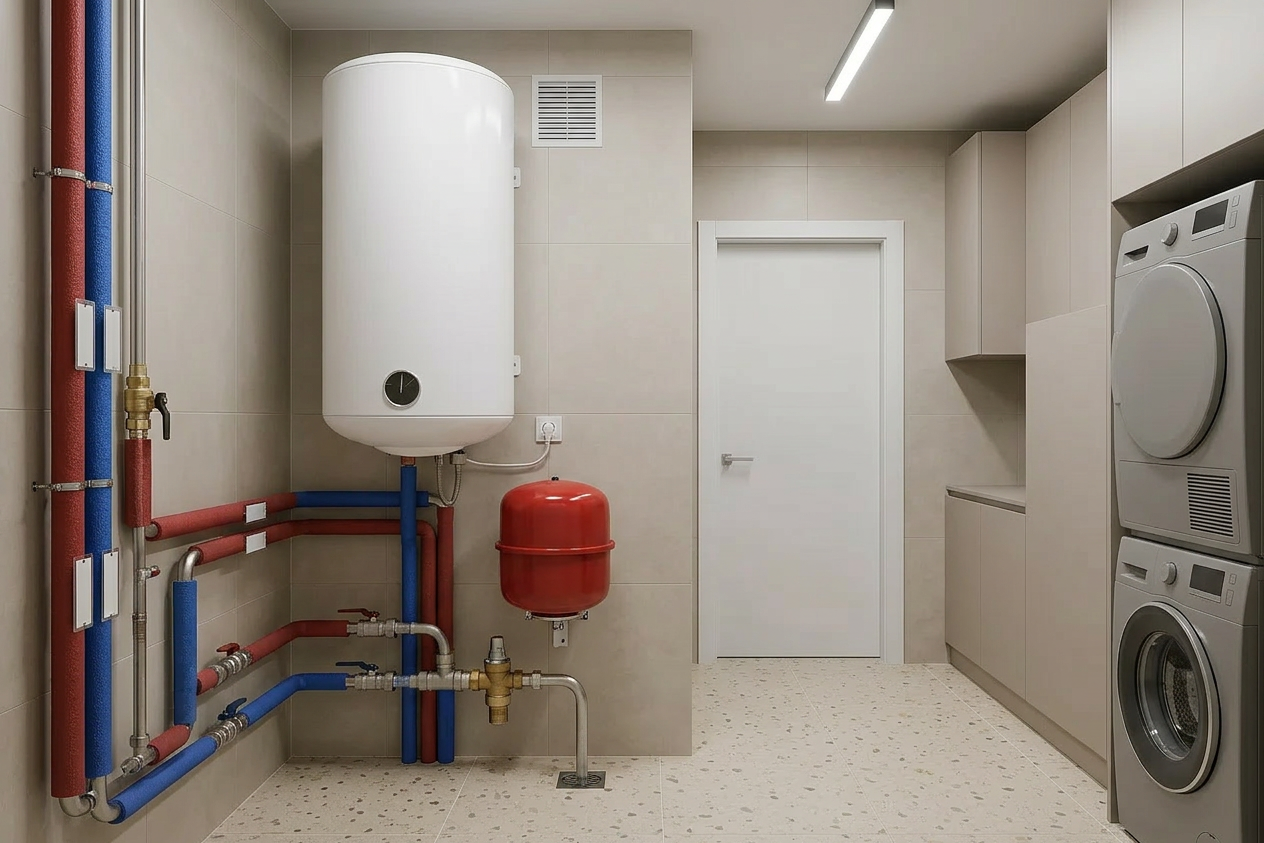
Key technical factors to verify before installation:
- Load-bearing capacity: The mounting wall must be sturdy enough to bear at least three times the total weight of the heater when completely filled with water.
- Electrical safety: The connection requires dedicated grounding and a 30 mA residual current device (RCD), installed by a qualified professional.
- Pressure protection: A certified safety relief valve must be installed on the cold-water supply inlet and tested regularly.
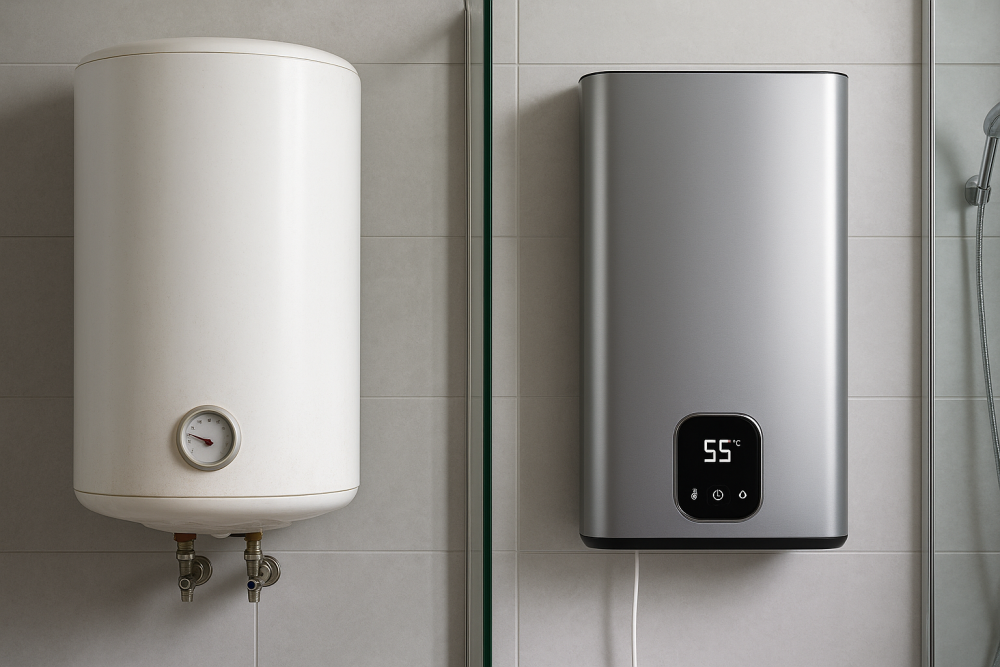
- Spatial constraints: If overhead or wall space is limited, evaluate horizontal configurations like the Ariston Blu1 R 80 H EU alongside classic vertical units such as the Ariston Blu1 R 80 V EU.
Need help choosing the right spot? Read our practical recommendations on water heater sizing and placement.
4. Settling for Outdated, Feature-Poor Models
Modern water heaters are no longer simple metal drums with heating elements—they are intelligent home appliances built to maximize comfort, optimize power use, and protect water quality.
Investing in smart controls delivers clear day-to-day advantages:
- Usage optimization: Features like Ariston’s ECO EVO function monitor your household routines, cutting energy consumption by up to 14% without sacrificing hot water availability.
- Rapid reheating: Multi-position models like the slimline Ariston Velis Pro (only 27 cm deep) employ Twin Tank technology to supply hot water for your first shower in under 50 minutes.
- Enhanced safety: Integrated anti-legionella cycles periodically heat water to temperatures that eliminate bacteria, while built-in anti-overheating and anti-dry-run safeguards protect internal components.
5. Buying on Sticker Price Alone
The most expensive mistake is shopping strictly by the lowest upfront price. Cheap, low-grade water heaters frequently feature basic enameled tanks and standard wet (submerged) heating elements.
In areas with hard tap water, limescale builds up rapidly on submerged elements. This acts as an insulating barrier, drastically slowing heat transfer, spiking your electric bill, and eventually burning out the element.
For superior durability in hard water conditions:
- Choose models with dry (ceramic) heating elements, such as the Ariston HPC MO 150 EU. The heating element sits inside a protective sleeve, avoiding direct contact with water and preventing scale encrustation.
- Ensure the sacrificial anode is inspected and replaced on schedule.
To protect your investment, learn when to replace your water heater and find out how routine water heater maintenance and cleaning can add years to your appliance's service life.
The Bottom Line
Finding the ideal water heater comes down to balancing your household's actual consumption, available space, and total cost of ownership. By factoring in energy ratings, water quality, and modern safety features, you can ensure dependable hot water year-round while keeping utility costs under control.
Explore Vipex's complete lineup of water heaters and heating equipment, or browse our advanced Ariston range to find the perfect solution for your home.