


Choosing a Water Heater: Finding the Right Size and Placement
Few household headaches compare to running out of hot water mid-shower. Choosing the correct water heater capacity and finding the right spot to install it are the two most critical steps in ensuring an uninterrupted hot water supply while keeping your monthly energy bills under control.
How to Calculate the Required Water Heater Capacity
When sizing a water heater, the golden rule is to plan around peak demand rather than average daily consumption. While an individual typically uses between 15 and 20 liters of hot water per day, your setup must handle simultaneous demands—such as someone running the dishwasher while another person showers.
- Single-person households and dedicated points of use: For a kitchen sink or a studio apartment, a compact, fast-recovery unit like the Ariston Blu Evo R 15/3 oversink water heater is an ideal solution, heating water to 45 °C in just 44 minutes.
- Two- to three-person households: Mid-sized options like the space-efficient Ariston Lydos Plus 50V vertical water heater or the classic Ariston Blu1 R 80V vertical water heater strike the perfect balance between volume and physical footprint.
- Families of four or more (especially with a bathtub): A tank capacity of at least 100 to 150 liters is recommended. High-performance models such as the slimline Ariston Velis Pro 100 water heater or the larger Ariston HPC MO 150 vertical water heater reliably supply enough hot water for back-to-back showers.
- Commercial properties, gyms, or large estates: Heavy-demand applications benefit from a heavy-duty floor-standing unit, such as the 300-liter Ariston HPC STAB 300 water heater.
To prevent costly sizing and selection errors, take a look at our guide on the 5 mistakes made when choosing a water heater.
Technical Requirements and Safe Placement
Where you place your water heater directly impacts its service life, operating efficiency, and ease of maintenance. Always maintain at least 30 cm of clearance around the appliance to allow adequate airflow and straightforward technician access.
Structural support is equally crucial: a filled 100-liter water heater weighs close to 130 kg, meaning the mounting wall or surface must be capable of supporting substantial dynamic loads.
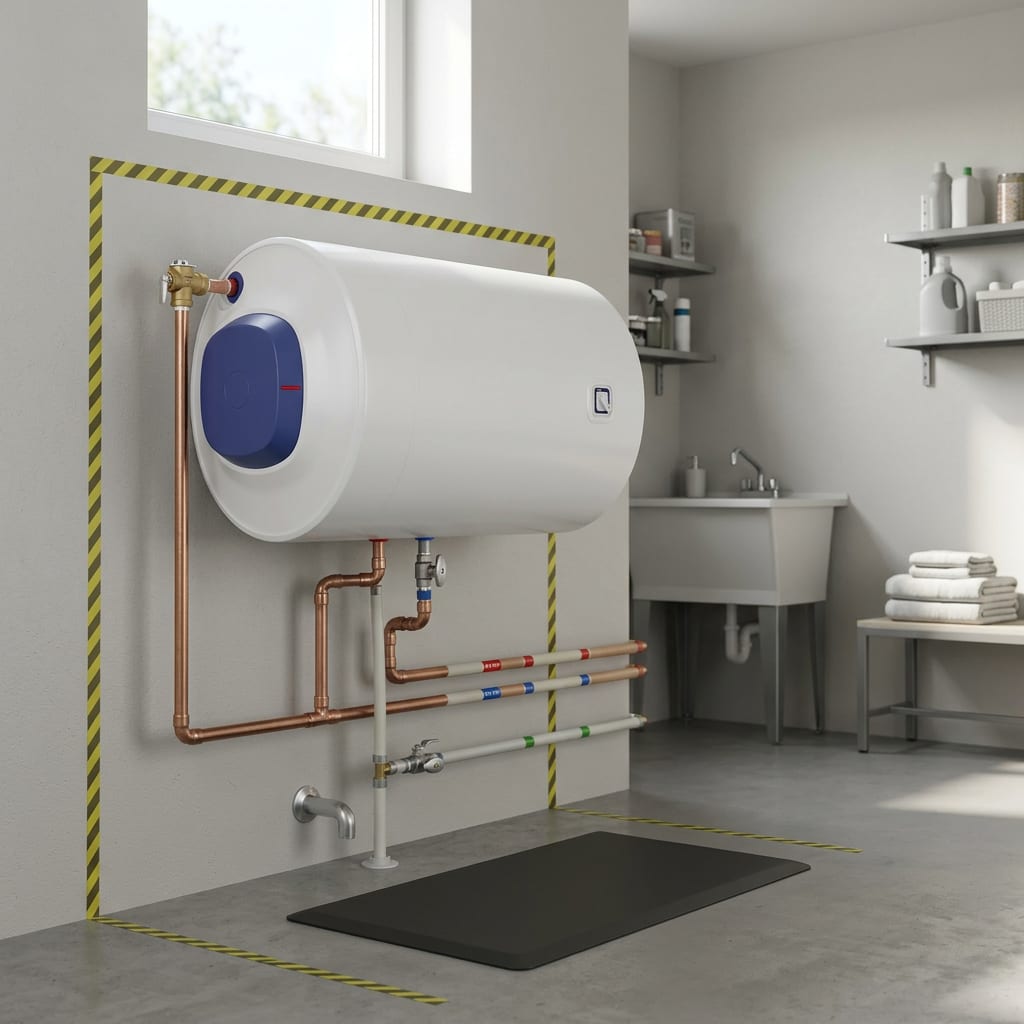
When space is at a premium, versatile multi-position models offer a practical workaround. The Ariston Velis Pro 80 water heater, for example, features an ultra-slim depth of just 27 cm and can be mounted vertically or horizontally. If you opt for a dedicated horizontal model, such as the Ariston Blu1 R 80H horizontal water heater, always follow the manufacturer's exact pipe orientation guidelines during installation.
Key factors to consider when choosing a location:
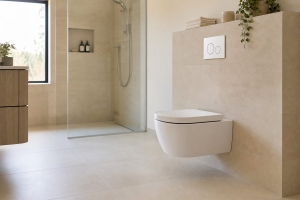
- Bathrooms and utility rooms: Excellent primary locations because existing floor drains and short pipe runs minimize heat loss and simplify plumbing.
- Basements: Offer stable ambient temperatures year-round, provided you have adequate moisture control and reliable floor drainage.
- Attics: Practical for saving living space, but require a dedicated drip pan and overflow drain pipe to protect the ceilings below from leaks.
- Garages: Require built-in freeze protection and compliance with local safety standards regarding electrical appliances.
Energy Efficiency and Modern Features
Today’s water heaters feature intelligent controls that adapt to your routine. Advanced programming, such as ECO EVO technology, learns your usage patterns to cut standby power consumption by up to 14%, while dual-tank architectures reheat water significantly faster than traditional single-tank designs.
For maximum energy savings, consider a hybrid heat pump system. The A-rated Ariston Lydos Hybrid 100 heat pump water heater cuts energy use by up to 50% compared to standard B-rated electric storage units. Learn more about how this technology works in our deep-dive review of the Ariston Lydos Hybrid 100 heat pump water heater.
If your existing unit has become noisy, heats water slowly, or is driving up your power bills, consult our checklist on when it is time to replace your water heater.
The Importance of Installation and Maintenance
Regular maintenance is essential to protect your investment. Inspecting the sacrificial magnesium anode and flushing out limescale deposits will keep internal corrosion at bay and preserve heating efficiency. For detailed upkeep instructions, read our guide on water heater maintenance and cleaning. In addition, every pressurized system must be fitted with a properly rated temperature and pressure relief (T&P) valve to prevent dangerous pressure spikes.
For further advice on choosing the right model, read our comprehensive guide on how to choose the right hot water heater.
Carefully matching your household's peak water demand with a well-planned installation site ensures years of dependable comfort and lower running costs. Explore our complete range of Ariston products or browse the full Vipex water heater selection to find the perfect fit for your home.