


How to choose tiles for a modern-style home
What makes tiles modern
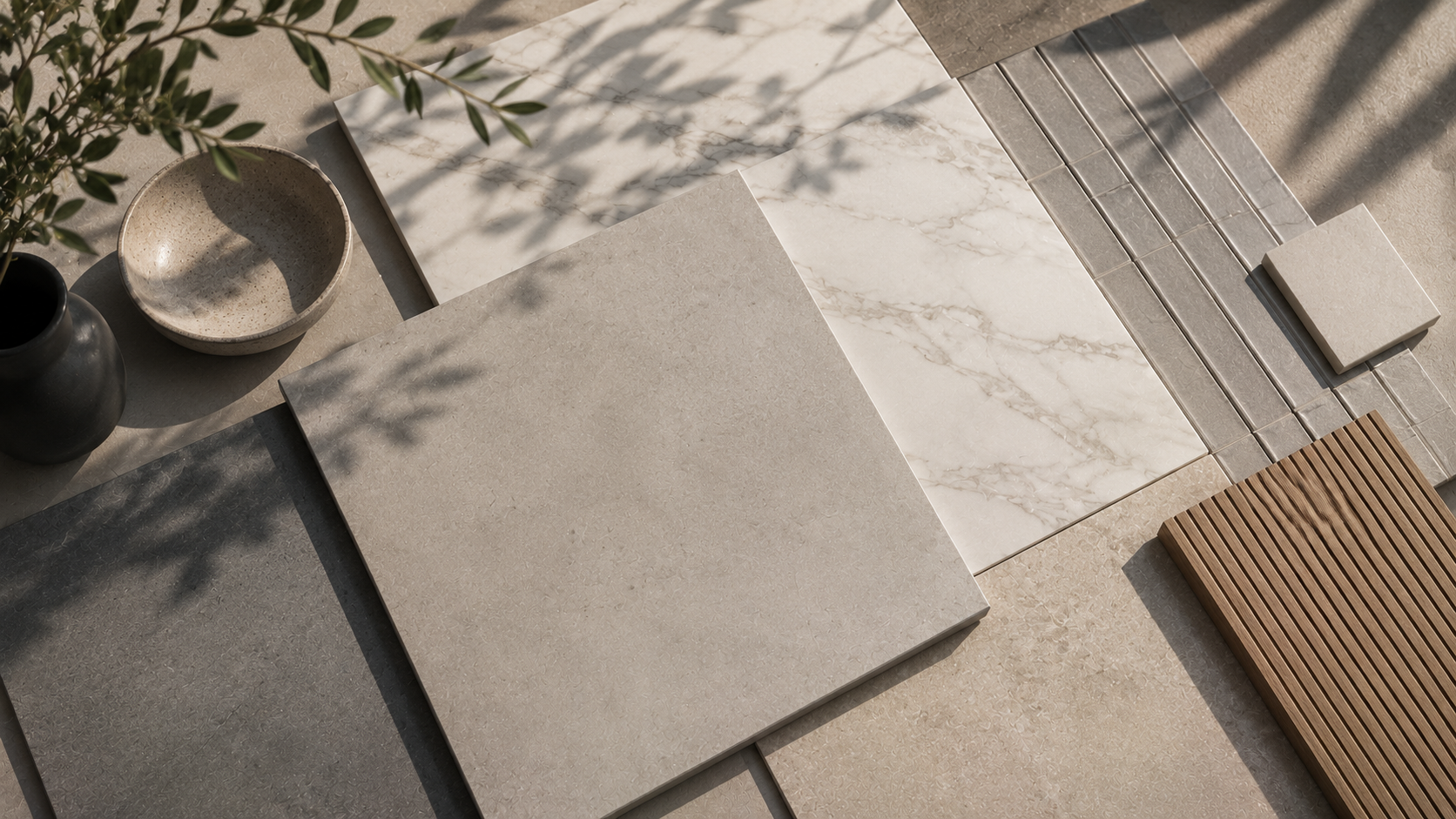
Modern ceramic tiles do not simply mean new products, but a specific approach. The surface is uniform, the pattern does not dominate, and the material’s appearance comes through naturally. This often means concrete, stone, or marble looks, where the focus is on texture rather than pattern and finishes.
Clarity of lines is also important. Ceramic tiles have straight edges and the layout is carefully planned. Grout lines do not stand out but blend into the surface, creating a consistent and calm result.
The color palette is usually neutral. Grey, beige, white, and black colors create a balanced base on which the rest of the space can be built, without the ceramic tiles becoming dominant.
Which modern tiles suit a home
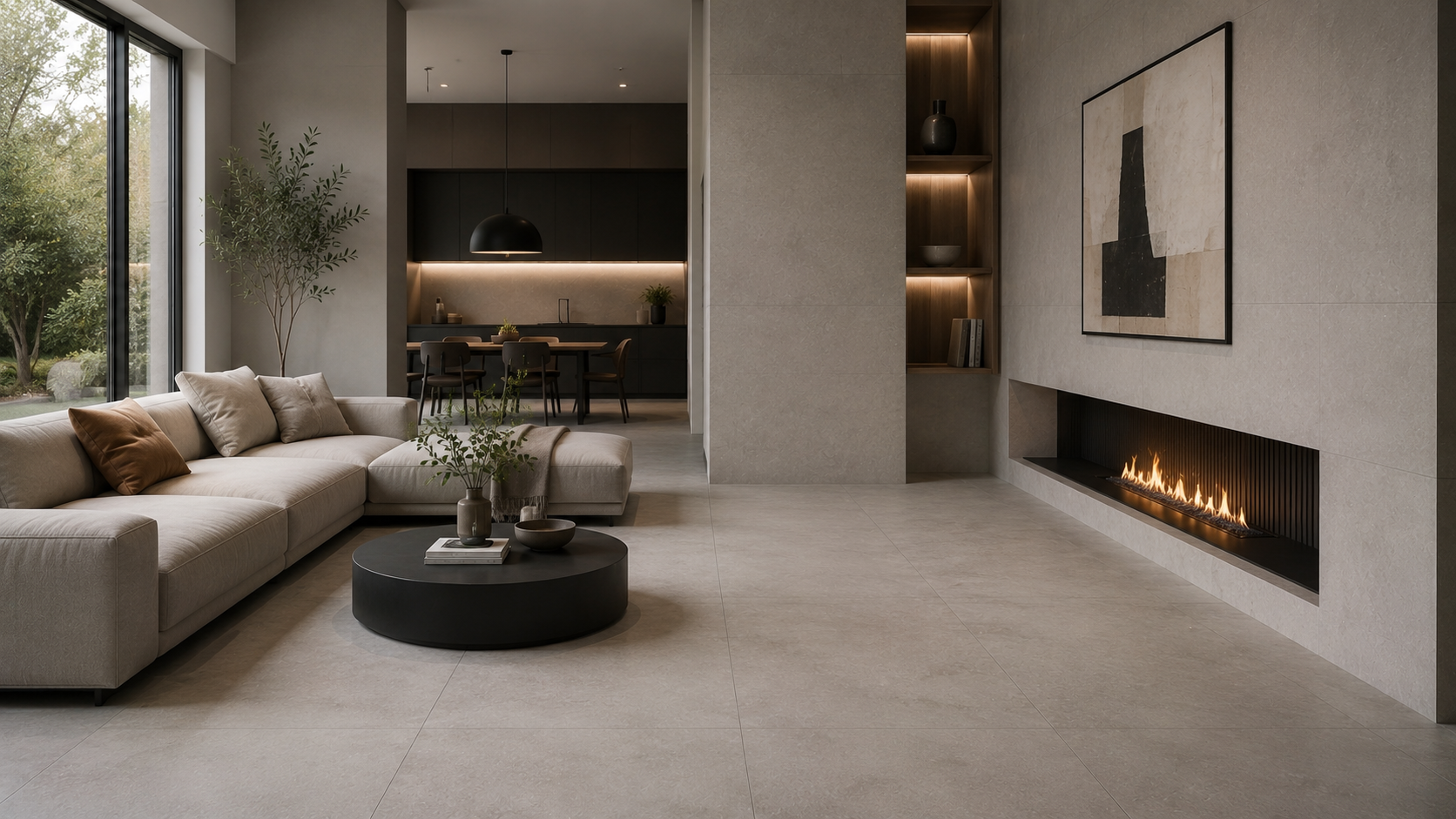
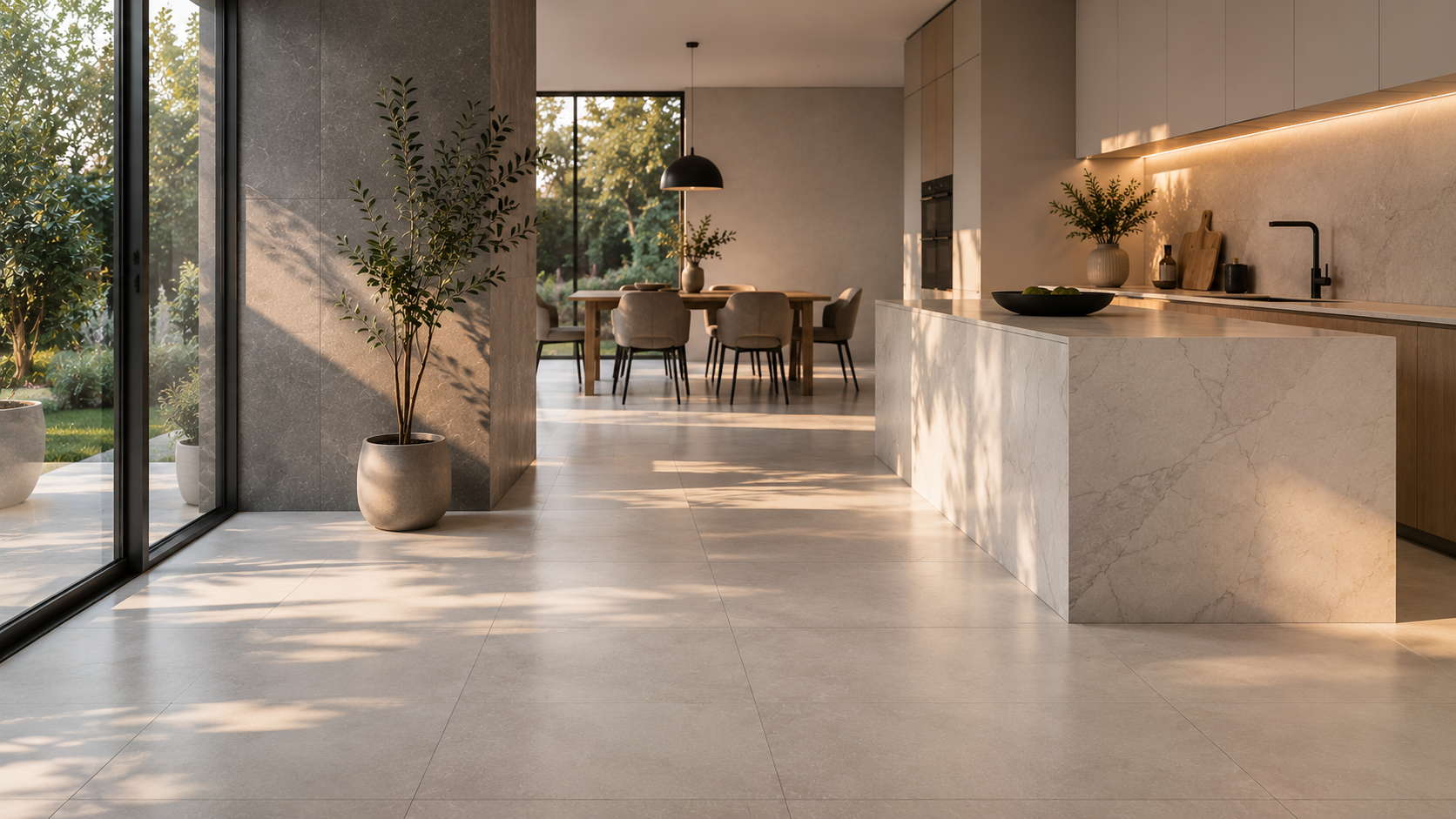
For a modern home, ceramic tiles that create a uniform and calm surface work best. Concrete-effect tiles are one of the most common choices, as they create a minimalist and clean result. They do not draw too much attention but still give the space character.
Stone-effect ceramic tiles bring a natural feel into the space while staying visually balanced. They work well in both bathrooms and kitchens, where it is important to combine practicality with a clean look.
Marble-look tiles also suit a modern interior, but the choice matters. Options with a calmer pattern and softer colors work better than high-contrast variants, which can stand out too much visually.
Surface finish and its impact
Surface finish directly affects both the look of a space and its maintenance. Modern ceramic tiles are usually matte or semi-matte, as they do not reflect light strongly and create a more even result.
A matte finish makes the space feel calmer visually, and water spots or fingerprints are less noticeable. This makes it more practical for everyday use.
Glossy ceramic tiles are used more selectively in modern interiors. They work in smaller areas or as an accent, but on large surfaces they can make the space feel visually busy.
Tile format and the role of grout
Color choice in a modern interior
How to match tiles with room size and lighting
Tiles must match the size and lighting of the space, as they directly affect how open and balanced it feels. In a small bathroom, lighter and larger ceramic tiles work better, as they do not visually divide the surface into smaller sections. If the space has plenty of natural light, darker tones like grey or black can also be used, as the light balances their effect and prevents the surface from feeling too dominant. In a darker room, it is better to stay with lighter tones such as white. In kitchens and other high-use areas, it is also important to consider how easy the surface is to clean, as dirt builds up quickly with daily use.
How to combine tiles in a modern space
Modern tiles from the Vipex selection
From the Vipex selection, you can find modern ceramic tiles suitable for different spaces.
Grespania Marmorea is a good example of a calm marble look that fits a modern interior. Rako Cava offers a concrete-like surface that supports a minimalist style. Cristacer Artico works well in lighter spaces where openness is important.
The Vipex range includes large ceramic tiles, matte finishes, and neutral tones that help create a consistent and modern result. It is worth exploring the selection further and reviewing other options.
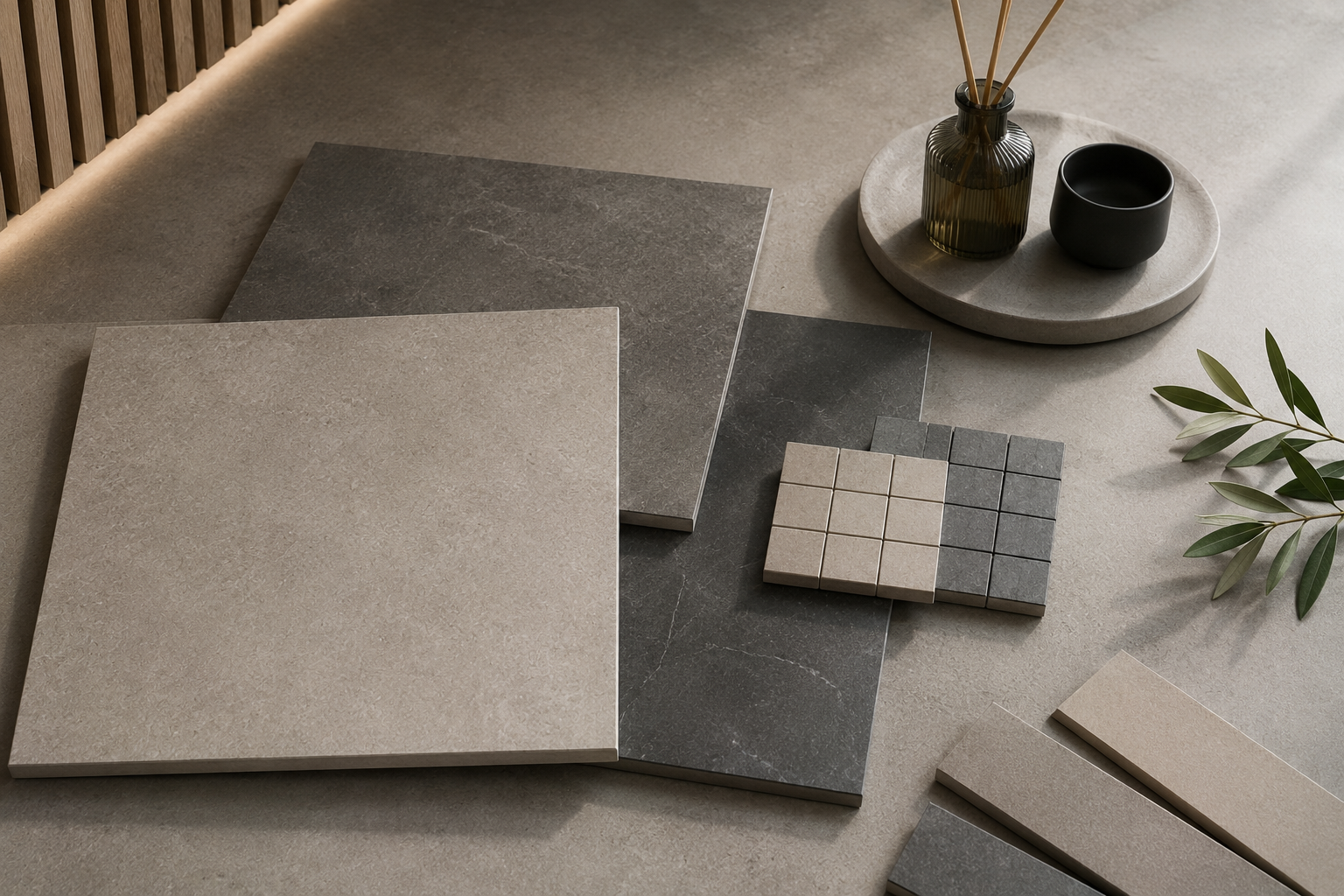
Modern ceramic tiles create the foundation of a space, so the selection should stay simple and well thought out. A busy or random combination stands out quickly and breaks the overall look. When format, matte or glossy finishes, and tones are aligned, the space feels calm and consistent.
If you want to find a solution that fits your home, get in touch with us and explore the Vipex selection.