


A Guide to Choosing Glass Blocks: Balancing Design and Technical Performance
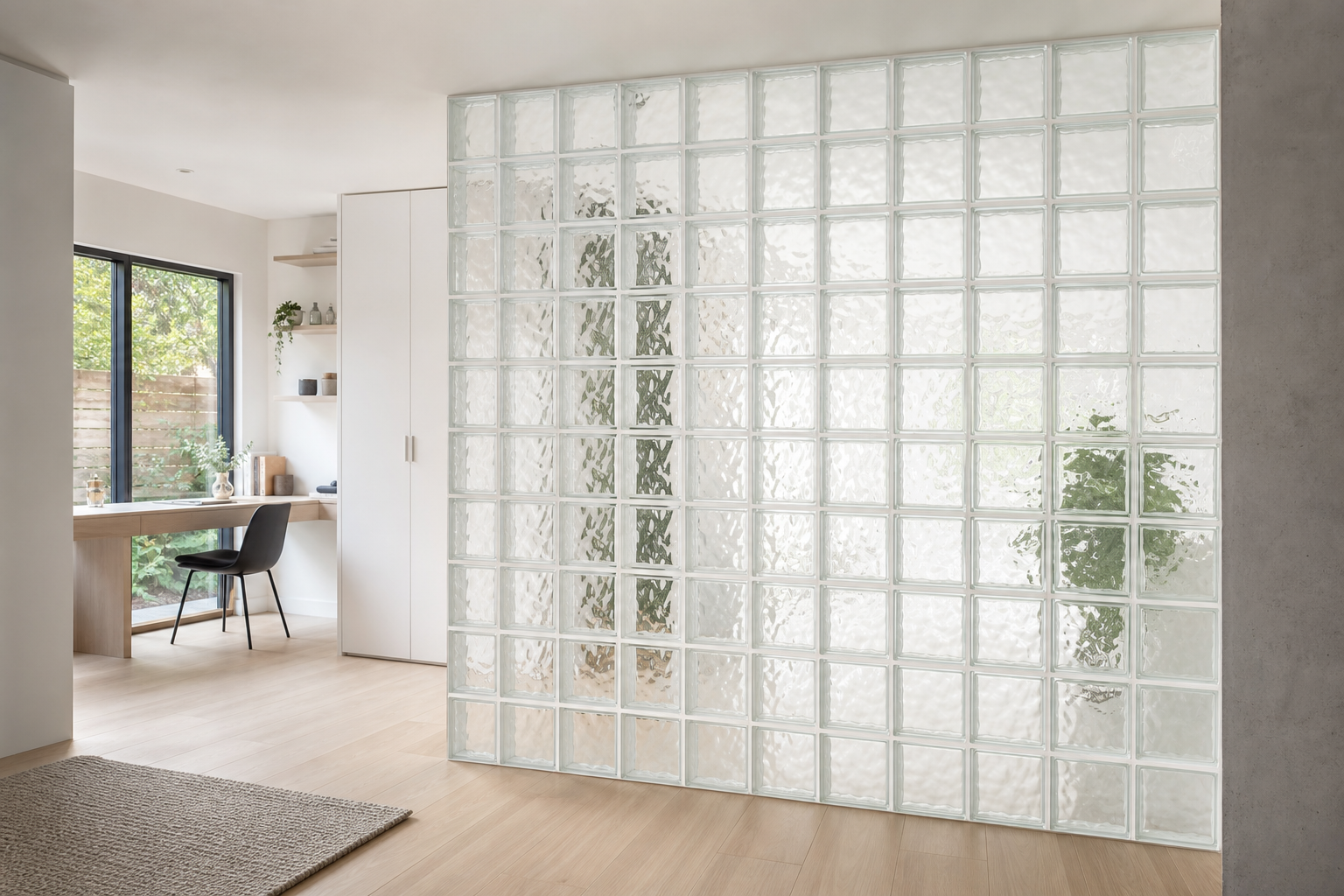
Glass blocks are much more than a vintage design trend; they are a versatile architectural solution for managing natural light, privacy, and thermal efficiency. Whether you are planning a modern interior partition or a high-performance building facade, selecting the right block requires a balance between visual aesthetics and rigorous technical specifications.
Glass blocks have seen a major resurgence in contemporary architecture. Far from being simple decorative elements, modern units offer advanced features like improved U-values, acoustic damping, and fire resistance. You can explore the renewed popularity of glass blocks in our detailed trend overview.
Light Transmission and Privacy Levels
The primary appeal of glass blocks is their ability to harvest natural light in areas where traditional windows might compromise privacy or structural integrity. Seves Glassblock products typically offer light transmission rates between 40% and 80%, depending on the surface finish.
- Transparent and Smooth: The 1908/C Clearview smooth glass block provides maximum clarity. It is the best choice when you want to maintain a visual connection between spaces while benefiting from a physical barrier.
- Textured and Wavy: The classic 1908/W Wave glass block uses a rhythmic pattern to diffuse light and obscure figures. With approximately 63% light transmission, it offers a perfect middle ground between brightness and privacy.
- Frosted and Matte: For total privacy, the Sahara frosted glass block features sandblasted surfaces on both sides. This finish is ideal for bathrooms or external facades where you want to eliminate shadows and sharp details while maintaining a soft, diffused glow.
Energy Efficiency and Sound Insulation
When used in exterior walls, the thermal transmittance (U-value) of a glass block becomes a critical factor. A standard single-chamber block usually has a U-value of approximately 3.0 W/m²K, which is suitable for most interior partitions and standard exterior applications.
For high-performance facades and energy-conscious builds, Seves Energy Saving technology utilizes low-emissivity glass and argon gas filling. This configuration can reduce heat loss by up to 50%, achieving a U-value as low as 1.1 W/m²K. Beyond thermal performance, glass blocks are excellent for noise reduction. They can provide sound insulation of up to 49 dB, making them highly effective for office partitions and buildings located in high-traffic urban areas.
Safety and Fire Resistance Ratings
In commercial environments and along egress routes, building codes often mandate specific fire resistance levels. The 1919/10 30F fire-resistant glass block is rated EI30, meaning it prevents the spread of flames, smoke, and heat for 30 minutes. For more demanding safety requirements, options are available for EI60 and EI90 classes, providing robust structural integrity without sacrificing the aesthetic of a glass wall.
Glass Blocks in Specialized Environments: Bathrooms and Saunas
Due to their inherent moisture resistance, glass blocks are an ideal material for shower enclosures and bathroom windows. However, extreme environments like saunas require careful selection of materials and installation techniques.
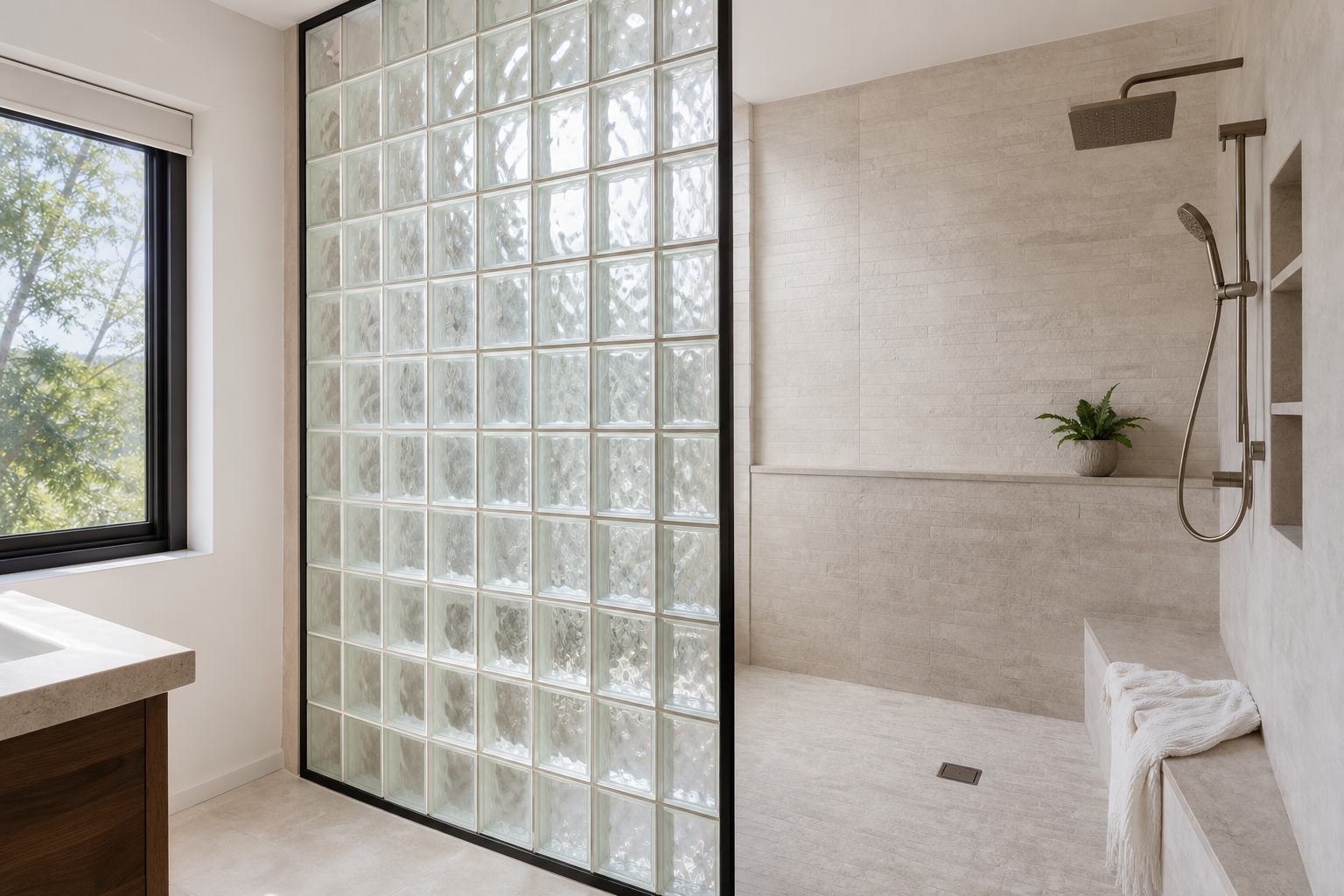
In sauna steam rooms, colorless and Pegasus-type glass blocks are suitable, provided that thermal expansion is accounted for in the design. In these high-temperature settings, it is essential to use specialized installation mortar rather than plastic profile systems, which may not withstand the heat.
Crucially, internally painted glass blocks should never be used in a sauna. The intense heat can cause the internal color coating to degrade or peel. These vibrant blocks are better suited for standard interior partitions where they can create striking, colorful light effects.
Essential Accessories for Professional Installation
The durability and visual finish of a glass block wall depend heavily on the accessories used during assembly. A standard 19x19x8 cm block requires specific components for a long-lasting result:
- Joint Spacers: 10 mm spacers are necessary to ensure uniform alignment and consistent grout lines across the entire surface.
- Dry-Fix Systems: For interior projects where a quick, "mess-free" installation is preferred, QT Systems allow for assembly using specialized strips rather than wet mortar.
- Specialized Mortar: For wet rooms, saunas, and all exterior applications, always use a specialized white installation mortar. This ensures the necessary bond strength and water resistance.
When selecting glass blocks, always prioritize the specific functional demands of the space. For a deeper dive into technical requirements, read our guide on glass block installation methods. You can also visit the Vipex showroom for expert advice on choosing the best glass block solution for your specific project.