


Glass Blocks in Interior Design: Light, Privacy, and Style
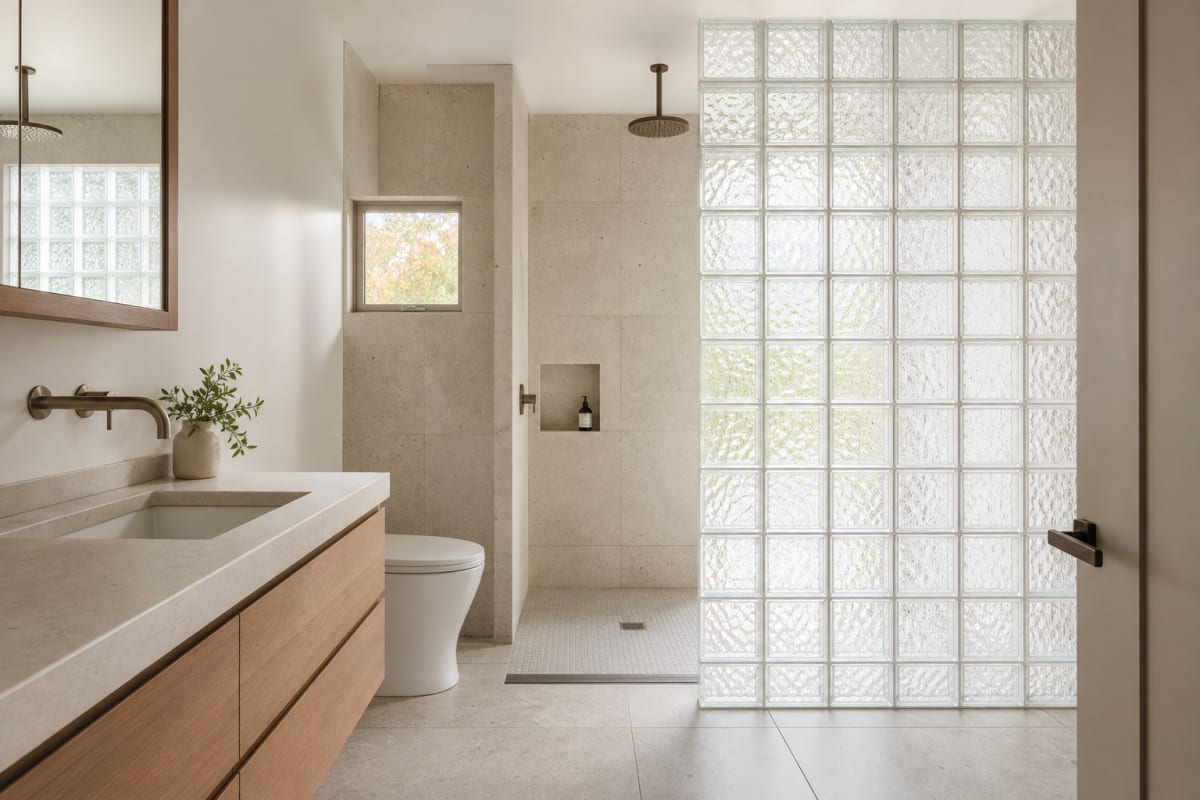
Looking to brighten dim interiors without compromising on privacy? Modern Seves glass blocks channel daylight deep into living and working spaces, delivering a durable, elegant solution for both residential and commercial architecture.
Technical Advantages and Performance Properties
Glass blocks are far more than decorative accents—they are engineered building elements built to perform. Each block is manufactured by fusing two pressed-glass halves together, forming a hermetically sealed hollow cavity with a partial vacuum. This internal void gives glass blocks their impressive insulating capabilities.
- Acoustic insulation: The substantial mass and density of glass blocks create an effective sound barrier. They are particularly well-suited for isolating home offices or partitioning open-plan kitchens where noise reduction is essential without losing visual continuity.
- Thermal performance: Glass masonry acts as an insulating barrier, reducing winter heat loss and minimizing summer solar gain. While standard glass blocks deliver a U-value of approximately 3.0 W/m²K, high-efficiency options can cut heat loss by up to 50%.
- Light transmission: Depending on the surface texture and pattern, Seves glass blocks transmit anywhere from 40% to 80% of ambient light, significantly cutting down the need for daytime artificial lighting.
- Fire resistance: For projects with stringent fire-safety standards, fire-rated options like the 1919/10 30F glass block offer an EI30 rating, preventing the passage of flames, smoke, and hot gases for up to 30 minutes.
Glass Blocks in Bathrooms and Wet Areas
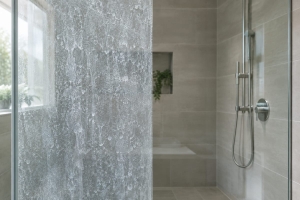
Bathrooms are among the most natural settings for glass block walls, offering an ideal blend of water resistance, privacy, and light diffusion. Unlike flat clear glass partitions that require constant upkeep and offer zero visual screening, textured glass blocks obscure sightlines while maintaining an airy, luminous feel. This makes them a standout design feature whether you are optimizing a small bathroom or undertaking a complete bathroom makeover.
A variety of surface treatments allow you to tailor the exact level of opacity. For complete privacy, consider the double-sided frosted 1908/CM Clearview Sahara glass block, or opt for the undulating 1908/W Wave glass block to softly scatter incoming light. Because glass is non-porous and impervious to moisture, it will never warp, rot, or harbor mold. Before constructing your wall, ensure that all under-tile bathroom waterproofing is thoroughly completed. For a complete overview of the process, consult our step-by-step guide on how to build a bathroom.
Practical Solutions for Kitchens and Living Areas
In open-concept kitchens, glass blocks make striking partitions between cooking and dining zones, or distinctive cladding along the front of an island or breakfast bar. To inject bold personality into your layout, injected-color glass blocks provide rich, saturated hues (note: internally painted blocks are engineered exclusively for climate-controlled indoor spaces).
In living rooms, hallways, and entryways, glass block screens serve as sophisticated architectural room dividers. Different surface patterns offer distinct aesthetic effects:
- The Savona bubble pattern adds an organic, fluid texture.
- The Midarc arched pattern introduces clean, rhythmic geometric lines.
- The Seves Alpha circle pattern is a timeless design that creates dynamic focal points through playful light refraction.
- The Optical geometric pattern creates a sharp, multi-faceted visual statement.
- The Pegasus Metallic glass block and tinted Pegasus Nordica capture and reflect surrounding ambient light with an upscale, lustrous finish.

Installation and Planning Considerations
Glass blocks form self-supporting walls, but they are strictly non-load-bearing. They cannot support structural loads from floors or ceilings above. Successful installation requires a rigid, level, moisture-resistant base and an opening built strictly square.
- Installation methods: Traditional mortar-and-rebar construction provides the highest overall strength and is suitable for both interior partitions and exterior walls. For any panel exceeding 1.1 m², embed horizontal ladder reinforcement every two courses to ensure structural integrity.
- Essential accessories: Dedicated plastic spacers (such as 10 mm alignment spacers) guarantee uniform joint widths. Assemble blocks using a flexible white mortar adhesive, or a specialized rapid-setting compound for faster project turnover.
- Seves Quicktech system: For mortar-free interior partitions, dry-glaze profile systems—like QT Systems—use interlocking track profiles and adhesive, enabling clean, fast installation with zero wet masonry work.
For detailed instructions and professional advice, explore our comprehensive guide to glass block installation.

Frequently Asked Questions
Can glass blocks be cut to size?
No. Unlike ceramic tiles or masonry bricks, glass blocks cannot be cut down without breaking their hermetic seal. The rough opening must be planned specifically around the exact dimensions of the blocks and their mortar joints.How do you clean and maintain glass block walls?
Regular maintenance requires nothing more than a standard glass cleaner and a soft microfiber cloth. Avoid abrasive cleaning powders, wire pads, or harsh chemicals that can scratch the outer face or damage grout lines.Can glass blocks be used on exterior facades?
Yes. Most unpainted, non-injected glass blocks are fully weather-resistant and engineered to withstand freeze-thaw cycles. Masonry installation should only take place when ambient temperatures stay between 5°C and 30°C.Do glass blocks offer good security?
Glass blocks are substantially thicker and more resilient than standard flat glass panes, making them virtually impossible to breach without heavy tools. They provide excellent security for ground-floor windows, basement openings, and entryways.
Whether you are designing an open-plan office partition or a tranquil master bathroom, glass blocks offer a timeless way to shape light and space. Browse the full collection in the Vipex glass blocks category to find the right blocks, profiles, and accessories for your next build.