


Achieving Perfect Balance: A Guide to Space, Material, and Light in Interior Design
Exceptional interior design is rarely accidental. It is the result of a deliberate, calculated harmony between three core elements: space, material, and light. When these components are masterfully balanced, they transform a room into an environment that feels tranquil, functional, and aesthetically cohesive.
Achieving this balance doesn’t always mean striving for perfect symmetry. Instead, it requires a nuanced understanding of how different materials respond to light and how the physical layout of a room influences its visual proportions. The designer’s goal is to find that "invisible harmony"—the point where a room feels natural, neither cluttered nor sparse, but perfectly poised.
Space: The Foundation of Design
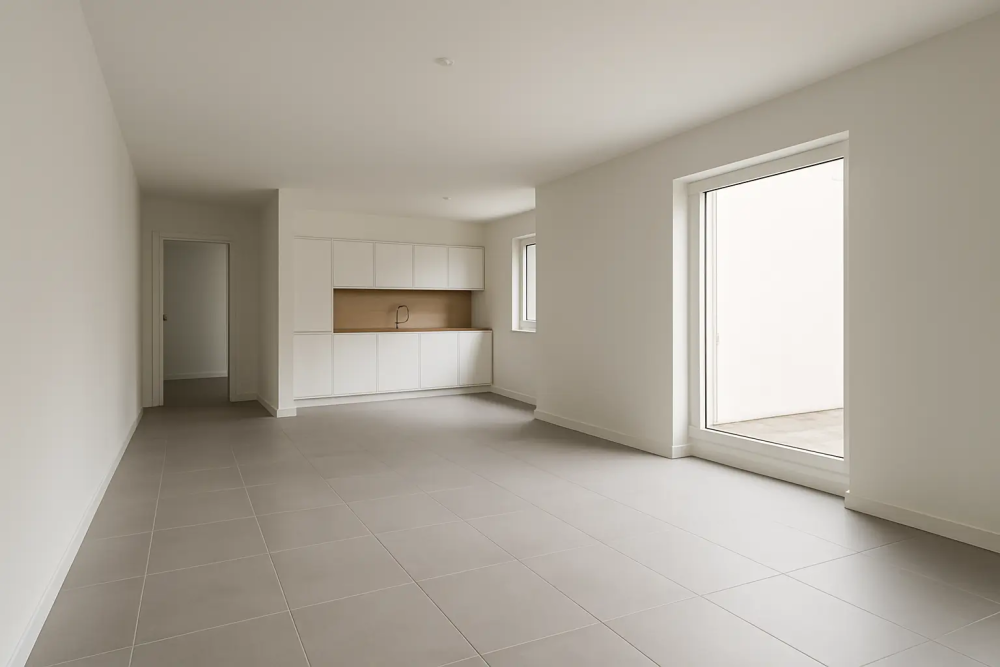
Every design project begins with the "canvas"—the empty room. Before selecting finishes, one must study the interaction between the layout, the sightlines, and the available light. While expansive living areas can accommodate bold architectural statements and high contrast, smaller, high-utility spaces like bathrooms require a focus on simplicity and clean lines to remain inviting.
In open-plan layouts where different functional zones share the same footprint, light must flow seamlessly to maintain a sense of unity. If natural light is concentrated on one side, integrated secondary lighting is essential to balance the atmosphere. This creates a successful spatial "dance" between light and shadow, warm and cool tones, and openness and privacy.
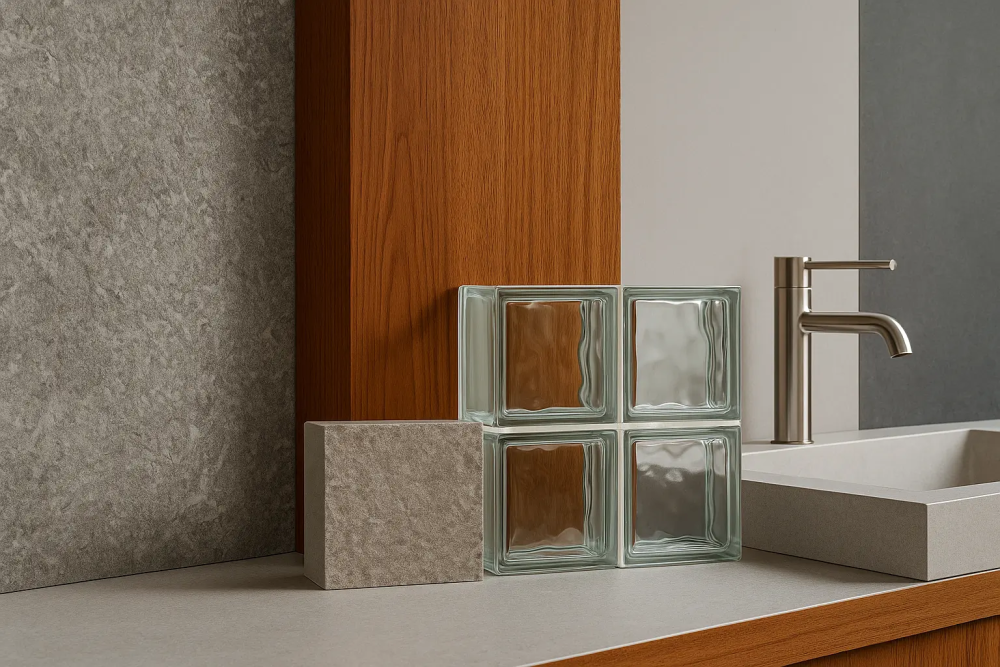
Designers often manage "visual weight"—the principle that certain elements, like a massive stone feature wall, can dominate a room and disrupt its equilibrium. To restore balance, these "heavy" features are often offset by lighter, more airy finishes such as glass blocks or natural wood, which introduce warmth and a sense of breathability.
The Harmony of Materials
Materials define the character and soul of a room. Natural stone tiles provide a sense of permanence and strength; wood adds organic warmth; metal provides precision and modern accents; while glass blocks offer transparency and lightness. A professional designer selects materials based on how they interact tactilely and visually, rather than on aesthetics alone.
For example, the texture of a raw stone wall can emphasize the clean lines of a smooth surface, while warm wood accents can soften the industrial chill of metal and glass. Furthermore, the choice between matte and glossy finishes on ceramic tiles directly impacts the perceived size and brightness of the space.
Modern interiors frequently utilize glass blocks as a sophisticated way to partition spaces. They allow light to travel freely while maintaining privacy—a perfect example of the synergy between material and light.
Light: The Invisible Designer
Light is the element that breathes life into a design. Without it, even the most premium materials are lost to the shadows. Designers use a combination of natural and artificial light to reveal textures, emphasize forms, and curate the desired mood.
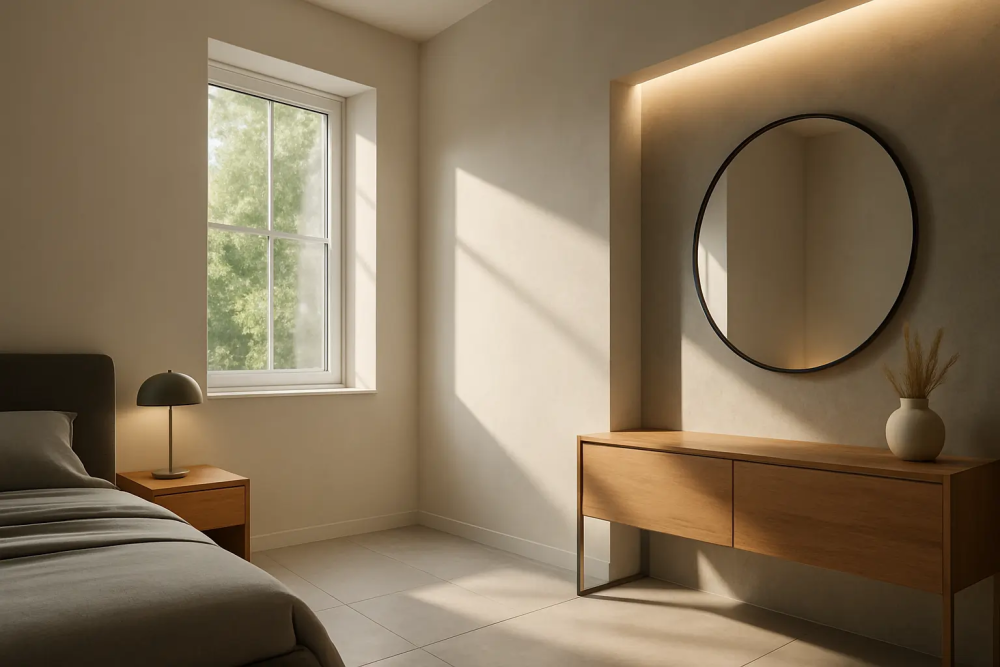
Natural light is the ideal starting point, as it makes a space feel dynamic. As the sun moves, it brings out different depths and hues—sharper and cooler in the morning, softer and warmer by evening. When planning a renovation, mirror cabinets and massage baths should be positioned to maximize the impact of this changing natural light.
As daylight fades, artificial lighting takes over. Layered lighting—using LED strips, ceiling fixtures, and wall-mounted solutions—reveals the depth of the room. Soft backlighting can accentuate the relief of a ceramic surface, while directional lighting highlights the unique veining of natural stone. Proper lighting ties the entire room together, creating a curated, comfortable atmosphere.
Balance Beyond Symmetry
Harmony is often mistaken for symmetry, but true balance is more complex. It often lives in the contrast between materials or the juxtaposition of textures. A concrete wall, for instance, becomes far more inviting when paired with warm light and natural wood. In a minimalist setting, dark natural stone can provide the "visual weight" necessary to ensure the room doesn't feel clinical or hollow.
Bringing These Principles to Your Home
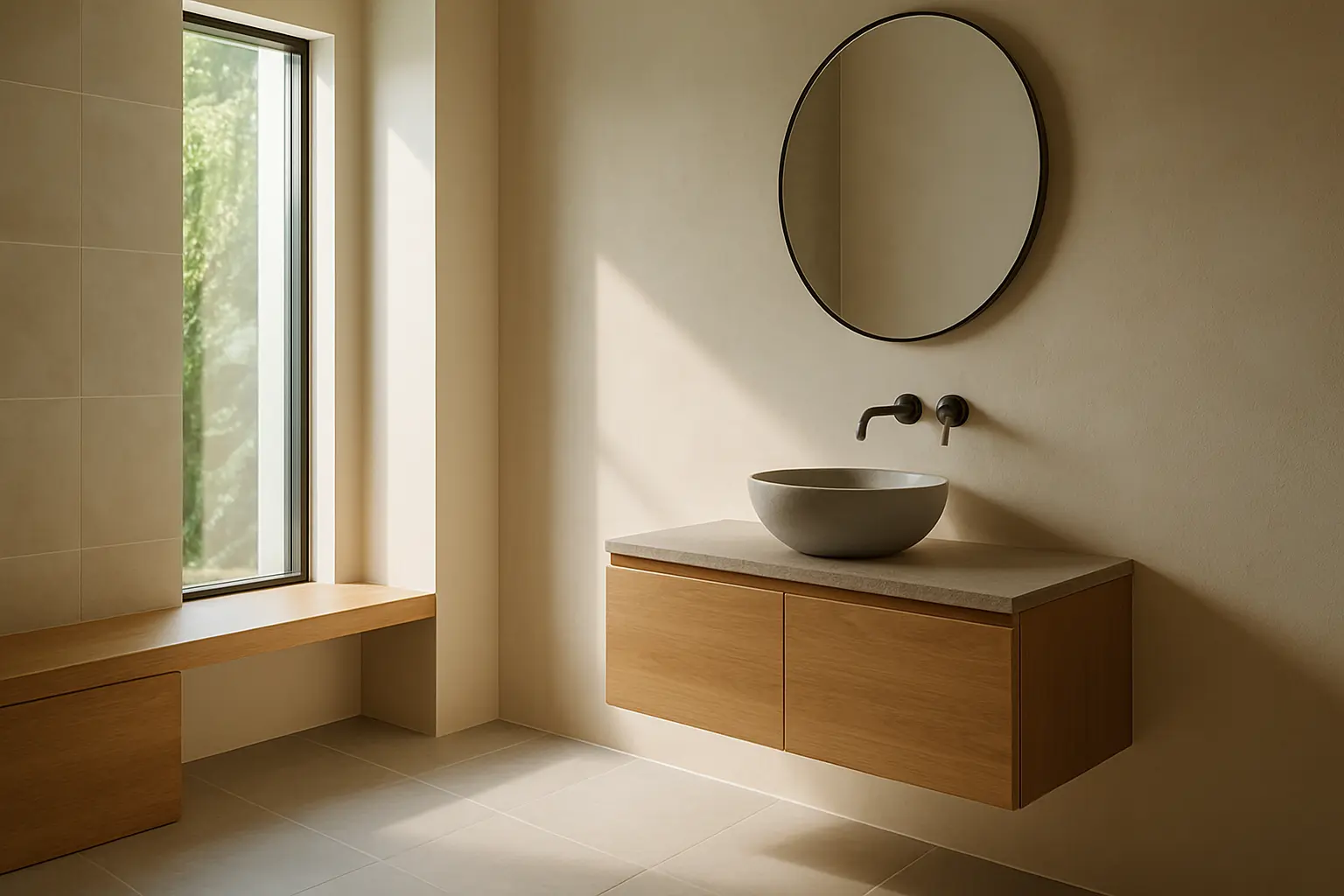
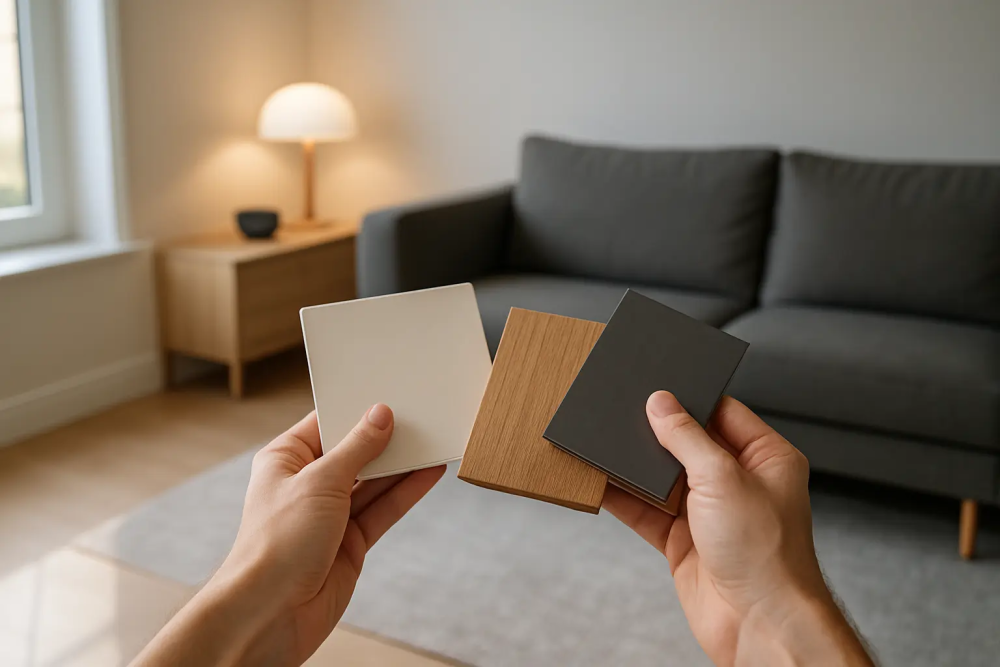
You don't need a design degree to apply these concepts to your own renovation. Start by observing your space: track how natural light moves throughout the day. When selecting finishes, aim for a curated palette; two or three complementary materials are usually enough to create a sophisticated look. For example, a combination of smooth ceramic tiles, warm oak, and matte metal finishes offers a balanced, engaging aesthetic.
When planning your lighting, think in layers. Use ambient lighting for general illumination, task lighting for specific areas (like mirrors), and accent lighting to add mood and depth.
Finally, don't be afraid of "white space." Empty space is a vital component of balance. In a well-designed room, every detail has a purpose, and even a subtle reflection or a slight shift in texture can make the space feel complete.
True interior design is realized when space, material, and light exist in total harmony. It is a balance you may not notice immediately, but you will feel it every time you enter the room.
If you are looking to create this harmony in your own home, visit the Vipex online store for inspiration and materials that blend high-end aesthetics with practical durability. For expert guidance on your project, contact us—we are here to help you find the perfect balance.